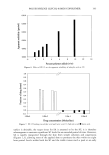
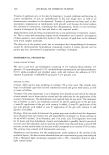
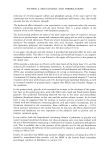
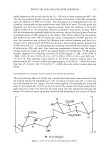
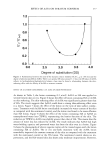
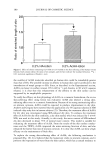
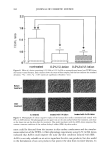
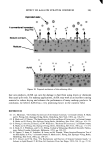
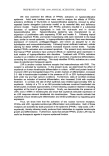
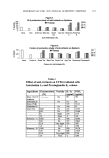
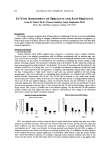
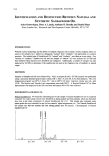
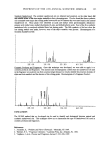
EFFECT OF AcHA ON STRATUM CORNEUM 181 nontreated 0.2%HA-lotion 0.2%AcHA-Iotion Figure 7. Effect of a lotion containing 0.2% HA or 0.2% AcHA on the ratio of skin surface conductance of the human ventral forearm. Each column shows the mean of four samples, and the bars indicate the standard deviation. **p 0.01 statistical significance (Student t-test). become harder with decreasing hydration (13,19). Therefore, AcHA can firmly adhere to the stratum corneum and prevent water loss from the skin. AcHA helps to sufficiently soften the stratum comeurn and allows the skin to have increased hydration by protect- ing it from dryness for a long period of time. Wichrowski et al. reported that the moisturization of the stratum corneum was assessed by a non-invasive and non- destructive in vivo method using Fourier transform infrared spectroscopy (26). It was shown that the intensity ratio of amide 1 band (1645 cm -•) and amide 2 (1545 cm -•) indicated indirectly the water content of the stratum comeurn and was assumed to be a relative measure of stratum comeurn hydration. The strength of interaction between keratin and humectant might be evaluated by this method. Using a solid-state •3C- nuclear magnetic resonance spectroscopy, Jokura et al. showed that structural keratin proteins, mainly consisting of 10-nm filaments, acquire their elasticity with the help of hydrated natural moisturizing factor via the reduction of intermolecular forces, probably through non-helical regions between keratin fibers (27). Further investigation is needed to clarify the mechanism of the skin-softening effect of AcHA. In the near future, we expect to further elucidate this process. CONCLUSION To summarize our results, we can conclude as follows: (a) An amphiphilic polymer, AcHA, was found to show superb moisturizing and excellent skin-softening effects as compared with HA. (b) Due to its hydrophobicity, AcHA could adhere efficiently to the human skin surface and showed a strong skin-softening effect. This adsorption enhance-

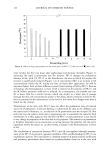
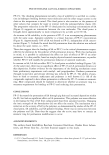
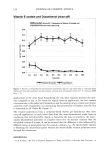
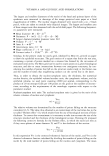
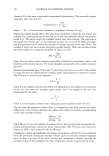
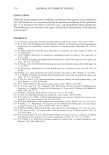
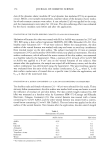
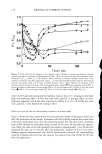
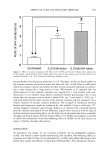
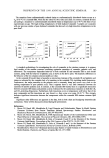
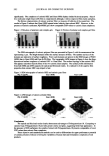
182 JOURNAL OF COSMETIC SCIENCE 2.2 iii 1.8 1.4 1.0 T" ..... .... '-'1' nontreated 0.2%HA-lotion 0.2%AcHA-Iotion Figure 8. Effect of a lotion containing 0.2% HA or 0.2% AcHA on transepidermal water loss (TEWL) from the human ventral forearm. Each column shows the mean of four samples, and the bars indicate the standard deviation. **p 0.01 *p 0.05 statistical significance (Student t-test). Before treatment After .• - - treatment . :• .* . n ontreated treated with HA-lotion -•..•....•_ , . _.. -..: •- .. .•..*•..• '• treated with AcHA-I orion Figure 9. Photographs of silicon negative replica of the human skin surface nontreated and treated with HA- or AcHA-lotion. The photographs on the upper row are the skin surface before the treatment, and those on the lower row are the skin after the treatment. One-week treatment with the AcHA lotion improved the stratum comeurn condition of the sodium dodecyl sulfate (SDS) dry-skin surface. ment could be detected from the increase in skin surface conductance and the simulta- neous reduction of the TEWL. (c) Skin physiology experiments using 0.2% AcHA lotion indicated that AcHA could improve the scaly dry-skin condition induced with SDS. AcHA is not only valuable as an active ingredient for skin care products, but also useful in the formulation of sun care products that protect the skin from excessive dryness. In
Purchased for the exclusive use of nofirst nolast (unknown)
From: SCC Media Library & Resource Center (library.scconline.org)