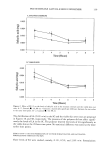
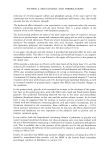
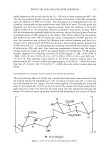
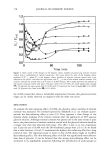
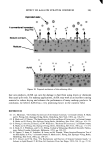
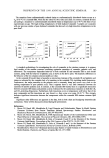
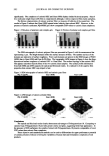
EFFECT OF AcHA ON STRATUM CORNEUM 183 o o 0 o Stratumcørneum%c::•i•••'•'......':i"•i•'= o 0 0 0 0 0 0 0 o o o o AcHA Figure 10. Proposed mechanism of skin-softening effect. hair care products, AcHA can cure the damage to hair from using dryers or chemicals that cause split ends. For makeup applications, AcHA may work as an excellent coating material to reduce drying and enhance the performance of many makeup products. In conclusion, we believe AcHA has a very promising future in the cosmetic field. REFERENCES (1) I. C. Mackenzie, "The Cellular Architecture of the Stratum Corneum," in Stratum Corneum, R. Marks and G. Piewig, Eds. (Springer-Verlag, Berlin, Heidelberg, New York, 1983), pp. 146-152. (2) R. Marks and S. P. Barton, "The Significance of the Size and Shape of Corneocytes," in Stratum Corneum, R. Marks and G. Piewig, Eds. (Springer-Verlag Berlin, Heidelberg, New York, 1983), pp. 161-170. (3) G. Piewig, E. Scheuber, B. Reuter, and W. Waidelich, "Thickness of Corneocytes," in Stratum Corneum, R. Marks and G. Piewig, Eds. (Springer-Verlag, Berlin, Heidelberg, New York, 1983), pp. 171-174. (4) A. Rook, D. S. Wilkikson, and F.J.G. Ebling, Textbook of Dermatology (Blackwell Scientific Publica- tions, Oxford, London, Edinburgh, Melbourne, 1972), pp. 249-255. (5) H. Tagami, Y. lwase, K. Yoshikuni, K. Inoue, and M. Yamada, "Water Sorption-Desorption Test of the Skin Surface In Vivo," in Stratum Corneum, R. Marks and G. Piewig, Eds. (Springer-Verlag, Berlin, Heidelberg, New York, 1983), pp. 248-251. (6) N.Y. Schurer and P.M. Elias, "The Biochemistry and Function of Stratum Corneum Lipids," in Advances in Lipid Research, P.M. Elias, Ed. (Academic Press, San Diego, 1991), Vol. 24, pp. 27-56.

184 JOURNAL OF COSMETIC SCIENCE (23) (24) (25) (26) (27) (7) P.M. Elias, Epidermal lipids, barrier function, and desquamation, J. Invest. DermatoL, 80(6), 44s-49s (1983). (8) R. L. Anderson, J. M. Cassidy, J. R. Hansen, and W. Yellin, Hydration of stratum corneum, Biopol- ymers, 12, 2789-2802 (1973). (9) I. H. Blank, Factors which influence the water content of the stratum corneum,J. Invest. DermatoL, 18, 433-440 (1952). (10) A. C. Park and C. B. Baddiel, Rheology of stratum corneum-II: A physico-chemical investigation of factors influencing the water content of the corneum,J. Soc Cosmet. Chem., 23, 13-21 (1972). (11) R. T. Tregear, Physical Function of Skin (Academic Press, London, New York, 1966), pp. 53-72. (12) G. Imokawa, H. Kuno, M. Kawai, Stratum corneum lipids serves as a bound-water modulator,J. Invest. Dermatol., 96, 845-851 (1991). (13) T. Ozawa, S. Nishiyama, I. Horii, K. Kawasaki, Y. Kumano, and Y. Nakayama, Humectants and their effects on the moisturization of skin, Skin Res., 27, 276-288 (1985). (14) N. Tonooka, Water-holding property of sodium hyaluronate, Skin Res., 27,296-302 (1985). (15) G. Abatangelo, R. Barbucci, P. Brun, and S. Lamponi, Biocompatibility and enzymatic degradation studies on sulfated hyaluronic acid derivatives, Biomateria/s, 18(21), 1411-1415 (1997). (16) E. Christophers and A.M. Kligman, Visualisation of the cell layers of the stratum corneum,J. Invest. DermatoL, 42,407-409 (1964). (17) A.M. Kligman and E. Christophers, Preparation of isolated sheets of stratum corneum, Arch. Derma- toL, 88, 702-705 (1963). (18) L.J. Tanghe, L. B. Genung, and J. W. Mench, "Acetylation of Cellulose," in Methods in Carbohydrate Chemistry, R. L. Whistler, Ed. (Academic Press, New York, 1963), Vol. 3, pp. 193-198. (19) M. Takahashi, M. Yamada, and Y. Machida, A new method to evaluate the softening effect of cosmetic ingredients on the skin, J. Soc. Cosmet. Chem. 35, 171-181 (1984). (20) J. Hatzis, and R. Marks, "The Relationship Between Conductance and Capacitance Measurements and Skin Surface Contour During Hydration of the Stratum Corneum," in Stratum Corneum, R. Marks and G. Piewig, Eds. (Springer-Verlag, Berlin, Heidelberg, New York, 1983), pp. 257-261. (21) H. Tagami, M. Ohi, K. Iwatsuki, Y. Kanamaru, M. Yamada, and B. Ichijo, Evaluation of the skin surface hydration in vivo by electrical measurement,J. Invest. DermatoL, 75, 500-507 (1980). (22) H. Tagami, M. Ohi, K. Iwatsuki, and M. Yamada, "Electrical Measurement of the Hydration State of the Skin Surface In Vivo," in Stratum Corneum, R. Marks and G. Piewig, Eds. (Springer-Verlag, Berlin, Heidelberg, New York, 1983), pp. 252-256. A. B. Cua, K. P. Wilhelm, and H. I. Maibach, Elastic properties of human skin: Relation to age, sex, and anatomical region, Arch. Dermato/. Res., 282, 283-288 (1990). C. Freijlarsson, T. Nylander, P. Jannasch, and B. Wesslen, Adsorption behaviour of amphiphilic polymers at hydrophobic surfaces--Effects on protein adsorption, Biomateria/s, 17(22), 2199-2207 (1996). W. F. Andrew and J. K. Gregory, Stratum corneum lipid abnormalities in surfactant-induced dry scaly skin, J. Invest. Dermato/. 86(5), 598-602 (1986). K. Wichrowski, G. Sore, and A. Khaiat, Use of infrared spectroscopy for in vivo measurement of the stratum corneum moisturization after application of cosmetic preparation, Int. J. Cosmet. Sci., 35, 171-181 (1984). Y. Jokura, S. Ishikawa, H. Tokuda, and G. Imokawa, Molecular analysis of elastic properties of the stratum comeurn by solid-state X3C-nuclear magnetic resonance spectroscopy,J. Invest. DermatoL, 104, 806-812 (1995).
Purchased for the exclusive use of nofirst nolast (unknown)
From: SCC Media Library & Resource Center (library.scconline.org)