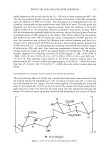
PREPRINTS OF THE 1999 ANNUAL SCIENTIFIC SEMINAR 187 We next examined the effects of PPAR(z activators on hyperproliferative epidermis. Adult male hairless mice were used to analyze the effects of PP^R(z activators (clofibrate or Wy14,643) on hyperproliferative epidermis, induced by either repeated barrier abrogation (sub-acute model) or by essential fatty acid deficiency (chronic model). Topical treatment with PP^R(z activators resulted in a substantial decrease of epidermal hyperplasia in both the sub-acute and in chronic hyperproliferative skin. Hyperproliferative epidermis was characterized by an expansion'of proliferative cells expressing PCN^ and keratin 5. Following topical clofibrate treatment PCN^- and keratin 5-expressing cells were restricted to the basal layer, similar to normal epidermis. In hyperproliferative epidermis, there was decreased expression of involucrin, profilaggrin-filaggrin, and Ioricrin as assayed by in situ hybridization and immunohistochemistry. Following topical clofibrate treatment, cellular staining for these mRN^s and proteins increased towards normal levels. Topically applied PP^R(z activators also increased apoptosis. The present study demonstrates that topical PP^R activators have profound effects on epidermal gene expression in both models of hyperproliferative skin disorders. Treatment with PP^R(z activators resulted in an inhibition of cell proliferation and in promotion of epidermal differentiation, correcting the cutaneous pathology. This study identifies PP^R(z activators as a novel class of potential skin therapeutic agents. /XR is another nuclear hormone receptor that heterodimerizes with RXR. This receptor is activated by oxysterols. In the present study, we determined the effect of oxysterols on human keratinocyte differentiation in culture. mRN^ and protein levels of involucrin (INV) and transglutaminase (TG), protein markers of differentiation, increased 2-3 -fold in keratinocytes incubated in the presence of 25- or 22R- hydroxycholesterol, both under low and high calcium conditions. Furthermore, rates of cornified envelope formation an indicator of terminal differentiation, also increased 2-fold with oxysterol treatment. In contrast, the rate of DN^ synthesis was inhibited approximately 50% by oxysterols. Activity of a TG- or an INV-promoter-luciferase construct transfected into keratinocytes increased approximately 2-3-fold following oxysterol treatment indicating regulation at the level of gene transcription. Finally, we demonstrate the presence of LXR(z and • mRN^ in keratinocytes and show that oxysterols stimulate expression of an LXR response element transfected into keratinocytes. These results indicate that oxysterols induce keratinocyte differentiation and inhibit proliferation by regulating gene expression. Thus, we show here that the activation of two nuclear hormone receptors, PP^R(z and LXR, regulates keratinocyte differentiation and proliferation. Both of these receptors are activated by lipids produced in the epidermis (PP^R(z - fatty acids LXR - oxysterols), thereby allowing locally produced lipid metabolites to regulate keratinocyte growth and differentiation. Furthermore, lipids that activate PP^R(z and/or LXR may be useful as therapeutic agents to improve epidermal function.

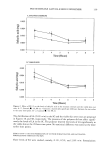
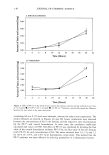
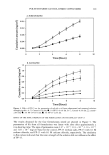
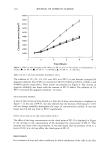
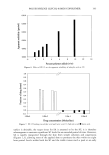
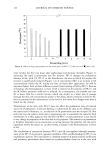
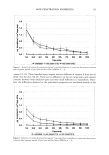
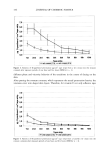
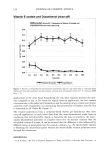
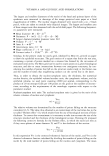
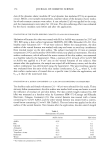
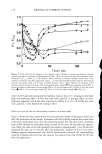
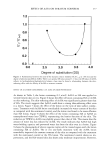
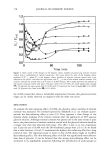
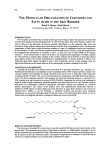
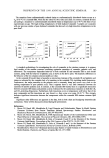
188 JOURNAL OF COSMETIC SCIENCE THE MOLECULAR ORGANIZATION OF CERAMIDES AND FATTY ACIDS IN THE SKIN BARRIER David J. Moore, Mark Rerek International Specialty Products, Wayne, NJ 0 74 70 INTRODUCTION: The skin plays an essential role in human physiology by providing a barrier that protects the body from external insult and prevents the unregulated loss of water from the body. This barrier function resides in the outer 10-20 gm of the epidermis, the stratum comeurn. Specifically, it is the ceramides, fatty acids, and cholesterol of the stratum corncure lipid matrix that provides the skin's permeability barrier. The molecular organization of these lipids within the stratum comeurn is a topic of considerable interest and importance. In our laboratory we have used Fourier transform infrared spectroscopy (FTIR) to study the intermolecular and intramolecular interactions of ceramides 2 and 5, on their own, and in lipid models of the stratum comeurn b4. In the current study we report on the inter- and intramolecular organization of human ceramide III. This molecule is commercially available to the cosmetic industry and is therefore of more than clinical and academic interest. Our results demonstrate two important points: 1) human ceramide 3 behaves very differently than either human ceramides 2 and 5, and of particular interest to this audience, there are significant differences in the phase behavior of the commercially available ceramide III and IIIB. MATERIALS AND METHODS: Ceramide III and IIIB were obtained from Cosmoferm B.V. through Centerchem, Inc., Stamford, CT. Perdeuterated hexadecanoic acid (palmitic acid) was purchased from CND Isotopes, Quebec, Canada. Pure ceramide samples were prepared by drying ceramides from solvent onto an horizontal ATR crystal then covering with pH 5.5 buffer. The crystal was then placed in a temperature controlled HATR unit (Specrta- Tech). The three component mixtures were prepared by dissolving equimolar amounts of ceramide III or IIIB, palmitic acid, and cholesterol in solvent (CHC13/CH3OH), evaporating the solvent, and hydrating the lipids in buffer at high temperature. Hydrated samples were placed between two AgC1 infrared windows and placed in a temperature controlled transmission cell holder. Spectra were acquired on a Mattson Infinity spectrometer. The nature of the detailed inter- and intramolecular information inherent in biophysical FTIR spectra of lipid samples has been discussed in great detail elsewhere and will not be repeated here s . Suffice to say the technique is extremely powerful and provides direct molecular information (i.e. no probe molecules) about the physical state of the lipid hydrocarbon chains as well as detailed data on headgroup ionization, hydrogen bonding and solvent accessibility. ceramide 171 '""' v v v v v T '"OH OH RESULTS AND DISCSUSSION: The structure of ceramide III is shown above, note that ceramide IIIB has an oleoyl chain in place of the stearyl chain. The intermolecular packing of lipid chains in bilayers i.e., orthorhombic, hexagonal or liquid and the intramolecular conformational order of the chains can be monitored directly, and simultaneously, in the IR spectra via the CH2 vibrational modes. The transition temperatures of ceramide III and IIIB from an ordered to a disordered bilayer are extremely high as illustrated in figure 1.
Purchased for the exclusive use of nofirst nolast (unknown)
From: SCC Media Library & Resource Center (library.scconline.org)