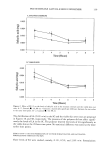
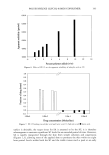
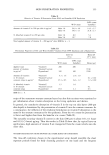
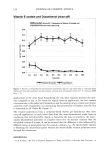
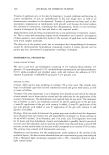
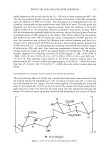
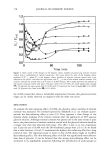
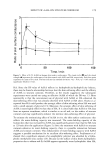
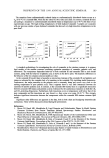
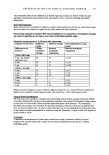
PREPRINTS OF THE 1999 ANNUAL SCIENTIFIC SEMINAR 189 The transition from conformationally ordered chains to conformationally disordered chains occurs at a Tm of 85 øC for ceramide IIIB, which has the oleoyl (C18:l) fatty acid chain. In contrast, ceramide III does not undergo a transition to conformationally disordered chains at temperatures up to 90 øC (the limit of our experimental set-up). The high melting temperatures of both hydrated ceramide 3 samples are consistent with our previous studies of pure hydrated ceramides that showed very high transition temperatures in the pure form 2. 2854 2008 2853 2852 2851 2850 2849 I • ceramide3 o palmitic acid 20 30 40 50 60 70 80 temperature [øC] 2854 2098 o • 2096 2853 _---, , 2094 I 2852 2092 • • 2851 2090 • • 2850 2088 2849 • ceramide 3B 0 palmitic acid 20 30 40 50 60 70 80 temperature FC] 2096 2094 2092 2090 2088 A standard methodology for investigating the role of ceramides in the stratum comeurn is to prepare lipid models of the stratum comeum containing equimolar quantities of ceramide, palmitic acid, and cholesterol. The temperature dependent behavior of both ceramide III and ceramide IIIB in such model systems, along with the behavior of palmitic acid, is shown in the above plots. The dramatic differences in the behavior of the two stratum comeurn models are clear. In the ceramide III model there is basically no interaction (mixing) of the ceramide III and palmitic acid chains as indicated by the complete lack of a transition in the ceramide CH2 stretching mode frequencies. Furthermore, the major transition in the palmitic acid is extremely sharp and occurs very close to the melting temperature of pure palmitic acid. Thus it appears there is very little interaction between the ceramide III and the palmitic acid. In contrast, in the ceramide IIIB model, there is a significant interaction between ceramide IIIB chains and palmitic acid as evidenced by the synchronous transition in both the CH2 and CD2 stretching frequencies. Furthermore, both transitions occur at temperatures well below that of the pure compounds and the transitions are very broad, i.e., they occur over some 20-30 øC. This strongly indicates significant interaction between the components within the ceramide IIIB stratum corneum lipid model. Significant other differences are apparent in the data, both in both chain and headgroup intermolecular interactions. These will be discussed in detail during the presentation. References: 1. Moore D J, Rcrek ME, Mcndclsohn R, Lipid Domains and Orthorhombic Phases In Model Stratum Comeurn: Evidence from Fourier Transform Infrared Spectroscopy Studies. Biochemical and Biophysical Research Communications, 231,797-801 (1997). 2. Moore D J, Rerek, ME, Mendelsohn R, FTIR Spectroscopy Studies of the Conformational Order and Phase Behavior of Ceramides. The Journal of Physical Chemistry, 101, 8933-8940 (1997). 3. Moore D J, Rerek ME, Mendelsohn R, Role of Ceramide II and IV in the Structure of the Stratum Comeurn Lipid Barrier. Proceedings of the 20th Congress of the IFSCC, 1, 30-50 (1998). 4. Moore DJ, Rerek ME, Mendelsohn R., Role of Ceramide 2 and 5 in the Structure of the Stratum Comeum Lipid Barrier. International Journal of Cosmetic Science, In Press (1999). 5. Mendelsohn R, Moore DJ, Vibrational Spectroscopic Studies of Lipid Domains in Biomembranes and Model Systems. Chemistry and Physics of Lipids, 86, 141-157 (1998).

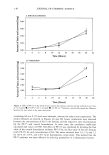
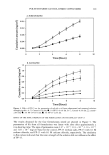
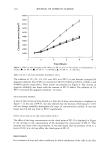
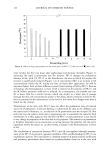
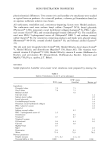
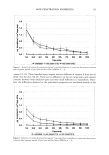
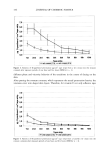
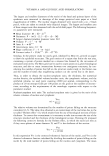
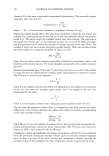
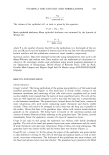
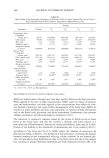
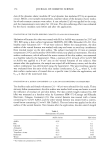
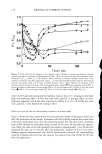
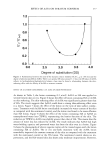
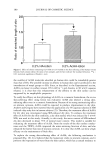
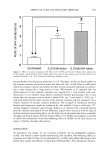
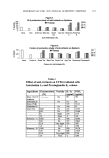
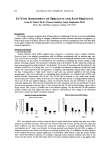
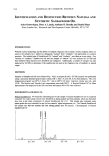
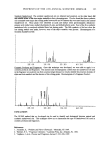
190 JOURNAL OF COSMETIC SCIENCE DEVELOPMENT OF AN IN VITRO METHOD FOR SCREENING ANTI-IRRITANTS Gopa Majmudar, Ph.D., Theresa Smithey, Louis B. Fisher, Ph.D. Mary Kay Holding Company, Dallas, TX 75247 INTRODUCTION: No validated predictive in vitro method is currently available for the evaluation of cutaneous anti- irritants or anti-inflammatory ingredients. The development of an in vitro method for testing unknown anti-irritant ingredients can provide a preliminary estimate of material safety. It is also a fast and economical way to screening anti-irritants prior to testing on humans. We utilized the Mat Tek Epiderm © skin model and a primary culture of keratinocytes to screen a variety of anti-irritants. Epiderm partially mimics human skin morphologically, functionally and biochemically and, therefore, it was possible to test anti-irritants in the product. Applying known irritants like sodium lauryl sulfate, croton oil and UV light to Epiderm or keratinocytes resulted in inhibition of mitochondrial enzyme activity and release of interleukins and prostaglandins •. Cytokines, prostaglandins and MTT conversion assays were conducted for anti- irritant screening following pre-applicafion of anti-irritant or an otherwise potentially irritating formula which also contained an anti-irritant. Anti-irritants such as tea and natural extracts reduced the release of cytokines and prostaglandin and protected mitochondrial enzyme. Clinical data on the effect of tea extracts and natural extracts on SLS and lactic acid irritation showed good agreement with the in vitro tests. MATERIALS AND METHODS: Living skin equivalent: Epiderm from Mat Tek Co, Ashland, MA were utilized to test anti-irritant compounds in the presence of SLS and croton oil, known skin irritants. 1% or 1.5% SLS or 1.5% croton oil in nonionic base were applied on Epiderm with or without anti-irritant test samples, and Epiderm were incubated at 37øC overnight. Epiderm were used for MTT (3-[4,5-dimethylthioazol-2-yl]-2,5-diphenyl tetrazolium bromide) assay. Cell culture and UVB protection study: HaCaT keratinocytes, spontaneously immortalized human keratinocytes, were used. The cells were exposed to different concentrations of each test sample in triplicates. After the initial pretreatment, media were removed and replaced with PBS-glucose. Cells were exposed to 14 mJ/cm 2 UVB irradiation in the absence of test compounds. Following irradiation, the cells were switched back into fresh media containing the same concentration of test compounds as they were exposed to during the pretreatment period. After incubation for 24 hours, the media were collected and used to analyzed inflammatory markers, such as, interleukin l tz (IL-ltz) and prostaglandin (PGE2), by enzyme immunoassay using commercially available kits. RESULTS: We examined the effect of tea and rosemary extracts on two known skin irritants, SLS, croton oil and UVB irradiation. Different tea extracts and rosemary extracts with SLS (figure-1) or croton oil (figure-2) in non- ionic aqueous base were applied on Epiderm. MTT data suggested that rosemary extracts were the most effective at protecting the cells against SLS. Green tea and other tea extracts were less effective than rosemary extracts against SLS on Epiderm (Figure-1). Green tea was the most effective against croton oil (figure-2). Other tea extracts and rosemary extracts were also effective on croton oil.(figure-2). Rosemary extracts and green tea reduced the production of inflammatory mediators, IL-lot and PGE2, in UVB irradiated keratinocytes (table- 1). CONCLUSIONS: In vitro results on the effect of tea extracts and rosemary extracts on SLS showed good agreement with clinical SLS irritation test. Thus, IL-1 tz, PGE 2 and MTT assays in the presence of known irritants can be used for a quick preliminary screening of anti-irritant ingredients. REFERENCES: 1. Muller-Decker, K., Furstenberger, G., Marks, F. Toxicology and Applied Pharmacology, 127, 99 (1994)
Purchased for the exclusive use of nofirst nolast (unknown)
From: SCC Media Library & Resource Center (library.scconline.org)