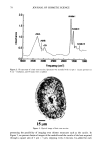
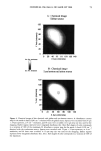
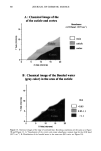
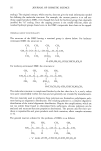
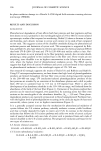
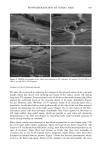
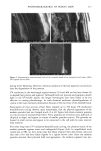
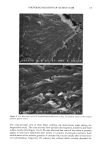
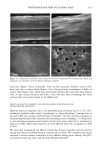
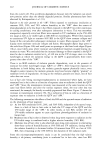
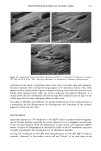
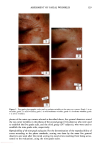
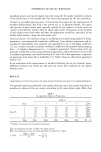
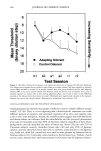
PHOTODEGRADATION OF HUMAN HAIR ! ! 5 "6"K ' i :" ' ß . 2•.' ,•B. .. Figure 9. a,b: After long-term UV-irradiation/humidification cycling, the physical nature of the melanin granules appears intact. The cross-sectional view of these fibers confirms the observations made during the longitudinal study. The cross sections show partially disintegrated, dissolved, and fused surface cuticle cells (Figure 12c,d). We also observed that some of the melanin granules appear to have been solubilized after merely 15 minutes of peroxide treatment. Such solubilization of the melanin granules in untreated hair occurs usually after several hours (4 h) of bleaching. Long-term UV exposure has, without doubt, severely degraded the

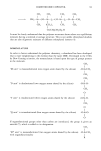
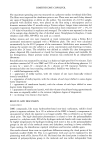
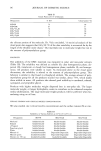
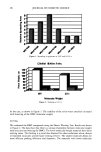
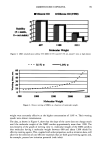
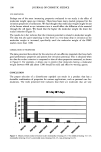
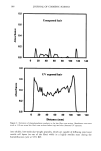
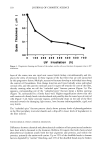
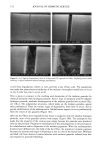
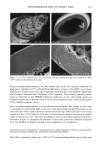
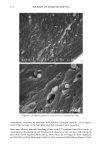
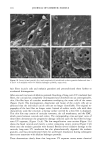
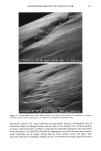
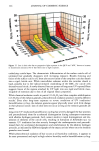
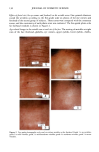
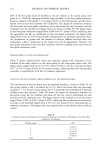
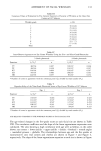
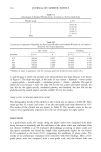
116 JOURNAL OF COSMETIC SCIENCE Figure 10. Intact (a) and partially (b,c) and completely (d) solubilized melanin granules before and after 1 h and 4 h of oxidation with 6% alkaline hydrogen peroxide, respectively. hair fibers (cuticle cells and melanin granules) and preconditioned them further to accelerated disintegration. After one and two hours of alkaline peroxide bleaching of long-term UV-irradiated hair fibers, the cuticula has completely disintegrated and dissolved into an unrecognizable, thin, film-like layer of cuticular membranes enveloping the outer cells of the cortex (Figure 13a,b). The disintegration, dissolution and fusion of the cuticle cells are so advanced that the individual cuticle cells are no longer identifiable. The original to- pography of the hair fiber no longer exists. Instead of surface cuticle cells with their characteristic scale-like structure, a bumpy surface covered by a thin film is displayed. This thin film may consist of cuticular remnants, the cell membranes, and the CMC, which exists between cuticula and cortex. The corresponding cross-sectional views of these fibers demonstrate the progressive damage inflicted upon the hair fiber by long- term UV exposure, (Figure 13c,d). The low magnification cross section (Figure 13c) shows the fused cuticula and merely a cortex containing empty cavities (Figure 13d) where once the melanin granules were housed. Besides severe oxidative damage to the cuticula, long-term U¾ irradiation has also photochemically degraded the melanin granules, and has preconditioned them for accelerated dissolution during subsequent short-term treatment with alkaline hydrogen peroxide. These observations clearly show that long-term UV exposure causes severe chemical
Purchased for the exclusive use of nofirst nolast (unknown)
From: SCC Media Library & Resource Center (library.scconline.org)