j. Cosmet. sci., 53, 1-9 (January/February 2002) Treatment of human skin with an extract of Fucus vesiculosus chanoes its thickness and mechanical properties TSUTOMU FUJIMURA, KAZUE TSUKAHARA, SHIGERU MORIWAKI, TAKASHI KITAHARA, TOMOHIKO SANO, and YOSHINORI TAKEMA, Biological Science Laboratories, Kao Corporation, 2606 Akabane, Ichikai-machi, Haga-gun, Tochigi 321-3497 (T.F., K.T., S.M., T.K., Y.T.), and Skin Care Science Laboratories, Kao Corporation, 2-3-1 Bunka, Sumida-ku, Tokyo 131-0044 (T.S.),Japan Accepted for publication August 15, 2001. Synopsis Recently the researchers found that an extract of Fz/cz/s vesiczdosz/s, which is a type of seaweed, promotes the contraction of fibroblast-populated collagen gels through increased expression of integrin molecules. In this study, they investigated the effects of topical application of an aqueous extract of this alga on the thickness and the mechanical properties of human skin. A gel formulation that included 1% of the extract was applied topically to human cheek skin twice daily for five weeks. A significant decrease in skin thickness measured by B-mode ultrasound was elicited, as was a significant improvement in elasticity measured with a Cu- tometer as compared with controls. In cheek skin, the thickness normally increases and the elasticity usually decreases with age. These results suggest that the Fucm vesiculosm extract possesses anti-aging activities and should be useful for a variety of cosmetics. INTRODUCTION The brown seaweed F•zzs vesic•os•s is a common littoral alga found on the coasts of the Northern Atlantic Ocean, the Pacific Ocean, and the Baltic Sea. It is well known that aqueous extracts of this alga show various biological properties, such as a potent antico- agulant activity (1). Recently we found that the Fuc•s extract promotes the contraction of fibroblast-populated collagen gels and changes their mechanical properties through increased expression of integrins o•2 and [31 on the surface of human skin fibroblasts (2). The fibroblast-populated collagen gel culture method is widely used as a simplified in vitro model of the dermis (3,4). Many researchers have studied the contraction of fibro- Address all correspondence to Tsutomu Fujimura. 1

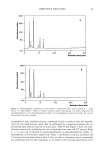
2 JOURNAL OF COSMETIC SCIENCE blast-populated collagen gels and have generally used that dermal equivalent model to investigate cell-matrix interactions--for example, as a model for wound healing (5,6). These results suggest that the Fucus extract might affect the maintenance of skin in- tegrity, in such areas as skin thickness and mechanical properties. Therefore, in this study, we investigated the effects of topical application ofa Fucus extract on the thickness and mechanical properties of human skin. MATERIALS AND METHODS FUCUS VESICULOSUS EXTRACT Dried Fucus vesiculosus was purchased from Ichimaru Pharcos Co., Ltd. (Gifu, Japan). Dried Fucus vesiculosus was extracted with water for 24 h, with stirring at room tem- perature. The residue was then removed by filtration to give a slightly brown colored extract (7). The residue of this extract was about 1.5 weight/volume % (residue weight %). TOPICAL APPLICATION The gel formulation included 1% of the aqueous extract of Fucus and was applied topically on one side of the face twice daily (in the morning and evening) for five weeks. Placebo gels without the Fucus extract were used as controls on the other side of the face. Placebo gels included detergent (Emanon CH40 PEG-40 hydrogenareal castor oil, 0.5 weight/weight [w/w] %), sodium alginate (1.0 w/w%, Mw. Ca.70000), 86% glycerol (5.0 w/w%), methylparaben (0.2 w/w%) as antiseptic agent, and purified water. SUBJECTS AND STUDY DESIGN Clinical testing was performed using ten healthy female volunteers (aged 23-36 years, mean 28.4 years) after giving informed consent. All measurements were performed twice daily with the volunteers in the supine position, i.e., in the morning (8:30-10:00) and in the evening (15:30-17:00). Both outer cheeks were examined before and after the application period by a specialist. Tests were carried out in a half-face, double-blind manner consisting of a five-week gel usage (twice daily applications at least) and evalu- ation of skin thickness and elastic properties. Panelists applied about 0.2 ml of gel per one side of cheek. All measurements were performed at exactly the same sites on the skin. Diurnal changes of skin thickness were determined by comparing the values obtained from both outer cheeks in the morning with those obtained in the evening. MEASUREMENT OF SKIN THICKNESS Skin thickness was measured with a ! 5-MHz B-mode ultrasonograph (UX-01, Rion Co. Ltd. Tokyo, Japan) as described previously (8). Briefly, the gain and dynamic range were adjusted to 24 dB and 30 dB, respectively. A typical ultrasonographic image obtained on human cheek skin is shown in Figure 1. The ultrasound image shows the epidermal echo observed close to the entry echo, then the moderately echogenic dermis, and finally
Purchased for the exclusive use of nofirst nolast (unknown)
From: SCC Media Library & Resource Center (library.scconline.org)