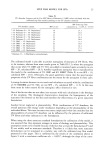
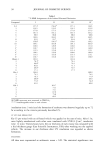
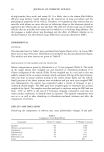
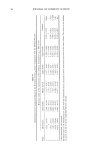
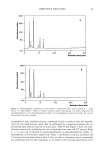
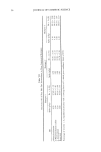
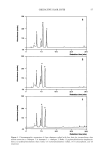
32 JOURNAL OF COSMETIC SCIENCE Table II The Contents of Kaempferol Glycosides in the Extract (Ku-35) of the Flowers of P. persica Compound I II III IV Contents (%) 3.3 + 0.5 0.6 + 0.2 1.8 + 0.2 2.0 + 0.3 From 1 g of the dried flowers ofP. persica, 120 + 25 mg of dried Ku-35 were obtained (n = 3). The contents represented here are percentages of the isolated compounds based on the weight of Ku-35 (w/w, n = 3). glycosides isolated and the extract (Ku-35) in HPLC. The contents of compounds I-IV in Ku-35 are represented in Table II. Among the four kaempferol glycosides, the multiflorin B content was highest. This result also supports our suggestion that mul- ti florin B may be used as a standard compound of Ku-35. Table III demonstrates the protective effects of Ku-35 on UVB-induced erythema for- mation in guinea pig skin. In this experiment, the erythema formation gradually in- creased up to 6 hr. After this point, the intensity did not drastically change until 72 hr. Ku-35 dose dependently inhibited the erythema formation up to 72 hr. The IC5o value of Ku-35 was determined to be 0.5 mg/cm i at 6 hr after UVB irradiation by linear regression analysis, while indomethacin (0.1 mg/cm 2) showed significant inhibition of the erytherna formation at early time points. At 5.0 mg/crn 2, Ku-35 completely blocked the erythema formation (Figure 2). It is noteworthy that the inhibitory effect of Ku-35 at concentrations -- 2 mg/cm 2 was well maintained during the experiment, whereas the inhibitory activity by indomethacin gradually decreased from 24 hr after UVB irradia- tion up to 72 hr (data not shown). Multiflorin B also inhibited the erytherna formation (80%) at the dose of 0.3 mg/cm 2, suggesting that this compound is one of the active principles of Ku-35. When the inhibitory effects of Ku-35 on UVB-induced ear edema were evaluated, they also showed reduction of ear edema at doses of 0.3-3.0 mg/ear (49% inhibition at 3.0 mg/ear), as shown in Figure 3. All results obtained above clearly demonstrated for the first time, that Ku-35 protected the formations of UVB-induced erythema and edema in vivo by topical application. Previously, Ku-35 inhibited the release of arachidonic acid (AA) metabolites from UVB-induced human keratinocytes in culture (3). The inhibitory activities of Ku-35 against in vivo UVB-induced erythema and edema formation may be partly due to the inhibitory activity of the release of AA metabolites, since AA and its major metabolite, Table III Effect of P. persica Extract (Ku-35) on UVB-Induced Erythema in Guinea Pigs mg/cm 2 1 hr 4 hr 6 hr 72 hr UVB -- 1.050.0 2.0ñ0.0 3.0ñ0.0 2.5ñ0.5 Indomethacin 0.1 0.0ñ0.0' 0.5ñ0.5* 1.050.7' 2.0ñ0.5 Ku-35 0.2 0.8ñ0.4 1.3ñ0.4 2.0ñ0.7 2.5ñ0.7 1.0 0.3ñ0.4 0.5ñ0.5* 0.8ñ0.4* 1.0ñ0.7 2.0 0.0ñ0.0' 0.3ñ0.4* 0.5ñ0.5* 0.5ñ0.5* 5.0 0.0ñ0.0' 0.0ñ0.0' 0.0ñ0.0' 0.0ñ0.0' MultiflorinB 0.3 0.5ñ0.5* Numericals in this table indicate the degree of erythema: 0 = none, 1 = mild, 2 = moderate, and 3 = severe (n = 4). * P 0.05, significantly different from UVB-irradiated group by one-way ANOVA test.

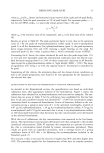
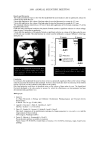
SKIN DAMAGE PROTECTION BY PRUNUS PERSICA 33 UVB + vehicle UVB + Ku-35 Figure 2. Photograph of UVB-induced erythema in guinea-pig. Ku-35 (5.0 mg/cm 2) was applied. This figure represents the complete protection of Ku-35 at 6 hr after UVB irradiation 0.2 0.1 0 0.3 I 3 mg/ear Figure 3. Effects ofP. persica extract (Ku-35) on UVB-induced ear edema in mice. UVB-irradiated control (O). Ku-35 (0). No statistically significant difference among Ku-35 treated groups was observed (n = 5). prostaglandin E• (PGE2), are well related with inflammatory responses including ery- thema and edema. We also described that Ku-35 inhibited UVB- and C-induced DNA breakage in fibroblasts and UVB-induced skin carcinogenesis in SKH-1 mice by topical treatment (4). The major constituents of Ku-35 were found to be kaempferol glycosides (fiavonoid). Therefore, the well-known anti-oxidative and UV-filtering activity of fia- yonolds may contribute to the inhibition of UV-induced skin damage by Ku-35.
Purchased for the exclusive use of nofirst nolast (unknown)
From: SCC Media Library & Resource Center (library.scconline.org)