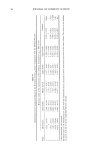
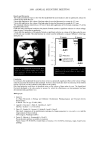
28 JOURNAL OF COSMETIC SCIENCE from normal human keratinocytes (3). Ku-35 also potently inhibited UV-induced DNA breakage from skin fibroblasts, measured by the single cell gel electrophoresis assay (4). These previous findings strongly suggest that Ku-35 may give protection from UV- induced skin damage such as erythema, premature aging, wrinkle formation, and ulti- mately skin cancer, when topically applied. To check this possibility, Ku-35 was evalu- ated in this investigation for its inhibitory activity against i, vivo animal models of UVB-induced erythema and edema formation. From the results, it was found, for the first time, that topical application of Ku-35 significantly inhibits the formation of UVB-induced erythema as well as edema. In addition, four flavonoid constituents (com- pounds I-IV) were isolated from this plant material and structurally identified as kaempferol 3-O-[IB-D-glucopyranosyl(1 •4)-o•-L-rhamnopyranoside], kaempferol 3-O- IB-D-galactopyranoside, kaempferol 3-O-o•-L-rhamnopyranoside, and kaempferol 3-0- IB-D-glucopyranoside, and their contents were measured using HPLC separation tech- niques. MATERIALS AND METHODS MATERIALS AND APPARATUS SH- and S3C-NMR were measured in JEOL 200 MHz NMR using an internal standard. Melting points were measured with the Fisher-Johns melting point apparatus and were uncorrected. Silica gel (70-230 mesh), TLC plates (F254) , and a lobar column (RP-18) were from Merck (Germany). PLANT MATERIAL The flowers ofP. persica (Rosaceae) were collected in several orchards located in Kangwon province (Korea) in April 1997 and 1998, and dried in the dark. A brochure specimen was deposited at the College of Pharmacy, Kangwon National University. ANIMALS Male Hartly guinea pigs and male ICR mice were purchased from Charles River Labo- ratories (Japan). The animals were maintained in the SPF animal facility at KNU under conditions of 20ø-22øC, 40-60% relative humidity, and a 12 hr/12 hr (L/D) cycle. UVB SOURCE For irradiation on animals, the strength of a UVB lamp (Model XX-15B, medium wavelength [312 nm], Spectroline, Westbury, NY) was adjusted using a DRC-100X digital radiometer (Spectroline) as described previously (3). PREPARATION OF THE EXTRACT AND ISOLATION OF KAEMPFEROL GLYCOSIDES The dried flowers ofP. persica were extracted with 80% aqueous ethanol according to the previous report (3). The extract (Ku-35) was filtered and dried i, vac•o. For i, vivo study,

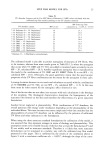
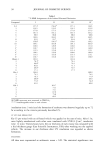
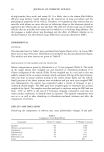
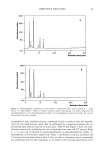
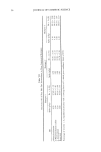
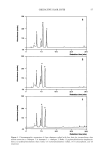
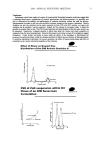
SKIN DAMAGE PROTECTION BY PRUNUS PERSICA 29 the dried residue was mixed with an oil-based vehicle and applied to the animal skin. For isolating the constituents, the residue was dissolved in a small amount of methanol. The dissolved residue was poured into a silica gel column and eluted with chloroform: methanol:water (10:3:0.5) as a mobile phase, giving ten subfractions. Subfraction 7 was dried and further separated in the RP-18 column using methanol:water (1:1), giving compound I. From subfraction 5, the repeated silica gel column chromatography yielded compound II. From subfraction 4, the repeated silica gel column chromatography and subsequent separation with the RP-18 column using methanol:water (55:45) gave com- pounds III and IV. Compound I: Recrystallized from methanol (yellowish amorphous powder). 1H-NMR (DMSO-d6) • 12.61 (s, 1H, 5-OH), 7.76 (d, 2H, J = 8.6 Hz, H-2' and 6'), 6.93 (d, 2H, J = 8.6 Hz, H-3' and 5'), 6.41 (s, 1H, H-8), 6.21 (s, 1H, H-6), 5.18 (s, 1H, rhamnosyl anomeric H), 4.30 (d, 1H, J = 8.0 Hz, glucosyl anomeric H), 0.90 (d, 3H, J = 5.6 Hz, rhamnosyl-CH3). For 13C-NMR, see Table I. Acid hydrolysis products: kaempferol, glucose, rhamnose. Compound II: Recrystallized from methanol (yellowish platelets), m.p. -- 233ø-235øC, 1H-NMR (DMSO-d 6) B 12.70 (brs, 1H, 5-OH), 8.06 (d, 2H, J = 8.0 Hz, H-2' and 6'), 6.86 (d, 2H, J = 8.0 Hz, H-3' and 5'), 6.42 (d, 1H, J -- 2.0 Hz, H-8), 6.19 (d, 1H, J -- 2.0 Hz, H-6), 5.40 (d, 1H, J = 7.6 Hz, galactosyl anomeric H). Acid hydrolysis products: kaempferol, galactose. Compound III: Recrystallized from acetone (yellowish needles), m.p. = 174ø-177øC, 1H-NMR (DMSO-d 6) B 12.63 (s, 1H, 5-OH), 7.75 (d, 2H, J = 8.6 Hz, H-2' and 6'), 6.91 (d, 2H, J = 8.6 Hz, H-3' and 5'), 6.41 (d, 1H, J = 2.0 Hz, H-8), 6.20 (d, 1H, J = 2.0 Hz, H-6), 5.29 (s, 1H, rhamnosyl anomeric H), 0.78 (d, 3H, J = 5.5 Hz, rhamnosyl-CH3). Acid hydrolysis products: kaempferol, rhamnose. Compound IV: Recrystallized from acetone (yellowish prisms), m.p. 250øC, 1H-NMR (DMSO-d6) B 12.61 (brs, 1H, 5-OH), 8.04 (d, 2H, J = 8.8 Hz, H-2' and 6'), 6.88 (d, 2H, J -- 8.8 Hz, H-3' and 5'), 6.42 (s, 1H, H-8), 6.20 (s, 1H, H-6), 5.45 (d, 1H, J = 7.0 Hz, glucosyl anomeric H). Acid hydrolysis products: kaempferol, glucose. HPLC ANALYSIS The contents of the isolated fiavonoids in crude extract (Ku-35) were measured using HPLC (Shimadzu, Japan) equipped with a reverse-phase ODS-II column (4.6 x 150 mm, Shinwa Chem.) and UV360 nm. The solvent gradient [3%•90%, 1% acetic acid in water: 1% acetic acid in acetonitrile] was used as a mobile phase at 1 ml/min for 75 min. The retention times for compounds I-IV were found to be 34.6, 38.3, 33.2, and 36.3 min, respectively. IN VIVO ERYTHEMA TEST Dorsal hairs of guinea pigs were shaved and depilated by application of Nair ©. After 4 hr, the plastic film having six circular holes was wrapped with rubber bands around each animal. Test compounds, including Ku-35 pre-mixed with an oil-based vehicle, were applied (20 mg of compound plus vehicle/1.1 cm2/site). Control sites received only 20 mg of vehicle/site. Five hours later, the sites were irradiated with UVB (1 J/cm 2,
Purchased for the exclusive use of nofirst nolast (unknown)
From: SCC Media Library & Resource Center (library.scconline.org)