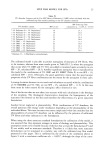
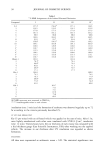
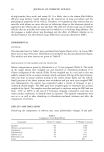
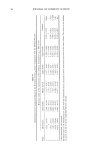
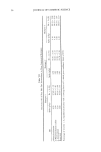
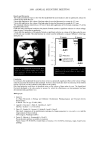
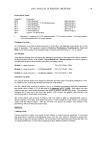
80 JOURNAL OF COSMETIC SCIENCE Challenge Test Results Test # Preservatives Blank Polysorbate Copolyol 6909 0.70% Phenonip Fail Fail Fail 6910 0.70% Phenonip + 0.3% Methyl paraben Fail Fail Fail 6911 1.30% Phenonip Fail Fail Fail 6912 • '-• 0.10% Dowicil 200 ...... Pass .... Pass ....... Pass 6913 0.30% 'Germall 115 Pass Pass Pass ........................................... 6914 0.10% Kathon CG Fail Fail Fail 6915 Control - No Preservative Fail Fail Fail Clinical In-Use Study In the first study, where the subjects were asked to artificially contaminate their hands before coming in contact with the product, only one (1) of the ten (I 0) samples exhibited detectable levels of bacteria. In this sample, a count of 165 cfu per ml was found. This level of bacteria, under normal conditions, would not be considered a risk to the consumer. In the second study where twenty (20) subjects were asked to apply an 'un-preserved' product twice daily, there were no detectable levels of bacteria found in any of the returned samples. DISCUSSION Results of the challenge test show that only preservatives classified as formaldehyde donors (Dowicil 200 and Germall 115) were able to meet the CTFA criteria of a three-log reduction. Blends of phenoxyethanol and parabens used at levels normally deemed sufficient in typical oil-in-water emulsions, were found to generate unacceptable challenge test results in this water-in-silicone model. The failure in challenge test also did not correlate with the clinical studies, which showed that the risk of consumer contamination was low, even though both formulations failed challenge test. The inability of phenoxyethanol based systems to pass challenge when placed in water-in-silicone emulsions may be due to the inability of the phenoxyethanol to migrate across the silicone barrier into water droplets that contain the innoculum. Micrographs of water droplets taken after emulsification show a silicone barrier around each water droplet. The same micrographs show that water droplets containing the challenge innoculum never come in contact with those droplets containing the preservative, allowing the bacteria to survive. CONCLUSION Even though water is the internal phase, these products cannot be considered without risk. This is especially true since the cosmetic industry does not use sterile raw materials and is not required to manufacture under sterile conditions. Based on the above data it can be concluded that preservatives classified as formaldehyde donors are the most effective in preserving water-in-silicone emulsions. Data will also show that when certain glycols are used as preservative potentiators, they also have the ability to improve preservative efficacy in these types of systems. Based on the lack of correlation between challenge test results and in use study observed in thts experiment, it is recommended that the clinical study be used as the final test procedure, to determine the potential risk of water-in- silicone emulsions. It is also recommended that the present challenge test method and criteria be modified to reflect these product types.
Purchased for the exclusive use of nofirst nolast (unknown)
From: SCC Media Library & Resource Center (library.scconline.org)