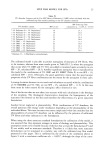
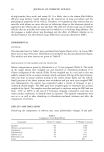
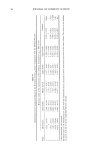
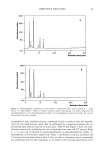
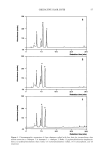
36 JOURNAL OF COSMETIC SCIENCE of triglycerides, fatty acids, and waxes (4). It is likely that in the sebum-filled follicle efficient drug delivery would depend on the interaction of drug and sebum and the physiological properties of the vehicle. Therefore, we hypothesize that vehicles that are miscible with sebum are more selective at delivering drugs to the sebaceous glands as opposed to the vehicles that are not miscible. The objective of this study was to identify vehicles that are miscible with sebum and to mobilize it to facilitate drug delivery. For this purpose, a model sebum was developed and the effect of different vehicles on its thermal behavior was determined using differential scanning calorimetry (DSC). EXPERIMENTAL MATERIALS The materials listed in Table I were purchased from Sigma Chemical Co., St. Louis, MO. They were at least 99% pure. Chloroform and methanol was also purchased from Sigma. The vehicles and their sources are given in Table II. PREPARATION OF LIPID SAMPLES AND DSC PROCEDURE Sebum composition as given by Nordstorm et alo (5) was prepared (Table I). The lipids of the model sebum were weighed out and dissolved in chloroform-methanol (3:1). Fifteen milligrams of the vehicle (Table II) was weighed out in a vial and to this was added a volume of the co-solvent mixture, which contained 100 mg of the lipid mixture. This was done to ensure uniform mixing of the model sebum lipids and the vehicle. Small portions of the above mixture were withdrawn and put onto a pre-weighed DSC pan. Subsequently, the solvent was evaporated under a stream of nitrogen to get a uniformly mixed sample. The DSC pans were weighed again to determine the accurate weight of the lipids. The samples were then analyzed in triplicate using the DSC and run from -50øC to 100øC at the rate of 5øC/minute. Singular components were also run under similar conditions, to identify them in mixtures. The separate components were run as is, as well as after dissolving in chloroform-methanol mixtures and after the evaporation of solvents. RESULTS AND DISCUSSION Dissolving the components in solvents may cause polymorphic changes. If any poly- Table I Components of the Model Sebum Component Purity (% weight) % Weight in mixture Squalene 98 13.00 Palmitic acid myristyl ester 99 27.00 Tripalmitin 99 6.67 Tripalmitolein 98 3.33 Palmitic acid 99 33.33 Palimitoleic acid 99 16.67 Total 100

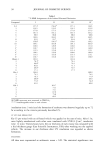
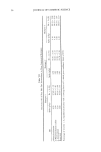
PHASE TRANSITIONS OF SEBUM 37 Table II List of Vehicles Evaluated for Their Effect on Model Sebum Chemical Source Propylene glycol (PG) Dimethyl isosorbide (DMI) Diethylene glycol monoethyl ether (Transcutol) Polyoxyethylene- 10-stearyl ether (POE- 10) Maleated soybean oil (Glycerid acid, MSO) Labrafil M 2125CS Labrafil M 1944CS Labrasol Phosphatidylcholine Glyceryl dilaurate (GDL) Isopropyl myristate (IPM) Oleic acid (OA) MP diol Sigma Chemical Co., St. Louis, MO Sigma Chemical Co., St. Louis, MO Sigma Chemical Co., St. Louis, MO Sigma Chemical Co., St. Louis, MO International Speciality Products, Wayne, NJ Gattafosse Corporation, Westwood, NJ Gattafosse Corporation, Westwood, NJ Gattafosse Corporation, Westwood, NJ Sigma Chemical Co., St. Louis, MO Sigma Chemical Co., St. Louis, MO Sigma Chemical Co., St. Louis, MO Sigma Chemical Co., St. Louis, MO L_vondell Chemical Worldwide= Inc l-ln•tnn T•'
Purchased for the exclusive use of nofirst nolast (unknown)
From: SCC Media Library & Resource Center (library.scconline.org)