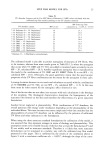
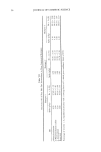
46 JOURNAL OF COSMETIC SCIENCE PROCEDURES Reversed-phase HPLC separations. A non-linear MeOH (A)/aqueous phase (B) gradient was used as described in our previous work (3). The total flow was 1 ml/min. The column was equilibrated by 25 ml mobile phase between injections. Each analysis was repeated three times. The column temperature was kept at 48øC. The data acquisition was carried out at the maximum UV absorbance wavelengths for each dye intermediate (Table I) in parallel with the UV spectra acquisition. Extraction of the matrix components from the final analyte solution. This was carried out by a three-step liquid-liquid extraction by n-heptane, previously shown to be 100% efficient for a large number of matrix components while not affecting the active compounds (3). Determination of concentration of dyes. The quantitation of each active compound was based on individual calibration lines in pure standard solutions [each hair dye being prepared in a mixture of Soerensen buffer (40%) and MeOH]. Each sample in a pure solution was injected in the HPLC system at concentrations ranging from 0 g/1 to 0.9 g/l (1,4-pd), 0 g/1 to 0.7 g/1 (3-ap), and 0 g/1 to 0.4 g/l (res and 1,3-pdS). The analysis was repeated three times in order to test the repeatability. Statistical evaluations and quality assurance. For the chromatography, the quality of the separations was evaluated according to different criteria classically considered in HPLC. The repeatability of the separation was calculated for each hair dye and was based on both the retention time and the peak area. Three other criteria were taken into account to evaluate the quality of the column: © the resolution R between two consecutive peaks, which characterizes the separating power of the column for two selected substances, © The peak asymmetry factor s, which is the measurement of the deviation of peak form from the theoretically expected Gaussian curve, and © the capacity factor k', i.e., the ratio of the net retention time (retention time - dead time) and the dead time. This capacity factor enables a comparison between columns of the separation of selected compounds. For the calibration, three regression types were tested (quadratic regression, linear re- gression, and trendline linear regression with intercept set at zero) in order to determine the best mathematical model applicable to the experiment (data not reported). The regression type finally chosen was that providing the most accurate results for the concentration of the maximum of selected dyes, i.e., the "trendline with intercept set at zero" regression. The pipettes were tested both by gravimetry and colorimetry, and the calculation of the uncertainties was performed according to international standards (7). Table I Maximum Absorbance Wavelengths for Four Hair Dye Intermediates Maximum UV absorbance wavelength (nm) Dye intermediate Maximum 1 Maximum 2 p-Phenylenediamine 235 290 m-Phenylenediamine sulfate 220 290 m-Aminophenol 235 280 Resorcinol 220 270

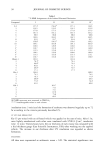
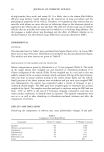
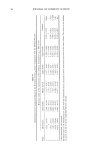
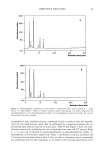
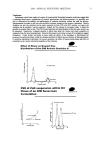
OXIDATIVE HAIR DYES 47 RESULTS AND DISCUSSION The validation is obviously a crucial step in the development of an analytical method and has therefore to be based on strong grounds. In the present work, five synthetic formu- lations are used to carry out this procedure, each of them containing the four active hair dyes, p-phenylenediamine, m-phenylenediamine sulfate, m-aminophenol, and resorcinol, chosen for the following reasons: ß They are representative of three major classes of oxidative hair dyes: aromatic amines, aminophenols, and phenols. ß They appear regularly in the composition of commercial formulations. These active compounds were mixed with several substances classically used in the matrices of cosmetic formulations: ß Erythorbic acid (antioxidant) ß EDTA (chelatant) ß Sodium metabisulfite (reducing agent) ß Butylene glycol (solvent, viscosity decreasing agent) ß Laureth-8 (surfactant, emulsifying agent) ß Laureth-3 (surfactant, emulsifying agent) ß Cetrimonium chloride (antistatic agent, cosmetic biocide, surfactant, emulsifying agent) ß Trideceth-2 carboxamide MEA (surfactant, foam booster, viscosity increasing agent, aqueous) ß Butoxyethanol (solvent, viscosity decreasing agent) ß Oleyl alcohol (emollient, solvent, viscosity increasing agent, non-aqueous) Further separations with formulations containing up to 15 oxidative hair dyes were also performed to confirm the following results (data not reported). CHROMATOGRAPHIC SEPARATION AND IDENTIFICATION OF THE PEAKS IN SYNTHETIC FORMULATIONS Each sample was submitted to chromatography after extraction. Each analysis was repeated three times in order to test the repeatability of both the extraction and the chromatographic separation. As an example, the chromatographic separations obtained for the "light brown" and the "light blonde" samples are depicted in Figure 1. Similar chromatograms were obtained for the three other formulations. Obviously, most of the matrix compounds are 100% extracted, and the chromatograms show only six peaks, with an excellent resolution, calculated according to the following formula: (tR2- try) x 2 R1, 2 = (/./21 -3- w2 ) (a) where R1, 2 is the resolution (determined for two consecutive peaks), tR1 and t•2 are the retention times of two consecutive peaks, and w• and w 2 are the peak widths at the baseline (base width) (8). All the calculated resolutions ranged between R4, 5 = 1.77 and R3, 4 = 4.76 (see peak labeling in Figure 1). The identification of the hair dye intermediates could then be easily performed using individual retention times and UV spectra. Indeed, these two characteristics having been previously recorded in a data base for 68 hair dyes and matrix
Purchased for the exclusive use of nofirst nolast (unknown)
From: SCC Media Library & Resource Center (library.scconline.org)