78 JOURNAL OF COSMETIC SCIENCE PRESERVATION OF WATER-IN-SILICONE EMULSIONS Steve Schnittger •, Jack Sabourin 2 and Doug King • •Estee Lauder R&D, Inc., Melville, NY, 2The Dow Chemical Company, Midland, MI, and SDow Corning Corporation, Midland, MI INTRODUCTION The use of silicone based raw materials is increasing in both aqueous and anhydrous formulations for their emulsification properties as well as their aesthetics. They offer a new tool in cosmetic chemistry for the cosmetic formulator. However, they offer extraordinary preservation challenges for the cosmetic microbiologist. In order to achieve acceptable challenge test results for formulations using these materials, it often requires up to 50% more preservative than similar formulations without these materials. Often, the most challenging are formulations that are intended for the Japanese market, where preservatives classified as formaldehyde donors are not permitted. OBJECTIVE The objective of this study was to determine the following points: ol. To determine if the method of preservative challenge testing is appropriate for these types of products. ß l- To understand why certain preservative systems are not effective in silicone based emulsions. To determine if the failure in challenge testing presents a real risk to the consumer and to the company supplying the product. To determine if the pass/fail criteria for silicone based emulsions should be modified to reflect the risk factor. MATERIALS AND METHODS Test Formulation The formulation tested was a water-in-silicone sunscreen containing 51.00% water, 17.30% cyclomethicone, and 7.50% octyl methoxycinnamate. Listed below are the ingredients for the formula: Deionized Water 51.00% Cyclomethicone 17.30% Octyl Methoxycinnamate 7.50% Octyldodecyl Neopentanoate 3.00% Titanium Dioxide 3.00% Buty!ene Glycol 3.00% Dimethicone 2.50% Zinc Oxide 2.00% PVP/Hexadecene Copolymer 1.50% Quatemium-18 Bentonite 1.40% Dimethicone Copolyol 1.40% Nylon- 12 1.00% PEG-150 1.00% Polyglyceryl-3 Diiosostearate 0.62% Stearic Acid 0.40% Sodium Chloride 0.38% Aluminum Hydroxide 0.26% Propylene Carbonate 0.20% Polyglyceryl-6 Polyricinoleate 0.14% Polysilicone- 11 0.07% Isopropyl Titanium Tri•sostearate 0.07% BHT 0.01% Preservative + water q.s.

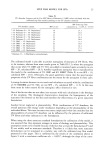
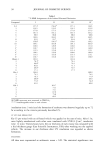
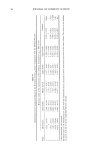
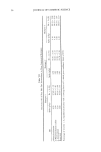
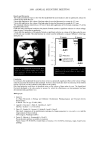
2001 ANNUAL SCIENTIFIC MEETING 79 Preservatives Tested Formula # 6909 6910 6911 6912 6913 6914 6915 Preservative 0.70% Phenonip* 0.70% Phenonip* + 0.3% Methyl paraben 1.30% Phenonip* 0.10% Dowicil 200 0.30% Germall 115 0.10% Kathon CG Control - No Preservative ( Nipa Biocides ) ( Nipa Biocides ) ( Nipa Biocides ) ( Dow Chemical ) ( ISP Corp. ) ( Rohm & Haas ) Phenonip is comprised of 72.0% phenoxyethanol, 17.0% methyl paraben, 7.0% butyl paraben, 2.0% ethyl paraben, and 2.0% propyl paraben Challenge Test Study Test formulations were made with the preservatives listed above and challenge tested against five mixed pools of organisms. The organisms consisted of Enterits, Pseudomonas, Staphylococcus, Yeast and Mold. Each of the formulas were inoculated with 106 cfu/ml. and tested at Day 2, 7, 14, 21, and 28. Test Methods Three different diluents were used during the challenge test procedure to determine if they had an influence on the preservative efficacy of the formula. Polysorbate 80 and a silicone copolyol were used as agents to split the emulsion and to ensure that the water phase was being exposed. Method 1:1 gram of product - 9mls TAT Broth -Plate Method 2:1 gram of product - 1 ml Polysorbate 80 - 8mls TAT Broth- Plate Method 3:1 gram of product - 1 ml silicone copolyol - 8mls TAT Broth - Plate Clinical In-Use Study Two clinical "in-use" studies were initiated to determine how these types of products performed in a real- life situation and to evaluate the potential microbial risk of the product. The first clinical study involved 10 subjects, who in a controlled environment, artificially contaminated their hands with a cocktail of 103 cfu per gram of S. epidermis {ATCC 14990}. Each subject was then asked to scoop out a small sample of product, and spread the product onto his or her hands. This procedure continued for 10 days over a two week time period. After 10 days, the samples were returned to the microbiology lab for aerobic plate count testing. The second clinical study involved 20 subjects, who were asked to apply an 'un-preserved', water-in- silicone emulsion, twice daily. Each subject was given a 4-ounce sample in a wide orifice jar to maximize contact with the subject's hands. After the two-week time period, the samples were returned to the microbiology lab for aerobic plate count testing. RESULTS Challenge Study Various preservative systems were tested for their efficacy in water-in-silicone emulsions. It was found that preservatives classified as formaldehyde donors were the most effective, followed by preservative blends that use glycol to increase solubility. The second part of this experiment also showed that there was no significant difference in results when comparing the three different methods of dilution.
Purchased for the exclusive use of nofirst nolast (unknown)
From: SCC Media Library & Resource Center (library.scconline.org)