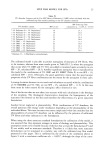
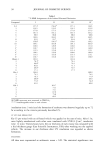
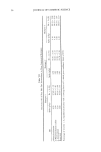
30 JOURNAL OF COSMETIC SCIENCE Table I t•C-NMR Assignments of the Isolated Flavonoid Derivatives Compound I II III IV C-2 157.3 • 156.4 a 157.3 3 134.5 133.2 134.2 4 177.8 177.5 177.8 5 161.4 161.2 161.4 6 98.9 98.8 98.8 7 164.6 164.2 164.5 8 93.9 93.7 93.8 9 156.6 • 156.3 a 156.6 10 104.1 103.8 104.1 1' 120.6 120.9 120.6 2' 130.7 131.0 130.7 3' 115.5 115.0 115.4 4' 160.1 159.9 160.0 5' 115.5 115.0 115.4 6' 130.7 131.0 130.7 Rham-1 102.0 101.8 2 70.3 b 70.1 3 69.8 b 70.3 4 82.0 71.1 5 69.0 b 70.7 6 17.3 17.5 Glu-1 104.8 2 74.5 3 76.7 c 4 69.8 • 5 77.0 c 6 61.0 Gal-1 101.7 2 71.2 3 73.1 4 67.9 5 75.8 6 60.2 156.5 133.2 177.5 161.2 98.8 164.5 93.7 156.2 103.9 121.0 130.9 115.1 160.0 115.1 130.9 100.9 74.2 77.5 e 69.9 76.4 e 60.8 All NMR spectrums were measured in DMSO-d 6. a,b,c,d,e Interchangeable values in each column. irradiation time: 3 min) and the formation of erythema was observed regularly up to 72 hr according to the criteria previously described (5). IN VIVO EAR EDEMA TEST Ku-35 pre-mixed with an oil-based vehicle was applied to the ears of mice. After 1 hr, mice lightly anesthetized with ether were irradiated with UVB (4 J/cm 2, irradiation time: 12 min). Twenty hours later, the ear thickness of each mouse was measured with a dial thickness gauge (Lux Scientific Instrument, USA) after washing out the applied vehicle. The increase in ear thickness after UV irradiation was regarded as edema formation. STATISTICS All data were represented as arithmetic mean + S.D. The statistical significance was

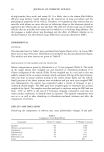
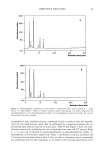
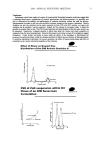
SKIN DAMAGE PROTECTION BY PRUNUS PERSICA 31 evaluated with one-way ANOVA. P values less than 0.05 were regarded as significantly different. RESULTS AND DISCUSSION In order to develop new plant materials providing protection from UV-induced skin damage for safer and long-term use, P. persica extract (Ku-35) was evaluated in in vivo animal models that included UVB-induced erythema and edema formation. From the flowers of P. persica, several constituents such as afzelin, quercitrin, multiflorin A and B, multinoside A, and chromogenic acid were previously isolated (6). In the present investigation, four flavonol glycosides (compounds I-IV) were successfully iso- lated from the extract. Compound I was structurally confirmed based on •H-, •3C-, and COZY NMR analysis as kaempferol 3-O-[[3-D-glucopyranosyl(1--4)-ot-L- rhamnopyranoside] or multiflorin B. The •3C-NMR spectrum was well matched with the results of that previously described (7,8). Multiflorin B was initially isolated from Rosa multiflora (9). Since a glucopyranosyl(1--4)rhamnopyranosidic bond of flavonoid glycoside is very rate in plants, compound I may be used as a standard compound for the P. persica extract. Compounds II and III were structurally identified as kaempferol-3- O-[3-D-galactopyranoside (trifolin) and kaempferol-3-O-ot-L-rhamnopyranoside (afze- lin), respectively, by comparison of the spectral results of the published data (9,10). Compound IV was directly compared with an authentic standard isolated previously from the flowers of Carthamus tinctorius (11) and identified as kaempferol-3-O-[•-D- glucopyranoside (astragalin). Figure 1 demonstrates the elution profiles of the flavonoid Compound I Compound II Compound III Compound IV • 5ompou_•nd I + II + Ili + IV •_• Ku-35 Iti R•tmfion Time (rain) 20 40 6O Figure 1. HPLC elution profiles of the isolated flavonoids and P. persica extract.
Purchased for the exclusive use of nofirst nolast (unknown)
From: SCC Media Library & Resource Center (library.scconline.org)