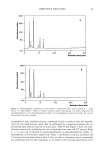
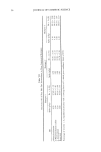
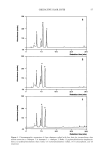
44 JOURNAL OF COSMETIC SCIENCE In our previous work, an analytical procedure was developed that enables the separation and identification of 52 different dye-forming products, according to their retention times and UV spectra, in standard pure solutions (2,3). These oxidative hair dyes, listed in the C.T.F.A. International Cosmetic Ingredient Dictionary and Handbook (4), were selected according to COLIPA • data (5) and to how representative they are of different groups of dye-forming compounds in the formulations. Then, the investigation of possible effects of the various matrix components on the separation of the active substances was con- cluded in the setting up of an extraction procedure of these matrix components from the dye-forming compounds (3). Before applying such methodology to commercial formulations from which qualitative and quantitative data are expected, a prior validation of the whole procedure has to be performed to assure confidence in the final results. Therefore, in the present contribu- tion, a validation process and its results are presented. This was carried out using (i) several representative synthetic formulations prepared with cosmetic grade raw materials and (ii) commercial shampoos available on the local market, spiked with four commonly used hair dye intermediates. Qualitative and quantitative determination of each dye was successfully achieved in the two types of formulations, and figures of merit of the method have been established. EXPERIMENTAL INSTRUMENTATION HPLC was performed using a two-piston HPLC pump with a low-pressure ternary gradient system module (System 325 from Kontron Instruments S.P.A., Milan, Italy), an Autosampler 360 with a loop of 20 1-fi (Kontron Instruments S.P.A.), a Diode Array Detector 440 (Kontron Instruments S.P.A.), and a vacuum degassing system (Degasys DG 1300, Uniflows, Japan). The column temperature was kept constant by means of the thermostat of an electrochemical detector (Decade, Antec Leyden, Leiden, The Nether- lands). Data processing was done with the Data System 450-MT2/DAD Series (Kontron Instruments S.P.A.). The column was a Merck Lichrospher RP 60 Select B (C8), 250 x 4 mm, 5-1•m particle size. CHEMICALS L-ascorbic acid sodium salt (NaAsc) was obtained from Fluka, and p-phenylenediamine (1,4-pd), m-phenylenediamine sulfate (1,3-pds), m-aminophenol (3-ap), and resorcinol (res) were kindly provided by "Les Colorants Wackkerr" (Saint-Ouen l'Aum6ne, France). Sodium tetraborate decahydrate (p.a.), acetic acid 95% (suprapure), ammonia 25% (suprapure), hydrochloric acid (0.1 M) and n-heptane (p.a.) were obtained from Merck. Methanol (HPLC quality) was obtained from Fluka. Oxocap ©, sodium acetate, erythor- bic acid (AFB), sodium metabisulfite (MBS), and tetraethylenediamineacetate (ED) were kindly provided by "Les Colorants Wackherr" for the preparation of the synthetic formulations. Triethanolamine (TEA) was obtained from Mobi-Lab bvba (Zutendaal, • Comit• de Liaison Europ6en de l'Industrie de la Parfurnerie, de Produits Cosm6tiques et de Toilette.

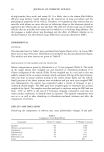
OXIDATIVE HAIR DYES 45 Belgium). Pure water (18.2 Mll/cm quality) used for the preparation of solutions was obtained from a MilliQ Plus 185 system (Millipore, Molsheim, France). PREPARATION OF REAGENTS Solvents and chromatographic mobile phase. The solvents were mixtures of methanol (MeOH) and Soerensen buffer (40%). The Soerensen buffer (pH 8.1) was prepared as follows: 88 ml hydrochloric acid (0.1 N) and 2 g/1 L-ascorbic acid sodium salt (NaAcs) as an anti-oxidant agent were added to 112 ml sodium tetraborate solution. Mobile phase (aqueous phase B): a 0.05 M acetic acid solution was adjusted to a pH of 5.9 with a 10% ammonia solution and filtered through a 0.45-1am filter. When not in use, the eluent was stored at a temperature of 4øC to prevent microbiological growth. Preparation oft he synthetic formulations. Five synthetic formulations, each containing four hair dye intermediates (1,4-pal, 1,3-palS, 3-ap, and res) at various concentrations, were prepared according to "Les Colorants Wackherr" data (6) to reproduce the following formulations: dark brown, middle brown, light brown, dark blonde, and light blonde. They were prepared using the following substances: 1. Dark brown ß Matrix: Oxocap © (600.00 g/l), sodium acetate (10.00 g/l), TEA (30.00 g/l), AEB (3.00 g/l), MBS (4.65 g/l), ED (9.60 g/l) ß Hair dyes: 1,4-pd (12.50 g/l), 3-ap (5.00 g/l), res (36.50 g/l), 1,3-pdS (1.62 g/l) 2. Middle brown ß Matrix: Oxocap © (600.00 g/l), sodium acetate (10.00 g/l), TEA (30.00 g/l), AEB (3.00 g/l), MBS (4.65 g/l), ED (9.60 g/l) ß Hair dyes: 1,4-pd (7.90 g/l), 3-ap (2.80 g/l), res (21.00 g/l), 1,3 pdS (0.86 g/l) 3. Light brown ß Matrix: Oxocap © (600.00 g/l), sodium acetate (10.00 g/l), TEA (30.00 g/l), AEB (1.80 g/l), MBS (4.65 g/l), ED (9.60 g/l) ß Hair dyes: 1,4-pd (5.00 g/l), 3-ap (1.58 g/l), res (12.10 g/l), 1,3-pdS (0.48 g/l) 4. Dark blonde ß Matrix: Oxocap © (600.00 g/l), sodium acetate (10.00 g/l), TEA (30.00 g/l), AEB (1.80 g/l), MBS (4.65 g/l), ED (9.60 g/l) ß Hair dyes: 1,4-pd (3.16 g/l), 3-ap (0.89 g/l), res (6.95 g/l), 1,3-pdS (0.27 g/l) 5. Light blonde ß Matrix: Oxocap © (600.00 g/l), sodium acetate (10.00 g/l), TEA (30.00 g/l), AEB (1.80 g/l), MBS (4.65 g/l), ED (9.60 g/l) ß Hair dyes: 1,4-pd (2.00 g/l), 3-ap (0.50 g/l), res (4.00 g/l), 1,3-pdS (0.14 g/l) Each synthetic formulation was extracted and injected into the chromatographic system, after appropriate dilution in a mixture of MeOH and Soerensen buffer, pH 8.1 (40%). Preparation of the spiked shampoos. Three commercial shampoos available on the local market were diluted ten times w/w in a mixture of MeOH and mobile phase B, pH 5.9 (40%). These diluted matrix solutions were then spiked with 4 g/kg of each of the four hair dye intermediates (1,4-pd, 1,3-pdS, 3-ap, and res). The spiked shampoos obtained were also diluted ten times each w/w in a mixture of MeOH and mobile phase B, pH 5.9 (40%), before extraction and injection into the chromatographic system.
Purchased for the exclusive use of nofirst nolast (unknown)
From: SCC Media Library & Resource Center (library.scconline.org)