FUCUS EXTRACT AND SKIN THICKNESS 7

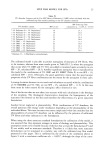
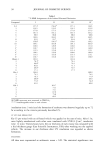
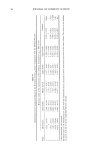
8 JOURNAL OF COSMETIC SCIENCE by measurement both in the morning and in the evening, and slight but significant diurnal changes were observed. Therefore, all measurements were performed twice daily, i.e., in the morning (8:30-10:00) and in the evening (15:30-17:00). The relationships among aging, skin thickness and mechanical properties of the skin have been investigated (9,11,13). In the human cheek, skin thickness increases gradually with aging (9). Topical application of the Fzzczzs extract caused a significant decrease in the thickness of human cheek skin over the range of the observed diurnal period, indicating that the Fucus extract is a potent anti-aging ingredient. Focusing on changes in the mechanical properties of skin, topical application of the Fucus extract elicited a significant increase in the Uf* value and a tendency to increase the Ue* value. The Ue* and Uf* values, which are indices of skin distensibility, were significantly decreased in proportion to aging (9). These results indicate that the Fucus extract elicited an im- provement in these mechanical properties of the skin against aging. Concerning the effective dose of extract, gels including 1%, 2%, 3%, and 5% of extract showed similar results on skin thickness and elastic properties. These results indicate that 1% of Fzzczzs extract is sufficient to elicit changes in skin thickness and elastic properties. We recently reported that the Fucus extract promotes the contraction of fibroblast- populated collagen gels and changes the mechanical properties of collagen gels (2). In general, the collagen culture method is used as a dermal equivalent model, and therefore these in vitro effects of the Fucus extract on gel contraction are consistent with the in vivo results elicited in human skin following topical application of the Fucm extract. The promotion of collagen gel contraction is caused by an increased expression of cell surface integrins (2), which mediate interactions between fibroblasts and extracellular matrix proteins (including collagen fibers) in the dermis (14-17). These results therefore suggest the possibility that a F•cm vesic•los•s extract might alter the thickness and the mechanical properties of the skin by enhancing integrin expression of skin fibroblasts. CONCLUSION Topical application of a Fucus vesi•losus extract on human facial skin elicited a significant decrease in skin thickness and an improvement in its mechanical properties, suggesting that the Fucus extract possesses anti-aging activities. We propose that the extract of Fuczzs vesiculosm should be useful for a wide variety of cosmetics due to its effects on skin tightening, anti-sagging, and wrinkle smoothing. REFERENCES (1) J. Durig, T. Bruhn, K.H. Zurborn, K. Gutensohn, H.D. Bruhn, and L. Beress, Anticoagulant fucoidan fractions from Fucus vesicu/osus induce platelet activation in vitro, Thromb. Res., 85,479-491 (1997). (2) T. Fujimura, K. Tsukahara, S. Moriwaki, T. Kitahara, and Y. Takema, Effects of natural product extracts on contraction and mechanical properties of fibroblast populated collagen gel, Bio/. Pharm. Bu//., 23, 291-297 (2000). (3) E. Bell, B. Ivarsson, and C. Merrill, Collagen gel contraction, Proc. Nat/. Acad. Sci. USA, 76, 1274- 1278 (1979).
Purchased for the exclusive use of nofirst nolast (unknown)
From: SCC Media Library & Resource Center (library.scconline.org)