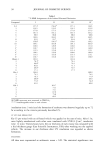
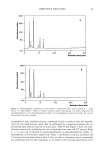
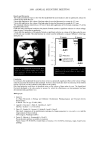
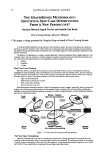
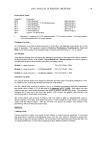
40 JOURNAL OF COSMETIC SCIENCE 56 54 52 •-, 50 48 46 42 Figure 4. Effect of different vehicles on Mp-4 peak transition. Error bars indicate the standard error of the mean of three replicates. *Statistically significant at the 95% confidence level, two-tailed t-test. 42 41 40 --- 39 • 38 37 36 30 y = 0.3856x + 21.151 R 2 =0.3811 * J ( i r 35 40 45 50 Mp-4 (øC) Figure 5. Correlation between Mp-3 and Mp-4. 55

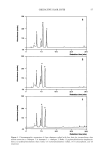
PHASE TRANSITIONS OF SEBUM 41 (11) are known not to be skin permeation enhancers. Similarly, glycerin is a humectant and does not act as a permeation enhancer. In our DSC studies, too, glycerin did not show much effect on Mp-3 and Mp-4, which means it is not miscible with the model sebum. It is interesting to note that the permeation enhancers also interact with sebum and are miscible with some of its components as shown by our experiments. Isopropyl myristate is known to be a permeation enhancer with increased follicular delivery of erythromycin (12). Its presence in the model sebum led to a considerable decrease in the Mp-3 peak. It is possible that the increase in permeability is due to the good miscibility with sebum and hence higher follicular delivery. In Figure 3 it is also observed that PEG 400 and •/-cyclodextrin increased the Mp-3 peak significantly. When PEG 400 was run as is, and after dissolving in the solvent, the transitions were not the same, which means some specific interaction occurred between the solvent and PEG 400. We are therefore hesitant to extend these results further. For •/-cyclodextrin, we can suppose that a complex has formed between the component and the cyclodextrin, which melts at a higher temperature than the control. Since this also is a specific interaction, we did not investigate it further. Many of the other vehicles tested here had not been tested earlier for follicular delivery. This method may help us to identify other potential vehicles for follicular drug delivery. The use of vehicles that are compatible with sebum to selectively transport a drug via the transfollicular pathway is certainly not a new concept (12). The basis for under- standing a vehicle's effect on the delivery into the sebum-rich areas, such as the sebaceous follicle, can be explained by conventional solubility parameters. The Hildebrand coef- ficients for model sebum compositions demonstrate that sebum is overall a non-polar, oily material, with a Hildebrand coefficient of approximately 7.5-8.0 call/2/cm3/2 (13). Some authors believe that many topical polar vehicles such as water and ethanol would be too polar to be readily soluble in sebum (13). When water was tested using DSC for miscibility with sebum, it did not show much effect, as shown in Figure 3 and 4. Moreover, other studies have identified IPM (14), GDL, and POE-10 (15) as being effective in delivering drugs into the pilosebaceous duct due to compatibility with sebum. In our DSC studies, these vehicles have also shown a significant effect on the Mp-3 peak, indicating interaction with the wax ester fraction. To deliver relatively polar drugs, if the vehicle is not specifically designed to be miscible with sebum, there would be little chance to effectively deliver the drug to the deeper portions of the hair follicle. Hydrophilic or marginally hydrophobic vehicles would not be expected to be highly compatible with the sebum. For hydrophobic vehicles, the transport of the drug can be predominantly follicular and is brought about by co-transport of the drug dissolved in the oil phase and into and across the pilosebaceous units (12). The efficiency of such a follicular enhancement in drug transport would depend on the solubility of the drug in the vehicle and the compatibility of the vehicle with the sebum-rich lipid environment within the follicles. CONCLUSIONS From the DSC experiments we can show that different vehicles interact with different components of sebum. Some of these vehicles have been known to behave as permeation enhancers and may be used for targeted follicular delivery. Hence DSC may be used as
Purchased for the exclusive use of nofirst nolast (unknown)
From: SCC Media Library & Resource Center (library.scconline.org)