j. Cosmet. Sci., 53, 43-58 (January/February 2002) Validation of an analytical procedure for the determination of oxidative hair dyes in cosmetic formulations URSULA VINCENT, GUY BORDIN, and ADELA R. RODRIGUEZ, European Commission, Joint Research Centre, Institute for Red•rence Materials and Measurements, Retieseweg, B-2240 Geel, Belgium. Accepted for publication November 15, 2001. Synopsis A high range and variety of cosmetic formulations that contain oxidative hair dyes and matrix-forming compounds have been industrially developed over recent years and are now available on the international market. Member states of the European Union are responsible for conducting analyses of cosmetic products as deemed necessary by law and European regulation enforcement. Therefore, inspection authorities as well as the cosmetics trade and industry need validated analytical methods for the identification, characterization, and/or quality control of specific active ingredients or formulations with the aim of implementing the European Union Cosmetic Directives (76/768/ECC, 95/17/EC). In this frame, we validated a candidate reference method that enables the identification and quantification of hair dye-forming compounds. This method consists of a separation by RP-HPLC coupled with a DAD after a liquid-liquid extraction procedure for separating matrix components from the dye-forming compounds. The validation of the method includes common criteria such as the repeatability of the analysis and the establishment of figures of merit, as well as statistical evaluations and quality assurance in order to follow the recommendations of the Eurachem guide for analytical measurements. INTRODUCTION A cosmetic formulation for permanent hair dyeing can be described as a mixture of two kinds of products: oxidative hair dyes, the so-called active compounds, and matrix compounds in which the dyes are embedded. Oxidative hair dyes are aromatic organic compounds, e.g., amines, phenols, and derivatives, while a broad range of products can be used as matrix compounds. These products play different roles in hair formulations. For example, they act as surfactants, pH adjusters, consistency providers, antioxidants, emulsifiers, film formers, preservatives, or perfumes. The biggest analytical challenge is thus to identify and quantify the active products into a complex matrix mixture in order to propose a reference method for the analysis of this type of cosmetic product with the aim of implementing the European Union Cosmetic Directives 76/768/ECC and 95/ 17/EC (1). 43

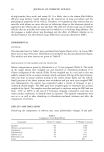
44 JOURNAL OF COSMETIC SCIENCE In our previous work, an analytical procedure was developed that enables the separation and identification of 52 different dye-forming products, according to their retention times and UV spectra, in standard pure solutions (2,3). These oxidative hair dyes, listed in the C.T.F.A. International Cosmetic Ingredient Dictionary and Handbook (4), were selected according to COLIPA • data (5) and to how representative they are of different groups of dye-forming compounds in the formulations. Then, the investigation of possible effects of the various matrix components on the separation of the active substances was con- cluded in the setting up of an extraction procedure of these matrix components from the dye-forming compounds (3). Before applying such methodology to commercial formulations from which qualitative and quantitative data are expected, a prior validation of the whole procedure has to be performed to assure confidence in the final results. Therefore, in the present contribu- tion, a validation process and its results are presented. This was carried out using (i) several representative synthetic formulations prepared with cosmetic grade raw materials and (ii) commercial shampoos available on the local market, spiked with four commonly used hair dye intermediates. Qualitative and quantitative determination of each dye was successfully achieved in the two types of formulations, and figures of merit of the method have been established. EXPERIMENTAL INSTRUMENTATION HPLC was performed using a two-piston HPLC pump with a low-pressure ternary gradient system module (System 325 from Kontron Instruments S.P.A., Milan, Italy), an Autosampler 360 with a loop of 20 1-fi (Kontron Instruments S.P.A.), a Diode Array Detector 440 (Kontron Instruments S.P.A.), and a vacuum degassing system (Degasys DG 1300, Uniflows, Japan). The column temperature was kept constant by means of the thermostat of an electrochemical detector (Decade, Antec Leyden, Leiden, The Nether- lands). Data processing was done with the Data System 450-MT2/DAD Series (Kontron Instruments S.P.A.). The column was a Merck Lichrospher RP 60 Select B (C8), 250 x 4 mm, 5-1•m particle size. CHEMICALS L-ascorbic acid sodium salt (NaAsc) was obtained from Fluka, and p-phenylenediamine (1,4-pd), m-phenylenediamine sulfate (1,3-pds), m-aminophenol (3-ap), and resorcinol (res) were kindly provided by "Les Colorants Wackkerr" (Saint-Ouen l'Aum6ne, France). Sodium tetraborate decahydrate (p.a.), acetic acid 95% (suprapure), ammonia 25% (suprapure), hydrochloric acid (0.1 M) and n-heptane (p.a.) were obtained from Merck. Methanol (HPLC quality) was obtained from Fluka. Oxocap ©, sodium acetate, erythor- bic acid (AFB), sodium metabisulfite (MBS), and tetraethylenediamineacetate (ED) were kindly provided by "Les Colorants Wackherr" for the preparation of the synthetic formulations. Triethanolamine (TEA) was obtained from Mobi-Lab bvba (Zutendaal, • Comit• de Liaison Europ6en de l'Industrie de la Parfurnerie, de Produits Cosm6tiques et de Toilette.
Purchased for the exclusive use of nofirst nolast (unknown)
From: SCC Media Library & Resource Center (library.scconline.org)