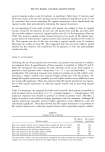
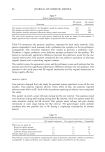
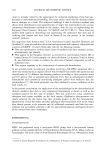
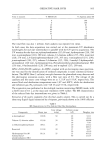
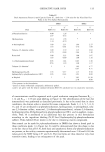
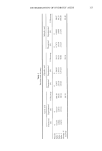
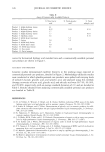
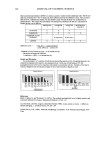
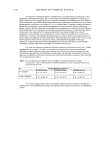
86 JOURNAL OF COSMETIC SCIENCE Table V Patient Agreement Scores SE vaginal Rp vaginal Statement moisturizer moisturizer This product provided relief for the discomfort caused by vaginal dryness 287 277 This product provided relief for vaginal dryness 284 286 This product provided adequate lubrication during sexual intercourse 293 290 The sums of the agreement scores for each patient completing the study are shown for each product. A higher agreement score indicates a higher degree of agreement with the statement. Table VI summarizes the patients' preference responses for both study intervals. Each patient responded to each question with a preference for a product or for no preference (comparable). The numerical responses were totaled to generate a preference score. Therefore, a higher preference score indicates stronger preference for the product. We found no statistically significant differences between the preference scores for the two vaginal moisturizers. Our patients considered the two products equivalent in relieving vaginal dryness and in providing vaginal comfort. The comfort scores, the agreement scores, and the preference scores each indicate that the patients perceived no significant performance differences between the two products. The patients in this study perceived SE vaginal moisturizer and Rp vaginal moisturizer as being equally effective. PRODUCT SAFETY Four patients dropped from the study for personal reasons unrelated to use of the test product. Four patients reported adverse events while on Rp two patients reported adverse events while on SE. Each of the six patients reporting an adverse event completed the study. One patient incurred a yeast infection during her Rp test interval. Two patients noted very transient itching and burning during their Rp interval, while one patient noted the same sensation during her SE interval. One patient noted itching and pain during intercourse at some stage during her Rp interval. The gynecologist noted uniform erythema that was possibly due to SE during a colposcopy examination of another patient. Table VI Patient Preference Scores SE vaginal moisturizer Rp vaginal moisturizer Comparable Which do you prefer for Relief of vaginal dryness? Relief of vaginal discomfort? Lubricant during sexual intercourse? Overall, which do you prefer? 12 13 22 13 13 21 12 14 21 19 19 9 The preference scores for each patient completing the study are shown for each product and for no preference (comparable). A higher preference score indicates a higher degree of preference for the product.

PECTIN-BASED VAGINAL MOISTURIZER 87 CONCLUSION The results of this double-blind crossover study indicate significantly less vaginal residue with SE vaginal moisturizer than with Rp vaginal moisturizer. No significant differences in efficacy between the two products were found. We conclude that the bioadhesive polycarbophil, as formulated in Rp vaginal moisturizer, provides no additional benefit over pectin, as formulated in SE vaginal moisturizer, in the relief of vaginal dryness. ACKNOWLEDGMENTS C. B. Fleet Company, Inc., sponsored this study. We would like to acknowledge the assistance of the staff at Consumer Product Testing Company, 70 New Dutch Lane, Fairfield, NJ 07004. We appreciate the statistical assistance of Charles Cox ofC. B. Fleet Company, Inc. REFERENCES (1) A. A. Haspel, M. Luisi, and P.M. Kicovic, Endocrinological and clinical investigations in postmeno- pausal women following administration of a vaginal cream containing oestriol, Mat•ritas, 3, 321-327 (1981). (2) M. Bygdeman, and M. L. Swahn, Replens versus dienoestrol cream in the symptomatic treatment of vaginal atrophy in postmenopausal women, Mataritas, 23, 259-263 (1996). (3) L. E. Nachtigall, Comparative study: Replens versus local estrogen in menopausal women, Fert. Ster., 61, 178-180 (1994). (4) S.J. Kelly, Coping with vaginal dryness, Clin. Pratt. SexaMity, 8, 18-21 (1992). (5) J. Balzarini, L. Naesens, E. Verbeken, et al., Preclinical studies on thiocarboxanilide UC-781 as a virucidal agent, AIDS, 12, 1129-1138 (1998). (6) G. A. Bachmann, M. Notelovitz, S. J. Gonzalez, et al., Vaginal dryness in menopausal women: Clinical characteristics and nonhormonal treatment, Clin. Pract. SexaMity, 7, 1-8 (1991).
Purchased for the exclusive use of nofirst nolast (unknown)
From: SCC Media Library & Resource Center (library.scconline.org)