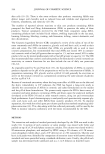
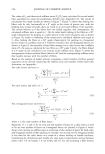
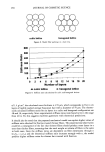
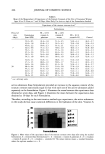
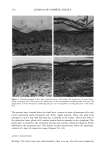
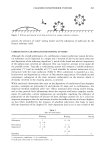
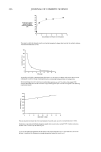
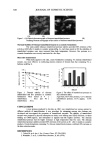
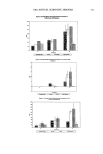
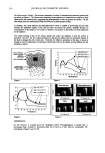
296 JOURNAL OF COSMETIC SCIENCE Protection against radical formation under UVA radiation [%] 80 70 60 50 40 30 20 10 0 0 2 4 6 8 10 12 Concentration of Vitamin C in Emulsion The extent to which the released ascorblc ac•d can be transported to deeper skin layers by the multiple emulsion was tested on human skin as well. 1oo 6o 4o Strip layer AS ascorblc ac•d •s able to penetrate deeper skin layers, we can expect It to &splay well known effects such as reducing the occurrence of age-related ptgment spots or promoting heahng processes m damaged skin. Several screening tests were camed out to explore these questions as well. The effect of the simple POW emulsion described above on the occun'ence of age-related p•gment spots xvas also •nvesugated m the follo•vmg experimental model. ,•, lOO.O c• • 80.0 ._ c• 60.0 -- .=_ • 40.0 5 10 15 20 25 30 35 40 Application [ days ] Th•s test also showed clearly that even small amounts ofascorblc acid can exert an unexpected positive cfI•:ct Furthermore, hght-mduced erythema disappears rapidly when treated with a multiple POW emulsion containing ascorblc ac•d, as •s shown by the lbilowmg test. Up to now this effect has appeared to be due solely to the action ofascorb•c ac•d. To show that th•s is m fact not the case, I would also hke to present an example using retmol •nstead ol'ascorb•c ac•d.

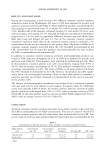
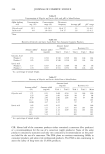
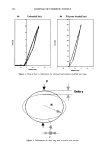
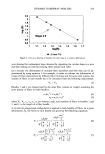
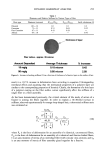
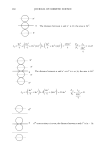
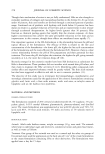
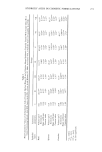
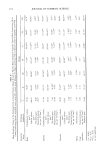
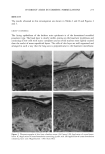
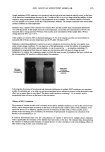
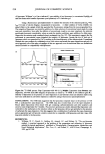
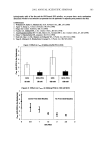
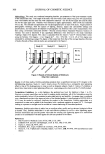
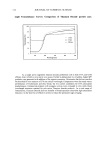
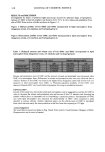
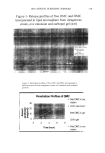
2002 ANNUAL SCIENTIFIC SEMINAR 297 NOVEL METHOD OF FORMULATING SKIN CARE PRODUCTS WITH LIPOSOMES Vitthal S. Kulkarni, Ph.D., Michael Ross, Barbara Brockway, Ph.D., James Wilmott and James Hayward, Ph.D. The Collaborative Group, Ltd., 3 Technology Drive, East $etauket, NY 11733 vitthal. kulkarni @ collabo. com INTRODUCTION: Liposomes are composed of !ipids that are self-assembled into a bilayer membrane forming closed ball like microstructures. Liposomes are kno•vn to enhance skin penetration and also are reported to deliver the actives to hair follicles. In the presence ofsurfactants, ho•vever, the liposomes loose their bilayer integrity making the encapsulated active to leak out or under excessive presence ofsurfactants, the bilayer structure may completely disintegrate to form micelies. Thus, stabilizing liposomes in a finished skin care product is challenging because the surfactants that are commonly used in producing a cream or lotion destabilize the liposomes. Therefore, to take advantages of !iposomes and make them •vork in real skin care products it is necessary to have a carrier system that is compatible •vith the liposomes. Lecithin has long been used as a dispersing agent for pigments, particularly in liquid makeup, however, the phospholipid content of commercial lecithin varies •videly and it also contains free-fatty acids, oils, glycolipids, and sugars. Moreover, the commercial varieties of lecithin are often fortified •vith surfactants including Polysorbate 2 I, PEG-6 Laurate and Sulfated Caster Oil to render lecithin water soluble. As mentioned above, the presence of surfactants is harmful to the stability of liposomes therefore •ve developed novel systems consisting of oil-in-•vater nano-dispersions using pure phospholipids and tested its compatibility with liposomes. MATERIALS AND METHODS: By applying very high energy, through high-pressure high-shear (HPHS) processing, to the mixture of oil, water and pure phospholipids we have produced stable oil-in- water nano-dispersions (particle size typically 500nm) of a variety of silicone or natural oils. The hydrophobic tails of phospholipids implant themselves into the oil droplet where as the hydrophilic headgroups remain at the oil/water interface. We studied the integrity of !iposomes in the presence of nano-dispersion and in cosmetic gels by 3Sp NMR (Varian UNITY 300 300 MHz) and fluorescence spectroscopy (Hitachi, F-2000). RESULTS AND DISCUSSION: The surface tension (measured using a Langmuir Film Balance, Kibron, Inc.) of water was almost unchanged (reduced by about 2 nuN/m) when a typical nano-dispersion (AM 100), produced as mentioned above, svas mixed with svater (at I%) suggesting that the nano-dispersions are practically "surfactant-free" (see Fig. I). Figure 1: Comparison of surface tension values of 1% AM I00 and 1% dispersion of a cream prepared using conventional emulsifiers ("conventional cream"). The data indicates that the surface tension of 1% AM i00 (70 mN/m) is almost same as that of pure water (72 raN/m) where as that of 1% conventional cream is significantly lower (28 I% AM 100 I%Co•vcmional disp•nion Crtam (Bl•k) A typical surfactant-free nano-dispersion (AM 400) was fully dispersed in •vater then mixed at 1:1 ratio with phospholipid liposomes (10mM !ipid) and the integrity of the !iposomes was monitored by 3•p NMR spectroscopy. The NMR data indicated that 100% of the lipid remained in the bilayer phase (see Fig. 2A) suggesting that the nano-dispersion did not &stabilize the liposomes. We also followed the stability of phospholipid liposomes in two types of gels (25% liposomes in gel) by 3•P NMR. In the gel containing carbomer and long alkyl chain acrylate crosspolymer (pemulen TR 2) the NMR data indicated that 100% of the !ipid remained in the bilayer phase after 8 months of storage at room temperature. Although there was increase in the lyso-lipid content over time, the NMR showed that all of the !ipid molecules remained in the bilayer phase suggesting that the !iposomes remained intact after 8 months of storage at room temperature. However, in a gel without carbomer or pemulen, the !iposomes degraded in 1 week at room temperature. Only 62.7% of the !ipid remained in the bilayer phase while remaining formed miceliar phase consisting of lyso-lipid, which is suspected to be formed as a result of !ipid hydrolysis (see Fig. 2B). Our data suggest that a gel that forms a good matrix structure is essential for long term stability
Purchased for the exclusive use of nofirst nolast (unknown)
From: SCC Media Library & Resource Center (library.scconline.org)