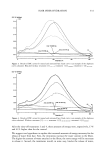
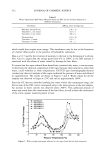
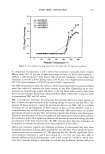
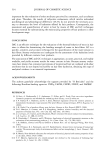
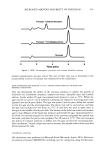
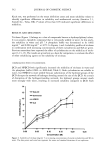
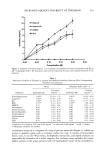
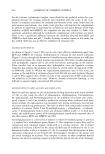
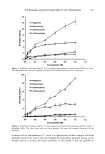
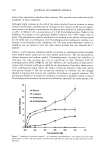
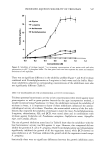
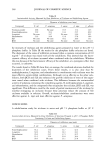
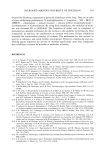
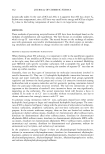
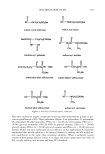
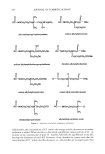
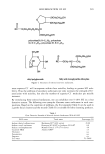
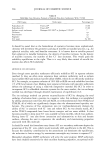
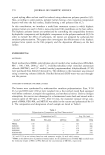
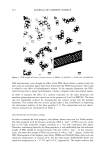
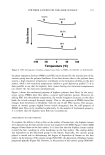
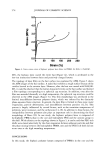
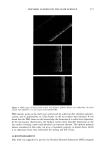
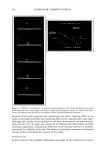
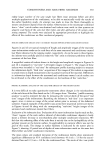
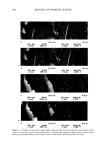
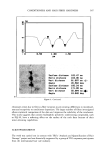
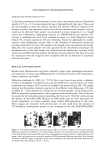
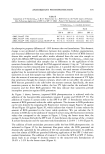
POLYMER LATEXES ON THE HAIR SURFACE 575 Figure 4. SEM images of human hairs treated with biphasic polymer latexes: (a) a naked hair. (b) a hair treated with NAS300. (c) a hair treated with NAS300-M5. PEG/cationic group in the shell were synthesized by surfactant-free emulsion polymer- ization, and its applicability to a film former on the hair surface was evaluated. It was found that the PEG chains on the latexes help the formation of a stable latex dispersion. In the microscopic observations, the biphasic latexes show favorable deposition on the hair surface, forming a nano-sized spherical cap structure thereon. The biphasic polymer latexes considered in this study can give a viscoelastic property to human hairs, which is an important factor that determines the styling and feel of hair. ACKNOWLEDGMENTS This work was supported in part by the National Research Laboratory (NRL) program

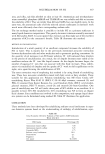
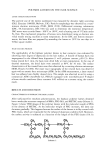
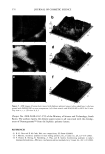
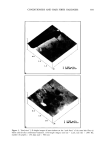
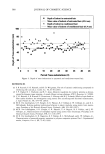
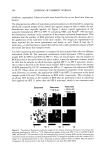
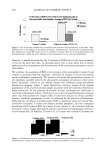
576 JOURNAL OF COSMETIC SCIENCE Figure 5. AFM images of human hairs treated with biphasic polymer latexes: (a,b) a naked hair. (c,d) a hair treated with NAS300-M5 at room temperature. (e,10 a hair treated with NAS300-M5 at 80øC for 10 min. Top view: a, c, e. 3D view: b, d, f. (Project No. 2000-N-NL-01-C-270) of the Ministry of Science and Technology, South Korea. The authors express the deepest appreciation to all concerned with the develop- ment of Nanoaquasome TM from the biphasic polymer latexes. REFERENCES (1) R. G. Chen and P.M. Cook, Hair care compositions, US Patent 6299864. (2) S. Martiny, Acetylenic polymers for hair styling products, Int. J. Cosmet. Sci., 24, 125-134 (2002). (3) P. Hossel, R. Dieing, R. Norenberg, A. Pfau, and R. Sander, Conditioning polymers in today's shampoo formulations--Efficiency, mechanism and test methods, Int. J. Cosmet. Sci., 22, 1-10 (2000).
Purchased for the exclusive use of nofirst nolast (unknown)
From: SCC Media Library & Resource Center (library.scconline.org)