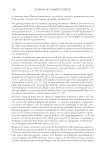
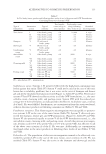
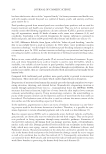
JOURNAL OF COSMETIC SCIENCE 108 to consumer safety. Chemical preservatives are added to cosmetics, pharmaceuticals, and foods in order to protect them against microbial contamination. The growing skepticism of consumers regarding the safety of chemical preservatives in combination with the fact that long-lasting skin health is often associated with the use of natural ingredients has led the cosmetics industry to seek alternative approaches for cos- metics preservation (1,2). A recent trend in cosmetics preservation is the replacement of traditional chemical preservatives by antimicrobial agents that are not legislated as pre- servatives according to Annex VI of Commission Directive 1976/768/EEC (3-5) but that are safe and effective as preservatives. An approach to acheive preservative-free cosmetics is the selection of natural compounds that have been characterized as safe and effective against microorganisms, in order to decrease or to eliminate the use of the traditional chemical preservatives and to formulate cosmetics with improved dermocosmetic properties, i.e., lower skin irritation and/or con- tact sensitization. A number of well-known plant-derived essential oils and extracts have exhibited excel- lent antimicrobial properties thus, they have been used for the effective preservation of cosmetic formulations. Among others, derivatives of Rosmarinus offi cinalis (7,8), Lavan- dula offi cinalis (9), Pteronia incana (8), Artemisia afra (8), Thymus vulgaris (10,11), Eucalyp- tus globulus (12), Laurus nobilis (12), Salvia offi cinalis (12), and Melaleuca alternifolia (13,14) have been reported to be effective natural preservatives. Medium polar substances also belong to the class of alternative antimicrobial agents. Examples of such agents as caprylyl glycol and monoglycerides of capric acid and caprylic acid, i.e., glyceryl caprate and glyceryl caprylate, besides being moisturizing agents, exert antimicrobial activities (15–17). Due to their emulsifi er-like structure, with a hydro- philic and lipophilic part, they interfere with the cellular structures of microorganisms and disintegrate cell membranes. Many studies have been reported concerning the use of glyceryl caprylate as an antimicrobial substance alone or in combination with other anti- microbial compounds for cosmetics preservation. (17–19). We have to keep in mind that the chemical composition of fragrances plays a key role concerning the antimicrobial activity of essential oils and the extracts obtained from nat- ural sources (20). Various aldehydes and alcohols, i.e., aromatic and aliphatic compounds, or terpenes and organic acids, are among the most active compounds. In the past, a fra- grance mixture that mainly consisted of benzyl acetate, phenethyl alcohol, and linalool had been proposed as an alternative preservative in order to reduce the amount of para- bens used in cosmetic formulations (21). Today, several antimicrobial fragrance ingredi- ents are commercially available, such as, p-anisic acid (p-methoxy-benzoic acid) and levulinic acid (4-oxo-pentanoic acid), which were found to be the main compounds in Pimpinella anisum and other herbs and in Dioscorea villosa as a by-product in the produc- tion of diosgenin from wild yam, respectively (22). Based on the above comments concerning the development of self-preserving cosmetics, we focused our research to evaluate the preservative effi cacy of the antimicrobial extracts of Lonicera caprifoleum and Lonicera japonica (Table I) in combination with other antimicro- bials such as glyceryl caprylate, p-anisic acid, levulinic acid (Table II), and ethanol in a series of aqueous and O/W emulsions. Lonicera extracts are described as being a mixture of esters of lonicerin and p-hydroxy benzoic acid, the structures of which are very similar

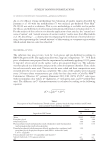
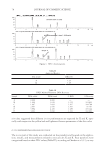
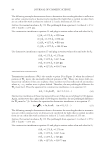
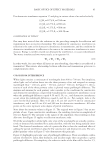
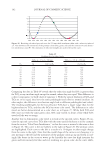
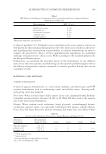
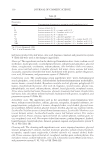
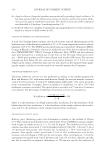
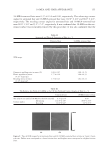
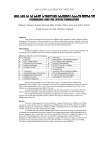
ALTERNATIVES TO COSMETICS PRESERVATION 109 to those of parabens (23). Although Lonicera caprifoleum and Lonicera japonica extracts are well known for their antimicrobial properties (24–26), there are no studies in the litera- ture regarding their incorporation as preservatives in cosmetic formulations. In order to evaluate the preservative effi cacy of these multifunctional ingredients, we performed challenge tests (preservative effi cacy tests, PETs) according to the standards proposed by the European Pharmacopoeia. Furthermore, we examined the microbial purity of the formulations in two different states of use (the intact product and following use) because few published papers refer to the effi cacy of preservative systems contained in cosmetic products during their use by consumers (27,28). MATERIALS AND METHODS COSMETIC FORMULATIONS A series of aqueous formulations, i.e., tonic lotion, shampoo, and shower gel, and O/W cosmetic formulations such as conditioning cream, anticellulite cream, cleansing milk, and peeling cream was prepared. Tonic lotion. Water, Syringa vulgaris (lilac) extract, lactic acid, cinnamyl alcohol, hydroxy- citronellal, and preservative systems I, II, III, or IV (Table III) were used as the ingredi- ents in the tonic lotion formulation. Shampoo. Water, sodium cocoyl isethionate, lauryl glycoside, cocamidopropyl betaine, cocobetaine, glyceryl oleate, coco glycoside, hydrolyzed milk protein, sodium phytate, Urtica dioica leaf water, Rosmarinus offi cinalis (rosemary) leaf water, Salix alba (white willow) Table I MIC Values of the Mixture Consisting of Lonicera caprifoleum and Lonicera Japonica Extracts (Plantservative WSr) (25) Microorganism MIC* (% w/v) Staphylococcus aureus 0.125 Escherichia coli 0.125 Pseudomonas aeruginosa 0.125 Aspergilus niger 0.20 Candida albicans 0.10 * Minimum inhibitory concentration. Table II Activity of the Alternative Preservatives Against Bacteria and Fungi (18,19) Alternative preservative Recommended dosage (% w/w) Gram+ Gram- Yeasts Molds Glyceryl caprylate 0.5–1.0 +++ +++ +++ + p-Anisic acid 0.05–0.3 ++ ++ ++ +++ Levulinic acid 0.2–0.3* +++ +++ ++ +++ +++ Very good activity. ++ Good activity. + Activity depends on compatibility or dosage. * As 2–3% w/w Dermosoft 1388®
Purchased for the exclusive use of nofirst nolast (unknown)
From: SCC Media Library & Resource Center (library.scconline.org)