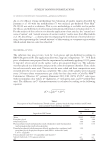
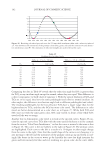
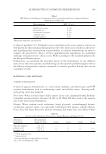
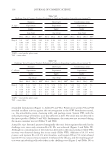
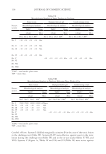
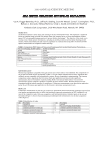
JOURNAL OF COSMETIC SCIENCE 110 leaf water, Ginkgo biloba leaf water, citric acid, fragrance, linalool, and preservative system V (Table III) were used as the shampoo ingredients. Shower gel. The ingredients used in the shower gel formulation were: water, sodium cocoyl isethionate, lauryl glycoside, cocamidopropyl betaine, sodium lauryl glutamate, glyceryl oleate, cocoglucoside, cocobetaine, sodium phytate, Aloe barbadensis (Aloe vera) extract, Avena sativa (oat) leaf extract, Calendula offi cinalis leaf water, Arnica montana leaf water, Lavandula angustifolia (lavender) leaf water, hydrolyzed milk protein, parfum (fragrance), citric acid, D-limonene, and preservative system V (Table III). Conditioning cream. The conditioning cream ingredients were: water, hydroxypropyl starch phosphate, cetyl alcohol, dioleyloylethyl hydroxyethylammonium methosulfate, sucrose laurate, cetearyl alcohol, Macadamia ternifolia seed oil, glycerin, polyglyceryl-10 laurate, meadowfoam (Limnantes alba) seed oil, fragrance, stearyl stearate, glycine soja, phospholipids, soy sterol, sodium phytate, ethanol, lauryl glycoside, tocopheryl acetate, Urtica dioica (nettle) leaf water, Rosmarinus offi cinalis (rosemary) leaf water, Gingko biloba leaf water, Salix alba (white willow) leaf water, hydrolyzed milk protein, tocopherol, and preservative system V (Table III). Anticellulite cream. The ingredients used in the anticellulite cream formulation were: water, sodium stearoyl lactylate, caffeine, glycerin, tricaprylin, dicaprylyl carbonate, iso- propyl myristate, polyglyceryl-3 stearate, dicaprylyl ether, cetyl alcohol, glyceryl stear- ate, panthenol, behenyl alcohol, glyceryl stearate, lecithin, glycine soja (soybean) sterols, Lactobacillus/Trifolium pratense (clover) fl ower ferment extract, Lactobacillus/Theobroma cacao (cocoa) ferment extract, Lactobacillus/Camellia sinensis leaf ferment extract, Vitis vinifera (grape) seed oil, Prunus armeniaca (apricot) kernel oil, sodium phytate, xanthan gum, es- cin, tocopherol, citric acid, Olea europaea (olive) fruit extract, parfum (fragrance), linalool, benzyl benzoate, benzyl salicylate, farnesol, geraniol, eugenol, and preservative system V, VI, or VII (Table III). Cleansing milk. The cleansing milk ingredients were: water, isopropyl myristate, glyceryl stearate, polyglyceryl 3-stearate, myristyl myristate, glycerin, sodium stearoyl lactylate, tricaprylin, caprylic/capric triglyceride, Calendula offi cinalis oil, cetearyl alcohol, bisab- olol, Prunus armeniaca (apricot) kernel oil, tocopherol, xanthan gum, sodium phytate, Aloe barbadensis extract, sodium hydroxide, citric acid, Chamomilla recutita (Matricaria) extract, and preservative system V, VI, VII, or VIII (Table III). Table III Preservative Systems Preservative systems Concentration of preservative system in tested formulation (w/w) I Lonicera extracts 0.2 % II Lonicera extracts 0.2 % + p-anisic acid 0.1 % III Lonicera extracts 0.2 % + levulinic acid 0.3 %* IV Lonicera extracts 0.2 % + ethanol 5 % V Lonicera extracts 0.2 % + glyceryl caprylate 1 % VI Lonicera extracts 0.2 % + glyceryl caprylate 1 % + p-anisic Acid 0.1 % VII Lonicera extracts 0.2 % + glyceryl caprylate 1 % + levulinic acid 0.3 % VIII Lonicera extracts 0.2 % + glyceryl caprylate 1 % + levulinic acid 0.1 %** * As 3 % w/w Dermosoft 1388. ** As 1 % w/w Dermosoft 1388.

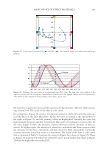
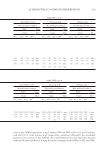
ALTERNATIVES TO COSMETICS PRESERVATION 111 Peeling cream. The ingrediants used in the peeling cream formulation were: water, glycerin, isopropyl myristate, Prunus dulcis amygdalus (almond) shell granules, glyceryl stearate, myristyl myristate, polyglyceryl 3-stearate, tricaprylin, stearic acid, sodium stearoyl lacty- late, cetyl alcohol, cetearyl alcohol, caprylic/capric triglyceride, Prunus dulcis amygdalus (almond) seed oil, tocopherol, xanthan gum, sodium stearate, Simmondsia chinensis (jojoba) seed oil, sodium phytate, sodium hydroxide, Chamomilla recutita (Matricaria) extract, citric acid, parfum (fragrance), limonene, and preservative system V, VI, or VII (Table III). ESSENTIAL OILS AND MULTIFUNCTIONAL INGREDIENTS WITH ANTIMICROBIAL ACTIVITY • Planteservative WSr® (Campo Cosmetics S Pte. Ltd., Singapore) = Lonicera caprifoleum fl ower extract and Lonicera japonica fl ower extract, water. • Dermosoft GMCY® (Dr Straetmans Chemische Produkte GmbH, Hamburg, Germany) = glyceryl caprylate. • Dermosoft 688® (Dr Straetmans Chemische Produkte GmbB, Hamburg, Germany) = p-anisic acid. • Dermosoft 1388® (Dr Straetmans Chemische Produkte GmbH, Hamburg, Germany) = levulinic acid (10%), sodium hydroxide, glycerin, water. • Ethanol (not denaturated). ORGANISMS AND INOCULUM PREPARATION Organisms. Staphylococcus aureus ATCC 6538, Pseudomonas aeruginosa ATCC 9027, Escheri- chia coli, Aspergillus niger ATCC 16404, and Candida albicans ATCC 10231 were used. Inoculum preparation. For bacteria and C. albicans inoculum, the cells (108) were harvested into 0.1% peptone water by gentle agitation and adjusted to yield suspensions of approx- imately 106 cfu/ml. The count of A. niger (approx. 105) was achieved after the 1% (w/w) dilution of the initial suspension (107). The peptone water used for harvesting A. niger contained 0.05% v/v of Tween 80 (Sigma-Aldrich). MICROBIAL CHALLENGE TESTS (PRESERVATIVE EFFICACY TESTS, PETS) ACCORDING TO THE EUROPEAN PHARMACOPOEIA (E. PH.) Preliminary studies were performed in order to assure the ability of the unpreserved for- mulations to support the viability and/or microbial growth and also the effectiveness of the neutralizing medium for the inoculum recovery. The microbial challenge test was performed according to the standards proposed by the European Pharmacopoeia (E. Ph., 1996) concerning topical preparations. The formulations (samples of 20 g) were placed in sterile containers and separately inoc- ulated with bacterial and fungal suspensions to reach microbial levels of not less than 106 cfu/g for bacteria and 105cfu/g for fungi. The test samples were mixed, diluted in Letheen broth, and assayed at 0, 2, 7, 14, 21, and 28 days. The assays were performed on 1 g or 1 ml of test sample and plated in triptic soy agar and Sabouraud dextroze agar for bacteria and fungi, respectively. Plates were incubated at 35°C for bacteria and at 25°C for fungi. After a fi ve-day incubation, colonies of bacteria and fungi were counted and (cfu/g) calcu- lated. The experiments were performed in triplicate. Products are judged adequately
Purchased for the exclusive use of nofirst nolast (unknown)
From: SCC Media Library & Resource Center (library.scconline.org)