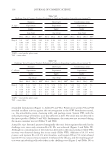
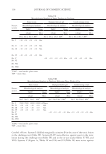
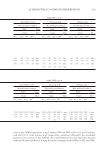
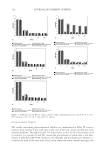
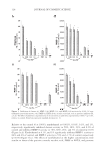
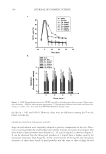
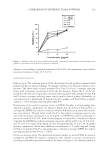
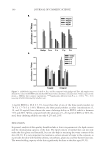
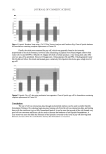
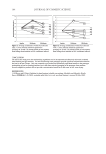
JOURNAL OF COSMETIC SCIENCE 122 On the other hand, fungi were less susceptible to Lonicera extracts (system I) and Lonicera extracts/glyceryl caprylate (system V). Although, system I in the case of the tonic lotion showed moderate activity against A. niger and C. albicans in challenge tests (criterion B of E. Ph.), signifi cant levels of mold were recovered following use. The moderate effi cacy of system I in the preservation of the tonic lotion could be ascribed to the inability of Lonic- era extracts (0.2% w/w) to inhibit mold in this formulation. System V protected the aqueous shampoo and shower gel against A. niger, where criterion A of E. Ph. was ful- fi lled. Probably the antimicrobial potencies of Rosmarinus offi cinalis leaf water in the shampoo and Lavender angustifolia leaf water in the shower gel enhanced the antifungal activity of system V. System V satisfi ed marginally criterion B of E. Ph against A. niger in all the emulsifi ed formulations except the conditioning cream. The greater ability of system V in this cosmetic form could be ascribed to cationic agents, which might rein- force the antimicrobial activity (28,29). Furthermore, system V was unable to preserve the anticellulite cream, cleansing milk, and peeling cream, since A. niger was detected after three weeks of consumer use. Another factor that might enhance contamination risk in the case of the peeling cream is the jar-container, which allows the entry of microorganisms into the product. The lack of effi cacy in system V against A. niger in some emulsifi ed formulations is in accordance with the fi ndings reported previously that the preservative performance of glyceryl capry- late against molds depends on the formulation (18,19). Regarding the fragrance ingredients, although the addition of (0.1% w/w) anisic acid (systems II and VI) or (0.3% w/w) levulinic acid (systems III and VII) signifi cantly improved antifungal activity, in some cases it caused stability problems. The reduction of the con- centration of levulinic acid to 0.1% w/w resulted in microbiologically and physicochem- ically stable products. CONCLUSIONS The results demonstrate that natural origin ingredients such as Lonicera extracts seem to be promising as antimicrobial substances for producing self-preserving cosmetic prod- ucts. The addition of multifunctional ingredients such as glyceryl caprylate, levulinic acid or p-anisic acid and/or ethanol was benefi cial in the majority of the products. Ethanol at low concentration (i.e., 5% w/w) may contribute to the performance of the antimicro- bial. An interesting observation is that the products that fulfi lled criterion B in the chal- lenge tests proved to be inadequately preserved after of three weeks of consumer use. We note that this is not surprising since criterion B is more lenient than criterion A. We suggest that E. Ph. should be changed to recognize only criterion A for adequately preserved products in multiple-use containers. Furthermore, challenge tests should be performed not only during the preparation of cosmetic products, but should also be used to evaluate the protection effi cacy of the preservative systems following periods of use. REFERENCES (1) H. Epstein, Cosmetics preservation: Sense and nonsense, Clin. Dermatol., 24, 551–552 (2006). (2) J. Y. Legendre, I. Schnitzler, Q. Y. Li, C. Hausen, M. Huart, G. S. Luengo, M. L. Abella, and M. Roreger, Formulation, characterization, and effi cacy of an adenosine-containing dissolvable fi lm for a localized anti-wrinkle effect, J. Cosmet. Sci., 58, 147–155 (2007).

ALTERNATIVES TO COSMETICS PRESERVATION 123 (3) A. Varvaresou, S. Papageorgiou, E. Tsirivas, E. Protopapa, H. Kintziou, V. Kefala, and C. Dementzos, Self-preserving cosmetics, Int. J. Cosmet. Sci., 31, 163–175 (2009). (4) L. Leistner, Basic aspects of food preservation by hurdle technology, Int. J. Food Microbiol., 55, 181–186 (2000). (5) W. Petersen, Antimicrobial ingredients for self-preserving cosmetics, Euro Cosmetics, 2/99, 28–36 (2002). (6) J. J. Kabara and D. S Orth, Preservative-Free and Self-Preserving Cosmetics and Drugs: Principles and Practice (Marcel Dekker, New York 1997). (7) T. Mangena and N. Y. Muyima, Comparative evaluation of the antimicrobial activities of essential oils of Artemisia afra, Pteronia incana and Rosmarinus offi cinalis on selected bacteria and yeast strains, Lett. Appl. Microbiol., 28, 291–296 (1999). (8) N. Y. O. Muyima, G. Zulu, T. Bhengu, and D. Popplewell, The potential application of some novel essential oils as natural cosmetic preservatives in an aqueous cream formulation, Flav. Fragr. J., 17, 258–266 (2002). (9) K. A. Hammer, C. F. Carson, and T. V. Riley, Antimicrobial activity of essential oils and other plant extracts, J. Appl. Microbiol., 86, 985–990 (1999). (10) L. Pianizzi, G. Flamini, P. L. Gion, and I. Morelli, Composition and antimicrobial properties of essential oils of four Mediterannean Lamiaceae, J. Ethnopharmacol., 39, 167–170 (1993). (11) I. Manou, L. Bouillard, M. J. Devleeschouwer, and A. O. Barel, Evaluation of Thymus vulgaris essential oil in topically applied formulations under challenge test, J. Appl. Microbiol., 84, 368–376 (1998). (12) A. M. Maccioni, C. Anchisi, A. Sanna, C. Sardu, and S. Dessi, Preservative systems containing essential oils in cosmetic products, Int. J. Cosmet, Sci., 24, 53–59 (2002). (13) C. F. Carson and T. V. Riley, Antimicrobial activity of the essential oil of Melaleuca alternifolia, Lett. Appl. Microbiol., 16, 49–55 (1993). (14) C. F. Carson and T. V. Riley, Antimicrobial activity of the major components of the essential oil of Mela- leuca alternifolia, J. Appl. Bacteriol., 78, 264–269 (1995). (15) J. J. Kabara, D. M. Swieczkowski, A. J. Conley, and J. P. Truant, Fatty acids and derivatives as antimi- crobial agents, Antimicrob. Agents Chemother., 2, 23–28 (1972). (16) G. Bergasson, J. Arnfi nnsson, Ó. Steingrìmson, and H. Thormar, In vitro killing of Candida albicans by fatty acids and monoglycerides, Antimicrob. Agents Chemother., 45, 3209–3212 (2001). (17) L. Rigano and R. Leporatti, Systemic canstellations: With or without preservatives? SÖWF J., 129, 1–9 (2003). (18) J. Jänichen, The quest for the ideal preserving system-reducing traditional preservatives in combination with Dermosoft Octiol. Euro Cosmetics, 7/8, 10–16 (2004). (19) Dr Straetmans Formulary 2005. E-mail info@dr-straetmans.de. (20) J. B. Hinou, C. E. Harvala, and E. B. Hinou, Antimicrobial activity screening of 32 common constitu- ents of essential oils, Pharmazie., 44, 302–303 (1989). (21) J. M. Blakeway, Fragrances as preservatives, SÖFW J., 116, 357–359 (1990). (22) M. Sautour, A.-C. Mittanine-Offer, and M.-A Lacaille-Dubois, The Dioscorea genus: A review of bioac- tive steroid saponins, J. Nat. Med., 61, 91–100 (2007). (23) A. C. Dweck, Natural preservatives, Cosmet. Toiletr. 118, 45–50 (2003). (24) B. Kong, J. Wang, and Y. L. Xiong, Antimicrobial activity of several herb and spice extracts in culture medium and in vacuum-packaged pork, J. Food Prot., 70, 641–647 (2007). (25) Plantservative® WSr, Technical Specifi cations, Campo Cosmetics S Pte. Ltd, Singapore. (26) M. Oskay and D. Sari, Antimicrobial screening of some Turkish medicinal plants, Pharm. Biol., 45, 176–181 (2007). (27) L. E. Anelich and L. Korsten, Survey of microorganisms associated with spoilage of cosmetic creams manufactured in South Africa., Int. J. Cosmet, Sci., 18, 25–40 (1996). (28) R. Campana, C. Scesa, V. Patrone, E. Vittoria, and W. Baffone, Microbiological study of cosmetic prod- ucts during their use by consumers: Health risk and effi cacy of prservative systems, Lett. Appl. Microbiol., 43, 301–306 (2006). (29) L. Thomas, A. D Russell, and J.-Y. Maillard, Antimicrobial activity of chlorhexidine diacetate and benzalkonium chloride against Pseudomonas aeruginosa and its response to biocide residues, J. Appl. Microbiol., 98, 533–543 (2005). (30) T. Thorsteinsson, T. Loftsson, and M. Masson, Soft antibacterial agents, Curr. Med. Chem., 10, 1129– 1136 (2003).
Purchased for the exclusive use of nofirst nolast (unknown)
From: SCC Media Library & Resource Center (library.scconline.org)