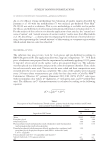
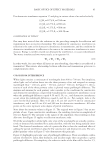
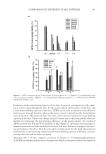
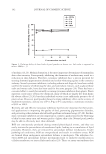
JOURNAL OF COSMETIC SCIENCE 136 (h) Angelica dahurica (Ange-da) powders were produced by grinding Angelica dahurica. It has been reported that the ethyl acetate extract of Angelica dahurica has potent inhib- itory activity against mushroom tyrosinase. The chemical structure of the compound was identifi ed as 9-hydroxy-4-methoxypsoralen (14). (i) Seaweeds: There are a number of antioxidant and antiproliferative activities of extracts found in a variety of edible seaweeds (15). ANALYSIS OF THE EFFICACY OF MOISTURIZING A total of 16 healthy female students (20.0 ± 0.8 yr) were selected. Measurements of the hydration state of the skin were performed at 23° ± 2°C room temperature and at a relative humidity of 45 ± 5%. The TEWL was measured using an evaporimeter (Tewameter MPA5, Courage & Khazaka, Germany), whereas the hydration state of the skin was obtained using the CORNEOMETER® CM825 (Courage & Khazaka). Both TEWL and the hydration state were measured in a marked area on the front of the left hand. Ultra-micro (sieve size = 8000) pearl powders and P-w were diluted with distilled (DI) water. The arm was cleansed one hour before the test, and seven areas with a diameter of 1.5 ± 0.2 cm were defi ned on the surface of the lower arm. One test was carried out fi ve minutes before apply- ing the sample, and then a test was carried out every fi ve minutes for 30 minutes. TYROSINASE INHIBITION ASSAY Tyrosinase inhibitory activity test was performed according to the method proposed by Rout and Banerjee (16). with minor modifi cations. Briefl y, the reaction mixture contained 1 ml of 0.03% L-tyrosine, 0.9 ml of 25 mM phosphate buffer (pH = 6.8), and 1 ml of dif- ferent concentrations of samples. After ten minutes of incubation, 0.1 ml of 350 U/ml mushroom tyrosinase was added. The optical density was taken at 475 nm after 30 minutes of incubation. The percentage of inhibition of tyrosinase activity was calculated as: % inhibition 100 = − − − − × ( ( A B C D) A B where A is the absorbance of a blank solution after incubation, B is the absorbance of the blank solution before incubation, C is the absorbance of the sample solution after incuba- tion, and D is the absorbance of the sample solution before incubation. ANTIOXIDANT ACTIVITY ASSAYS Reducing power. Reducing power was determined according to the method of Oyaizu (17). Three kinds of pearl powders were mixed with 10 ml of DMSO to prepare samples with weight-to-volume ratios of 1, 5, 10, and 20 mg/ml. Two millilitiers of the above samples were then mixed with 2.5 ml of phosphate buffer (0.2 M, pH = 6.6) and 2.5 ml of 1% potassium ferricyanide. The mixture was incubated in a 50°C water bath for 20 minutes, then rapidly cooled, mixed with 2.5 ml of 10% trichloroacetic acid for fi ve minutes, and centrifuged at 3000 rpm for ten minutes. After centrifugation, 5 ml of the supernatant was mixed with 5 ml of DI water and 1 ml of 0.1% ferric chloride, and this was left to stand for ten minutes. Absorbance at 700 nm was used as the indicator of

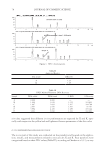
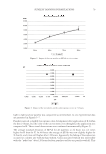
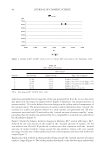
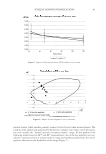
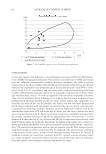
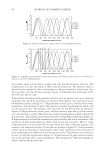
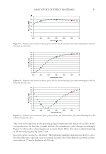
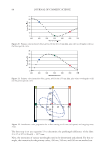
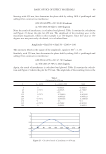
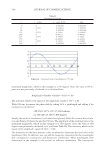
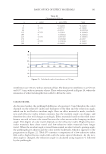
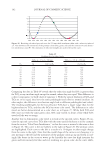
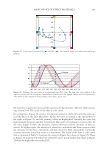
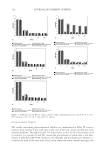
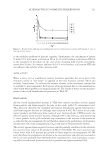
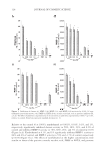
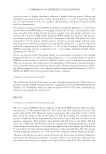
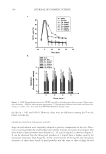
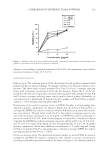
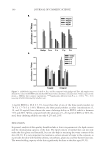
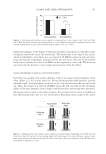
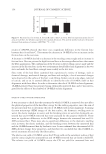
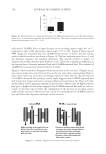
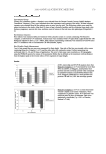
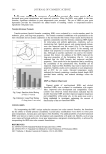
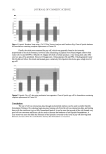
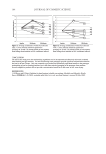
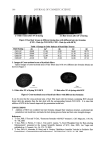
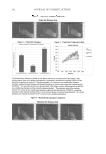
COMPARISON OF DIFFERENT PEARL POWDERS 137 reducing power. A higher absorbance indicates a higher reducing power. Ginkgo and dandelion were used as positive controls and diluted to 1, 5, and 10 mg/ml for further use. (A concentration of P-w, P-n, ginkgo, and dandelion exceeding 20 mg/ml would lead to sedimentation.) Free-radical scavenging activity of DPPH. A method described by Shimada et al. (1992) was used to detect the DPPH radical scavenging activity (18). To start, 2 ml of each test solu- tion, including three kinds of pearl powders, ascorbic acid, and ginkgo solutions, was mixed with 2 ml of 0.2 mM freshly prepared DPPH methanolic solution. The mixture was shaken vigorously and left to stand for 30 minutes in the dark. Absorbance was then measured at 517 nm against a blank solution. Ascorbic acid and ginkgo solutions were used as positive controls for comparison to P-μ and P-n diluted to 1, 5, and 10 mg/ml, as well as for comparison to P-w diluted to 1, 5, 10, 20, and 50 mg/ml. The percentage of DPPH scavenging activity is expressed as [1 − (test sample absorbance/blank sample absorbance)] × 100 (%). Ferrous ion chelating ability. Chelating ability was determined according to the method proposed by Dinis et al. (19). Each sample dilution (1, 5, 10, and 20 mg/ml in water or DMSO) was mixed with 0.1 ml of 0.1 mM FeCl2 and 0.2 ml of 5 mM ferrozine solutions. After ten minutes at room temperature, the absorbance of the solution was determined at 562 nm and the values were measured and recorded. The percentage of ferrous ion chelat- ing ability is expressed as [1 − (test sample absorbance/blank sample absorbance)] × 100 (%). EDTA and BHA were used as positive and negative controls. SAMPLING AND STATISTICAL ANALYSIS The results were obtained from three or more individual examinations. Values were ex- pressed as means ± SEM. Group means were compared by one-way ANOVA followed by Scheffe’s test. Probability values less than or equal to 0.05 or 0.01 were considered sig- nifi cant or very signifi cant, respectively. RESULTS THE EFFICACY OF PEARL POWDER MOISTURIZING The time course of TEWL is shown in Figure 1A. For both TEWL and the hydration mois- turizing test, 1% Hya diluted with 30%, 50%, 80%, and 30% of glycerite was used. The results showed that 50% Hya had a better moisturizing effect than that of 30% or 80% Hya, which was similar to that of 30% glycerite. Fifty percent Hya was considered as the positive comparison for the experimental group, and 10 mg/ml Spi was considered as the negative comparison. Pearl powders were diluted with DI water as the blank. The P-μ (sieve size = 8000) and the P-w were used at 1 mg/ml and 10 mg/ml for the test, and the results showed that from fi ve to 30 minutes after application of the samples, the P-μ and the P-w had almost the same moisturizing performance as that of soluble Hya. The three groups showed signifi cant differences ( p 0.01 and 0.001) compared with the blank and the Spi. The effect of hydration on skin is shown in Figure 1B. There were no distinct differences between the test substances in the fi rst 15 minutes. From 15 to 30 minutes, there were dis- tinct differences among the 1 mg/ml or 10 mg/ml P-μ and the 50% Hya, the blank, and
Purchased for the exclusive use of nofirst nolast (unknown)
From: SCC Media Library & Resource Center (library.scconline.org)