JOURNAL OF COSMETIC SCIENCE 244 INTRODUCTION In Homo sapiens, the principal mode of thermoregulation is accomplished by evaporative cooling that takes place when sweat is secreted from eccrine glands and evaporated from the surface of the skin. Overall, such a process ensures that the body’s core temperature does not signifi cantly rise above 37°C to levels that can lead to heat exhaustion or hyper- thermia. There are about 2–5 million eccrine glands distributed over the surface of the body, which carry out this function (1). In addition, there are approximately 100,000 apocrine glands localized in specifi c regions of the body, most notably the axillae. Al- though apocrine glands secrete substances that eventually break down to malodorous compounds, antiperspirant treatments target eccrine glands that are located in the axil- lae. Therefore, understanding how various external and internal stimuli affect eccrine sweating is of great concern for those involved in antiperspirant technology (2). In addition to thermoregulation, sweating also occurs due to emotional/mental stimula- tion as well as during gustation. In recent years, Wilke et al. provided an updated review covering most aspects of these phenomena (3). We often associate emotional sweating with profuse sweating that occurs in the palms, soles, or axillae (4). Most researchers be- lieve that sweating in these locations during stressful events has evolutionary origins that allowed us to reduce the surface friction of the otherwise high-friction zones of the palms or soles (5). Likewise, secretion of eccrine and apocrine sweat from the axillae during dis- tress would facilitate pheromone signaling to other members of our species. Gustatory sweating occurs in many individuals during digestion and is particularly evident during the consumption of spicy food. Such sweating is normally confi ned to the face, forehead, scalp, and neck (3). Thermoregulatory sweating is affected by many internal and external factors including climatic conditions, diet, physical/mental state, and body posture. The most evident cli- matic factors include temperature, humidity, and dewpoint. At high humidity and dew- point, cooling is less effi cient (6,7). Diet and fl uid intake also play a major role in determining sweating behavior. Not surprisingly, many studies were carried out by military agencies during the 1940s to understand how man could better survive the harsh ele- ments, such as conditions found in the desert (8). Furthermore, it may come as no surprise that clothing is also a critical factor of perspiration. Physical stamina and fi tness form the basis of sweat capacity, and more fi t individuals are likely to be more effi cient sweaters (9). Likewise, the sweat gland apparatus is less active in the elderly, usually beginning around the sixth decade (10,11). Therefore, less fi t and older individuals will tend to overheat much easier. Finally, posture also governs sweating. Whether we are sitting or standing, or even crossing our legs, will infl uence our sweating behavior (7). Posture becomes in- creasingly important during antiperspirant testing when subjects are placed in climate- controlled environments for prescribed periods. In addition, the pH of axillary skin surface fl uctuates depending on the time of day (12). This can have profound implications on the effi cacy of antiperspirant treatments, whose mechanism of action is pH dependent. Overall, all of these factors must be considered when monitoring sweating behavior. Our initial objective in this work was to develop an in-house procedure to test the effi cacy of antiperspirant products using replica techniques in combination with image analysis (13). To better understand the rheological profi le of the replica impression material, we used dynamic mechanical analysis (DMA) to monitor rheological parameters, such as the elastic modulus (E), loss modulus (E), and damping ability (tan δ), as a function of curing

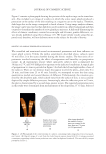
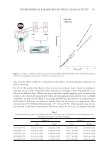
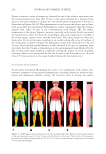
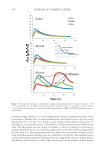
ENVIRONMENTAL PARAMETERS ON SWEAT GLAND ACTIVITY 245 time. These data provided us with suffi cient information to establish appropriate testing parameters, ensuring that we used proper quantities and induction times in the test pro- tocol. To understand the variability of sweat output, we carried out gravimetric measure- ments to monitor the kinetics of sweat uptake by absorbent pads placed in the axillae. Proper choice of equilibration times in the environmental room required that we also conduct fl ux measurements of water vapor diffusion, which were carried out on the inner forearm. In addition, we used thermal infrared (IR) imaging to map the temperature distribution across all surface anatomical regions. This allowed us to monitor the heating (environmentally controlled) and subsequent cooling (eccrine sweating) of various regions of the body. Based on the combined results of the gravimetric kinetic studies, fl ux mea- surements, and IR thermal imaging, we fi nd that our choice of parameters (temperature, relative humidity (RH), and acclimatization times) for the skin replica studies is valid. MATERIALS AND METHODS Sweat gland activity was monitored using gravimetric analysis and skin replica techniques. We carried out gravimetric analysis to monitor sweating in the axillae. Skin replicas were obtained from the inner forearm and later analyzed using image analysis techniques— providing the quantity of active glands per unit area. Two different tests were conducted, one where the subjects spent 30 min in the sauna (Test 1) and the other 45 min (Test 2). Replicas and gravimetric analysis were carried out simultaneously in Test 1, whereas only gravimetric analysis was completed in Test 2. We used various temperature and humidity control conditions in the sauna, which are indicated in the Results and Discussion section. Unless otherwise indicated, the subjects were acclimatized in an environmental room prior to entry into the sauna—for both Tests 1 and 2. In addition, we carried out DMA studies of the replica formulation to ensure proper mixing and curing kinetics. Flux density measure- ments were used to corroborate the chosen acclimatization schedule. Thermal imaging al- lowed for the determination of the anatomical temperature distribution in the subjects as a function of time and the selected environment. QUANTIFICATION OF SUDORIFEROUS BEHAVIOR An environmental room was constructed to house a sauna and also to serve as an acclima- tization area for subjects prior to entry into the sauna. We designed the room in such a manner as to provide a serene environment allowing the subjects to experience similar comforts and sentiments as in a spa. After the installation of a ceramic fl oor, the entire room was painted and decorated using modern decor. The underlying walls and fl oor of the environmental room are constructed of concrete thereby preventing excessive tem- perature/humidity loss from the room and temperature/humidity invasion from the ex- ternal environment. The dimensions of the environmental room are 5 m length, 2.5 m width, and 2.2 m height. The sauna, Model FRB-022LCND, was purchased from Sauna King Products, San Leandro, CA. It is an IR sauna constructed of cedar wood and has fi ve internal heaters. The operating temperature is between 30°C and 60°C (86°F and 140°F). The humidity inside the chamber is controlled with a humidifi er (Model HM5082 Holmes, Boca Raton, FL) connected to a humidity controller (Model 5200 Electro-tech Systems,
Purchased for the exclusive use of nofirst nolast (unknown)
From: SCC Media Library & Resource Center (library.scconline.org)