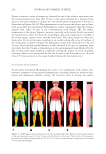
J. Cosmet. Sci., 64, 243–260 ( July/August 2013) 243 Infl uence of various environmental parameters on sweat gland activity ROGER L. MCMULLEN, TIM GILLECE, GUOJIN LU, DONNA LAURA, and SUSAN CHEN Department of Materials Science, Corporate R&D, Ashland Specialty Ingredients, Wayne, NJ. Accepted for publication January 31, 2013. Synopsis The choice of environmental conditions when conducting antiperspirant studies greatly affects the quantity of sweat output. Our initial goal in this work was to develop an in-house procedure to test the effi cacy of antiperspirant products using replica techniques in combination with image analysis. To ameliorate the skin replica method, we conducted rheological studies using dynamic mechanical analysis of the replica formula- tion. In terms of sweat output quantifi cation, our preliminary results revealed a considerable amount of variation using the replica technique, leading us to conduct more fundamental studies of the factors that infl uence sweating behavior and how to best design the experimental strategy. In accordance with the FDA’s protocol for antiperspirant testing, we carried out gravimetric analyses of axillae sweating under a variety of environmental conditions including temperature and humidity control. Subjects were fi rst acclimatized in an environmentally controlled room for 30 min, and then placed in a sauna for an additional 30 or 45 min, de- pending on which test we administered. In Test 1 (30 min total in the sauna), the fi rst 10 min in the sauna was another equilibration period, followed by a 20 min sweat production stage. We monitored axillae sweat- ing during the last 20 min in the sauna by gravimetric analysis. At time (t) = 30 min in the sauna, skin replicas were taken and later analyzed using imaging and image analysis techniques. Test 1 was carried out on over 25 subjects, both male and female, from various racial backgrounds. In Test 2, subjects spent 45 min in the sauna after the initial 30-min period in the environmental room. During the 45 min, we obtained gravimetric readings of absorbent pads placed in the axillae. We conducted studies at various temperature and relative humidity settings. We also studied the infl uence of several external parameters on sudoriferous activity. Test 2 was a range-fi nding experiment on two subjects to determine the optimized environmental conditions for the hot room procedure. In addition to the replica and gravimetric techniques, we also mea- sured fl ux density to determine the onset of fi ring of sweat glands to ensure that our environmental precon- ditioning step (30 min in the environmental room) brought subjects to the point that their sweat glands were activated. Although fl ux density measurements are usually carried out to determine transepidermal water loss (TEWL), we found that they can be equally useful for monitoring the onset of sweat production. Thermal infrared imaging experiments were also carried out allowing us to generate full-body images of subjects containing anatomical thermal distribution data with high accuracy. Overall, we conclude that our in-house hot room procedure offers much potential as an effective and cost-effi cient screening tool for narrowing copi- ous antiperspirant formulations to a select few for expensive clinical evaluation. Address all correspondence to Roger McMullen at rmcmullen@ashland.com.
Purchased for the exclusive use of nofirst nolast (unknown)
From: SCC Media Library & Resource Center (library.scconline.org)