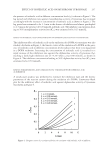
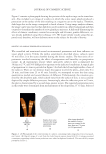
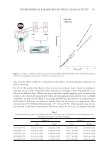
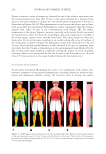
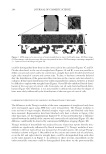
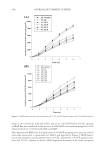
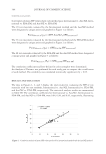
JOURNAL OF COSMETIC SCIENCE 248 at a fi xed distance from the subject to obtain a full-body image. All dimensions were kept constant throughout the experiments. The image data consist of a two-dimensional image grid with temperature measurements plotted on a third axis using a color image scale. FLUX DENSITY MEASUREMENTS To gain insight into the impact of a subject’s recent environmental history on the quality of the fi nal 30 min acclimatization process (i.e., equilibration phase before entering the hot box), a new method was applied in vivo to two experienced subjects. Vapor fl ux measure- ments were performed on the two male subjects after 15 min pre-equilibration in a cool (6.3°C, 66% RH) or warm (24°C, 28% RH) environment. Flux density measurements were commenced during the fi nal acclimatization stage (30.5°C, 36.5% RH) using an AquaFlux AF200 (Biox Systems, London, UK) evaporimeter confi gured with a Tefl on 7 mm orifi ce measurement cap. The AF200 was used to examine variations in the vapor fl ux density as a function of equilibration time. For each subject, three zones of the middle of the left volar forearm were screened at 0, 30, and 60 min of the fi nal acclimatization process. The device was transferred rapidly from park (idle), or from zone to zone, to reduce the impact of ambient humidity on the skin surface water loss results. The maximum time for each zone measurement was 80 s and the target precision for the evaluation of the equilib- rium fl ux density was ≤0.075 gm−2h−1 standard deviations, which is calculated from the running average of 10 consecutive fl ux readings. Two-sample Student’s t-tests (α = 0.10, two-tailed), assuming equal variances, were performed on the fl ux density results to test the null hypotheses (H0: μ1 − μ2 ≠ 0) that (i) environmental pre-equilibration time and condi- tions have no infl uence on a single subject’s fl ux density response (ii) in addition, when compared at the same pre-equilibration time and environmental conditions, the fl ux den- sity response between subjects is not statistically signifi cant (XLSTAT, Addinsoft, NY). RESULTS AND DISCUSSION We used several techniques to monitor the amount of perspiration by test participants. A skin replica technique was used following a previously published procedure (13). To gain further insight into the gelation of the replica material, we carried out rheological mea- surements using DMA. In turn, a method similar to the FDA monograph was used to measure axillae sweating using absorbent pads (15). We also used thermal IR imaging to monitor overall skin-surface temperature and the anatomical temperature distribution. In all of these tests, subjects were fi rst acclimated in an environmentally controlled room (27°C, 50% RH) for 30 min and then placed in a similarly controlled sauna chamber— specifi c temperature and humidity settings are provided in the following text. In addi- tion, we monitored variations in fl ux density of water vapor diffusing through the skin barrier either in the form of TEWL and/or insensible perspiration. RHEOLOGY OF SILFLO FORMULATION Figure 1 shows the average (n = 6) curing profi le of the Silfl o replica formulation at ambi- ent conditions as a function of time. The error bars express the standard deviation of

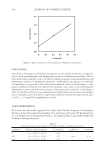
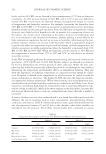
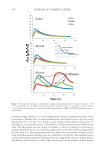
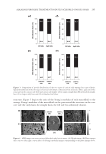
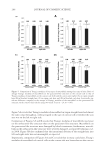
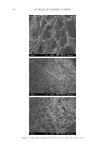
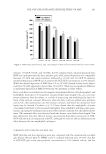
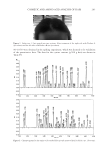
ENVIRONMENTAL PARAMETERS ON SWEAT GLAND ACTIVITY 249 E′, E″, and tan δ at each time point in the experiment. The deviation in viscoelasticity between trials refl ects the inherent randomness in the logistics of crosslinking a slow- moving, highly viscous prepolymer—including slight variations in the volume of each catalyst droplet, mixing effi ciency, and sample loading time. Although the resin consis- tency varies slightly with time from trial to trial, the mean time of E′/E″ inversion is approximately 5 min (±12 s). Hence, 5 min was chosen as the length of curing for acquir- ing in vivo impressions. In reality, however, the replicas were not removed for another 2–3 min (i.e., total cure t = 7–8 min) due to post-testing interviews. From the rheology data (Figure 1), the advantage of waiting an additional 2–3 minutes ensures a rubbery consis- tency and that E′ E″ (16). In general, excess curing time ( 5 min) does not infl uence the quality of the replica and ultimately produces a stronger, more uniform, and cohesive impression that is easily peeled from the substrate. QUANTIFICATION OF PERSPIRATION WITH SKIN REPLICAS After 30 min equilibration in the environmental room, subjects were placed in the sauna (usually at 45°C and 35% RH) and allowed to acclimatize for 10 min followed by a 20 min perspiration period (Test 1). At the beginning of the perspiration period, absorbent pads were placed in the axillae—they were later weighed at the end of the test. After a total of 30 min in the chamber, replicas were obtained on the volar fore- arm, using a four-quadrant sampling area immediately adjacent to the antecubital fossa (inner elbow). The replicas were allowed to set for 5 min, then removed. Quantifi cation of the number of active eccrine pores was achieved using the image analysis software, ImageJ. Figure 1. Average dynamic time sweep profi le for curing of replicas as a function of time. The average gel point for the formulation, where E′ = E″, occurs at 297 ± 12s (n = 5 1 Hz 25.7°C).
Purchased for the exclusive use of nofirst nolast (unknown)
From: SCC Media Library & Resource Center (library.scconline.org)