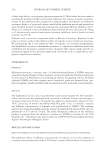
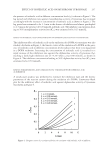
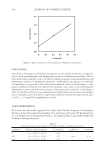
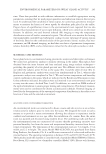
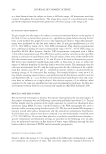
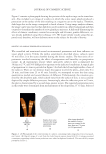
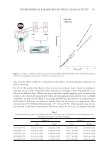
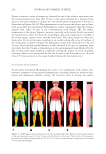
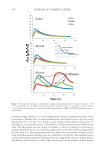
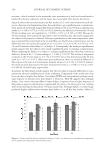
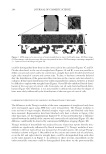
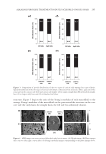
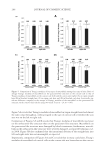
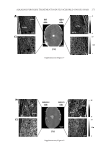
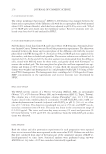
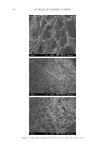
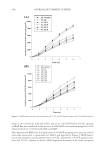
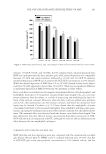
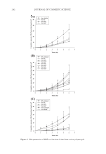
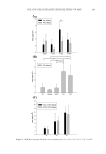
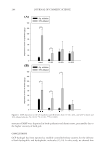
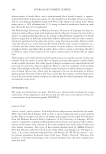
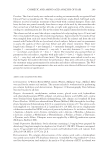
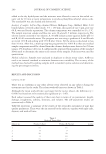
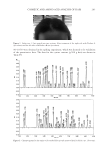
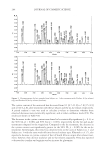
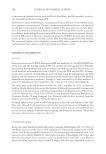
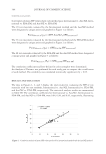
JOURNAL OF COSMETIC SCIENCE 250 Figure 2 contains a photograph showing the position of the replica rings on the inner fore- arm. Also included is an image of a replica in which the active sweat glands produced a protrusion on the surface of the skin resulting in a negative cast on the replica. Therefore, dark large dots in the image correspond to beads of sweat. Using image analysis software, the image can be processed so that dark dots can be isolated on a white background and then counted to determine the number of active glands per unit area. A full study illustrating the effects of climatic conditions, contrast between right and left arms, gender differences, etc. was already published using this technique (13). We found similar results using this ap- proach and, therefore, will not elaborate more on the subject for the sake of brevity. KINETICS OF AXILLAE PERSPIRATION BEHAVIOR We controlled and monitored several environmental parameters and their infl uence on sweat gland activity. Unlike the replica experiments described above, subjects spent 45 min (Test 2) in the sauna chamber during the kinetic studies. The fi rst series of ex- periments involved examining the effect of temperature and humidity on perspiration output. In all experiments (except where indicated), subjects were acclimatized for 30 min at 27°C and 50% RH prior to exposure to the indicated conditions. A typical plot of perspiration vs. time is provided in Figure 3 for both the left and right axillae of one of the subjects. There are two distinct slopes that appear in all of the plots—from time 0 to 20 min, and from time 25 to 45 min. Initially, we attempted to treat the data using quantitative models and several theories of diffusion. Unfortunately, the situation gov- erned by the absorbent pads, which adsorb sweat from the surface of skin, is not accurately depicted by simple diffusion processes. Interestingly, after the infl ection point at 25 min, the plot is characterized by a second slope greater in rate. The reported perspiration rates in this study were determined from measurements of the slope from 25–45 min. Selected Figure 2. (A) Photograph of the volar forearms of a subject containing replica rings placed on a four quad- rant layout. (B) Digital image of a cast from the volar forearm region along with (C) its image processed counterpart containing isolated sweat profusions on a white background (counted). This was the key output parameter for Test 1.

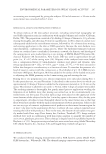
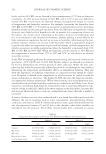
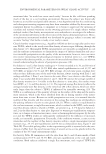
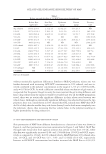
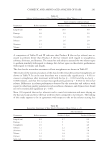
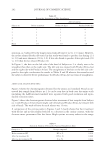
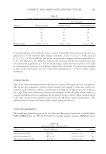
ENVIRONMENTAL PARAMETERS ON SWEAT GLAND ACTIVITY 251 data are provided in Table I to demonstrate the effects of environmental conditions on axillae sweating. For all of the studies described in this section, two subjects were chosen to undergo a rigorous series of tests. Reported values represent an average of two measurements con- ducted on different days. While this may seem like a small sampling pool, we found the results to be extremely reproducible when all environmental parameters were carefully controlled. As indicated in Table I, increasing the RH increases the rate of perspiration in both subjects. Likewise, we observe a similar effect for an increase in temperature. Data are shown for 30% RH and temperatures of 37, 45, and 52ºC. This humidity may be eas- ily attained at all three temperatures. However, when we try to go to higher humidity Figure 3. In Test 2, subjects were placed in the sauna chamber with absorbent pads in the axillae region, which were weighed for a period of 45 min in increments of 5 min. Table I Perspiration Rates (g/min) Calculated from Plots of Perspiration vs. Time for Various Temperature and Humidity Settings in the Sauna Chamber Subject 1 Subject 2 Left Right Left Right 30% RH, 37°C 0.0414 ± 0.006 0.0406 ± 0.003 0.0189 ± 0.006 0.0149 ± 0.004 80% RH, 37°C 0.0848 ± 0.002 0.0893 ± 0.007 0.0377 ± 0.000 0.0357 ± 0.000 30% RH, 45°C 0.0790 ± 0.001 0.0848 ± 0.005 0.0405 ± 0.002 0.0295 ± 0.002 60% RH, 45°C 0.1212 ± 0.058 0.1238 ± 0.055 0.0757 ± 0.001 0.0661 ± 0.004 30% RH, 52°C 0.1384 ± 0.009 0.1391 ± 0.007 0.1044 ± 0.006 0.0927 ± 0.003
Purchased for the exclusive use of nofirst nolast (unknown)
From: SCC Media Library & Resource Center (library.scconline.org)