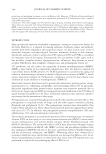
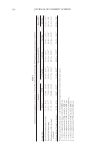
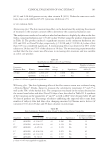
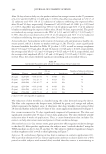
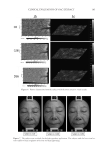
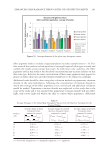
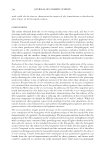
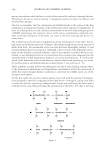
JOURNAL OF COSMETIC SCIENCE 186 Table V Results of Gac Extract Irritation Testing Product MII values at 30 min MII values at 24 h MII values at 48 h Gac extract 0.000 0.000 0.000 30 min, 24 h and 48 h, (MII) (Table V).Gac extract was observed MII values of 0.00 (MII values of 0.00 exhibited no irritation) after 30 min, 24 h or 48 h of exposure. Thus, Gac extract is classifi ed as safe product for use in skin creams. CONCLUSIONS Gac extract has potential utility as an antioxidant and tyrosinase inhibitor in skin care products. A novel Gac cream formulation was developed and evaluated. The Gac cream was a nonirritating product that lightened skin, signifi cantly increased smoothness and moisture, and reduced skin wrinkles. Gac extract can thus be considered an effective an- tiwrinkle cream component. ACKNOWLEDGMENT The 90th anniversary scholarship from the Graduate School, Chulalongkorn University, to Pakapun Leevutinun is gratefully acknowledged. REFERENCES (1) P.P. Bhushan and L.B. Sachin, “Polyphenols: A Remedy for Skin Wrinkles” in Polyphenols in Human Health and Disease, R.W. Ronald, R.P. Victor, and Z. Sherma. Eds., Academic Press-Elsevier, CA. pp. 861–869 (2014). (2) L.T. Vuong, A.A. Franke, J.L. Cluster, and P.S. Murphy, Momordica cochinchinensis Spreng. (gac) fruit carotenoids re-evaluated, J. Food Comp. Anal., 19, 664–668 (2006). (3) J. Kubola and S. Siriamornpun, Phytochemicals and antioxidant activity of different fruit fractions (peel, pulp, aril and seed) of Thai gac (Mormordica cochinchinensis Spreng), Food Chem., 127, 1138–1145 (2011). (4) L.T Vuong, Under-utilized beta-carotene-rich crops of Vietnam, Food Nutr. Bull., 21(2), 173–181 (2000). (5) C. Hoang, P. Thi, P.J. Osorio, and W. Yves, Stability of carotenoid extracts of Gac (Momordica cochi- nchinensis) towards cooxidation—Protective effect of lycopene on Beta-carotene, Food Res. Int., 44, 2252–2257 (2011). (6) P.M. Nguyen, Investigation the different ratios of carrier material to protect carotenoids in gac (Momordica cochinchinensis Spreng) powder in drying process, Int. J. Multidiscip. Res. Dev., 1(2), 71–76 (2014). (7) J. Kubola, N. Meeso, and S. Siriamornpun, Lycopene and beta carotene concentration in aril oil of gac (Momordica cochinchinensis Spreng) as infl uenced by aril-drying process and solvents extraction, Food Res. Int., 50, 664–669 (2013). (8) P. Klungsupya, J. Saenkhum, T. Muangman, U. Rerk-Am, S. Laovitthayanggoon, and W. Leelamanit, Non-cytotoxic property and DNA protective activity against H2O2 and UVC of Thai gac fruit extracts in human TK6 cells, JAPS, 02(04), 4–8 (2012). (9) P. Klungsupya, W. Tiatragoon, T. Muangman, J. Eiamwat, S. Laovitthayanggoon, J. Thongdo-A, and S. Trangwacharakul, Investigation on phytochemical, antioxidant and cytotoxic properties of Momordica cochinchinensis (gac) fruit extracted by supercritical fl uid carbon dioxide (SCF-CO2) method, Thai J. Pharm. Sci., 38, 29–32 (2013). (10) H.C. Mai, V. Truong, B. Haut, and F. Debaste, Impact of limited drying on mormordica cochinchinensis Spreng. aril carotenoids content and antioxidant activity, J. Food Eng., 118, 358–364 (2013).

CLINICAL EVALUATION OF GAC EXTRACT 187 (11) L.T. Voung, Stable and bioavailable lycopene formulations and associate methods. United States Patent No. 20130344195 A1, Dec 26 (2013). (12) M.O. Odey et al., Preparation of plant extracts from indigenous medicinal plants. Int. J.Sci. Technol., 1(12), 688–692 (2012). (13) R. Prior, X. Wu, and K. Sciaich, Standardized methods for the determination of antioxidant capacity and phenolics in foods and dietary supplements, J. Agric. Food Chem., 53, 4290–4302 (2005). (14) M.C. Sanchez, Review: Methods used to evaluate the free radical scavenging activity in foods and bio- logical systems, Food Sci. Technol. Int., 8, 121–137 (2002). (15) B. Robin, B. Haenen, B. Henk, V. Wim, and B. Aalt, The predictive value of the antioxidant capacity of structurally related fl avonoids using the trolox equivalent antioxidant capacity (TEAC) assay, Food Chem., 70, 391–395 (2000). (16) I.F.F. Benzie and J.J. Strain, The ferric reducing ability of plasma (FRAP) as a measure of ‘‘antioxidant power’’: the FRAP assay, Anal. Biochem., 239, 70–76 (1996). (17) K. Thaipong, U. Boonprakob, K. Crosby, Z.L. Cisneros, and D.H. Byrne, Comparison of ABTS, DPPH, FRAP, and ORAC assays for estimating antioxidant activity from guava fruit extracts, J. Food Compos. Anal., 19, 669–675 (2006). (18) K.P. Balakrishnan, Tyrosinase inhibition and anti-oxidant properties of muntingia calabura extract: In vitro studies, International Journal of Pharma and Bio Sciences, 2(1), 294–303 (2011). (19) T.Y. Lim, Y.Y. Lim, and C.M. Yule, Evaluation of antioxidant, antibacterial and anti-tyrosinase activi- ties of four Marcaranga species, Food Chem., 114, 594–599 (2009). (20) C. Roques, L. Teot, N. Frasson, and S. Meaume, PRIMOS: an optical system that produces three-dimensional measurements of skin surfaces, J Wound Care,12, 362–364 (2003). (21) M.C.T. Bloemen, M.S. Gerven, M.B.A. Wal, P.D.H.M. Verhaegen, and E. Middelkoop, An objective device for measuring surface roughness of skin and scars, J. Am. Acad. Dermatol., 64(4), 706–715 (2011). (22) G. Ducombs, Dermato-allergologie de contact, Editions MASSON, pagez 13 à 16, pp 36–37 (1988). (23) N. Marzulli-H, Maibach Ed., Dermatotoxicology Methods: The Laboratory Worker’s Vademecum, Taylor & Francis, Washington D.C. (1998). (24) Les essais cliniques en dermatologie, Thérapie, Tome 46, pp. 183–187 (1991). (25) L.T. Vuong, Momordica cochinchinensis (Spreng) beta-carotene and method, United Patent 20040024275 A1 (2004). (26) M.N. Jin and S.L. Yoon, Inhibitory activities of hydroxyphenolic acid–amino acid conjugates on tyrosi- nase, Food Chem., 125, 953–957 (2011). (27) B. Sun, L. Qi, X. Mu, J. Qiao, and M. Wamg, A chiral ligand exchange CE system for monitoring inhibitory effect of kojic acid on tyrosinase, Talanta, 116, 1121–1125 (2013). (28) S. Natakankitkul, Development of anti-wrinkles cosmetics from the aril oil of Momordica cochinchinesis (Lour.) Spreng in nanostructured lipid carrier, (2011 IFSCC Conference. IFSCC Magazine 1), 03-06 (2012).
Purchased for the exclusive use of nofirst nolast (unknown)
From: SCC Media Library & Resource Center (library.scconline.org)