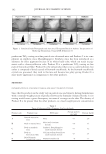
J. Cosmet. Sci., 66, 189–205 (May/June 2015) 189 Enhancing skin radiance through the use of effect pigments DAVID FUNK, BRANDON KOVAROVIC, GABRIEL UZUNIAN, JILL LITCHAUER,TRICIA DALEY-BOWLES, and AMBER HUBSCHMITT, BASF Corporation, Tarrytown, NY 10591 (D.F., B.K., G.U., J.L.), and BASF Corporation, Stony Brook, NY 11794 (T.D., A.H.). Accepted for publication April 10, 2015. Synopsis In this study, the radiance contribution from formulating various pearlescent effect pigments into a skin cream was modeled using gloss map histograms created from digital photographs of clinical panelists. CIELab color data from the various pearlescent effect pigments applied to simulated skin tone drawdown cards was fi rst collected to screen experimental candidates and to help select the concentration of pigment used in the formula. Optical microscopy was used to develop a simple coverage model to control for the dif- ferences in particle size and density of the effect pigments. In the subsequent in vivo study, panelists applied a weighed amount of cream containing various pearlescent effect pigments to the face and high-resolution digital photography images were collected on each panelist for image analysis. Gloss map histograms were developed through the software analysis of gray-scale images, which were used to describe the gloss, whiteness, and/or radiance contribution of each pearlescent effect pigment. The resulting gloss map histograms shared identifi able characteristics useful for statistical analysis and de- scription. This methodology could serve as a novel way to investigate and describe the visual impact and benefi t of formulating effect pigments in cosmetic creams intended for application on the skin. INTRODUCTION Effect pigments are used in cosmetics for their ability to provide color, luster, iridescence, color travel, and texture. While metal-oxide-coated mica remains the dominant effect pigment technology in use for most color cosmetics, the past 20 years have seen the in- troduction of various new effect pigments that utilize novel transparent substrates such as synthetic fl uorphlogopite, borosilicate, and silica. Each of these substrates provides a range of optical properties that can deliver differentiated appearance and performance characteristics in cosmetic formulation. This abundance of choice creates a dilemma for the formulator that is looking for a comparative understanding of each technology when used in formulations where luster or radiance is desired. Address all correspondence to David Funk at david.funk@basf.com.
Purchased for the exclusive use of nofirst nolast (unknown)
From: SCC Media Library & Resource Center (library.scconline.org)