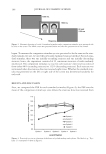
JOURNAL OF COSMETIC SCIENCE 190 Generally, white or clear skin care creams and lotions are not formulated with effect pig- ments, despite their value for increasing the appearance of luster and radiance on the skin. It is presumed that this is due to the desire of the formulator to avoid adding color or sparkle to the face. When effect pigments are used in these nondecorative skin care prod- ucts, the formulator requires an understanding of the visual benefi ts that the effect pig- ment might provide. To support the use of effect pigments in these skin care applications, there is an interest in developing methodology for assessing any impacts these pigments might have on radiance so that recommendations can be made for their use in this me- dium. Therefore, the purpose of this study is to develop a quantifi able method for deter- mining the radiance contribution from the use of effect pigments in a skin cream, and to use this method for the evaluation of various pearlescent effect pigment types. Included in this evaluation of radiance is the measurement of any color impacts on the skin from the use of effect pigments, primarily to help separate color contribution from lightness changes. Historically, skin tone drawdown cards have been used (1) as a screening tool to allow controlled colorimetric measurements of effect pigments over simulated skin color. This technique has been repeated in this study as a pre-experimental screening tool to deter- mine an effective pigment loading weight percent for luster on skin. Additional image analysis was then conducted on the coated skin tone cards to determine even coverage, correcting for the density and bulk densities for each substrate. In this study, we discuss the experimental results of an in vivo screening study intended to evaluate radiance and color measurements of various effect pigments in a simple skin cream. We evaluated various titanium dioxide (TiO2)-coated pearlescent effect pigments of a uniform color, particle size, and coverage, including TiO2-coated mica, TiO2-coated borosilicate, and TiO2-coated synthetic fl uorphlogopite, along with uncoated mica and bismuth oxychloride (BiOCl). A split-face in vivo study allowed the comparison of mea- surements of a skin cream containing no effect pigment, to various skin creams formu- lated with a uniform coverage of different types of effect pigments. Color measurements were taken via a handheld colorimeter to test for changes in the red/yellow appearance of the skin, while digital photographs of the volunteer’s hemiface were taken to allow image analysis for the determination of brightness. EXPERIMENTAL DEFINITIONS The terms “radiance” and “brilliance”, as representing the benefi ts of functional ingredients on skin (i.e., creams, pigments) have not been well defi ned by the industry (3). Recently, G. Martin-Langrand defi ned skin radiance as a subjective rating of individual parameters of the face, such as “luminosity of the complexion, homogeneousness of the complexion… , and contrast of the eye contour/whole face”, to defi ne overall skin radiance (4), whereas in the same publication, N. Lunau defi nes radiance as coming from a soft focus effect, “the so called soft focus effect, evens out the inhomogeneous aspects of the skin and leads to a more beautiful shine and radiance” (5). To better attempt classifying pigments and products us- ing these terms, there needs to be further research of the quantifi able adjustments needed to create radiance, along with the necessary methods to study this.

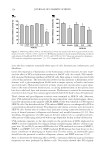
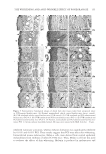
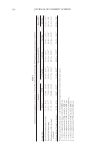
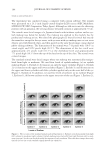
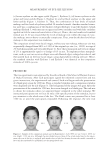
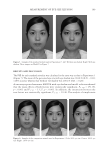
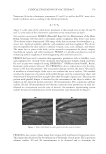
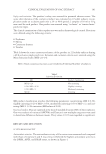
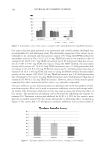
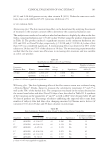
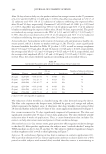
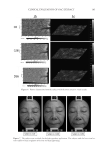
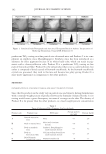
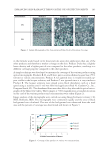
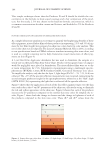
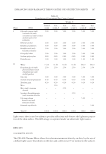
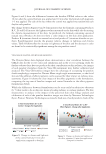
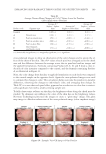
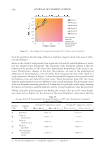
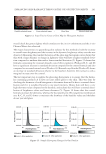
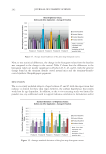
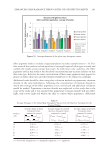
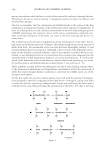
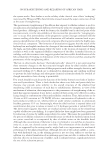
ENHANCING SKIN RADIANCE THROUGH THE USE OF EFFECT PIGMENTS 191 In the coatings, paint, and textile industry, similar product-relevant terms and their def- initions have been described (6). As an example, brightening has been defi ned as an increase in the “aspect of visual perception whereby an area appears to emit more…light” (ASTM E284-13b). For a uniform brightening of an area, there would be an even increase in pixel intensity of every pixel in the given area in a photograph. Brightness is linked with an object color as a “combination of lightness and saturation” (ASTM E284-13b) and in terms of 1976 CIELab, this means that an increase in the L* parameter and a decrease in a* and b*, where every pixel is evenly approaching a white color of the light source. Whitening is one of the only terms that can be described with just using the CIELab parameters, while most of the other skin color terms can only be characterized by using a histogram of all the pixel intensities in a fi xed area of a photograph. A histogram of a normal gray-scale photograph of the skin should show an even normal distribution of pixel intensities. Skin that has only been whitened will maintain the shape of the normal distribution, but will also demonstrate a shift to higher pixel in- tensities. Terms like glossy and matte also come from the coatings industry to describe aspects of appearance (6). Gloss is defi ned as an “angular selectivity of refl ectance, in- volving surface refl ected light, responsible for the degree to which a refl ected high- lights or images of objects may be seen superimposed on a surface” (ASTM E284-13b). The histogram for glossy skin will have two peaks, one similar to the normal distribu- tion except with less pixels (or a smaller peak), and another peak at the maximum pixel value as the light source is refl ected off the surface. The histogram for matte skin, being free of any gloss properties (3), will show a concentration around a single pixel inten- sity, making the standard deviation of the histogram smaller. In contrast to these terms, radiance for skin should show both an increase in the average pixel intensity and also a widening of the normal distribution of values. This combination of a slight increase in white values (lightness) with a decrease in skin coloration, coupled with a large normal distribution will show skin that is radiant and glowing. A term like radiance requires a holistic image of the face with the three dimensionality of the facial morphology to defi ne it and proof that the skin is not just shiny or glossy (Figure 1). PIGMENTS Given the many types of effect pigments in the market that have some form of angle- dependent hue, chroma, and luster, simple pearlescent pigments were chosen. The products chosen are pearlescent (or are called nacreous) because they impart an angle-dependent lightness or luster (2). The products are white in comparison to other effect pigments, and do not have any strong chroma or dominant hue. In this study, the substrate and technol- ogy of the pearlescent pigments were intentionally varied. Since an even coverage without perceivable sparkle is needed to create a luminous appearance on the skin, effect pigments with a relative small particle size were chosen (Table 1). Since the substrate used for many common effect pigments is platy muscovite mica, a secondary control was introduced to the study as Product A to establish the effect that uncoated muscovite mica would have in comparison to a TiO2-coated mica effect pig- ment. Generally, in a liquid or anhydrous formulation, the index of refraction of the for- mulation matrix will match that of mica, effectively making it disappear and not have a visually apparent impact on the visual performance of the formulation. Product B is a
Purchased for the exclusive use of nofirst nolast (unknown)
From: SCC Media Library & Resource Center (library.scconline.org)