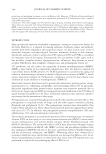
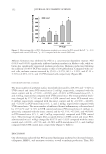
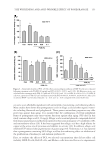
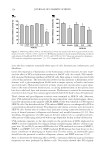
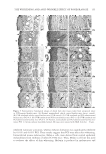
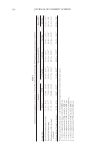
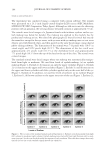
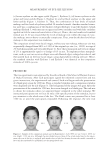
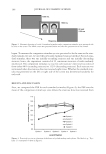
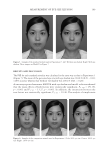
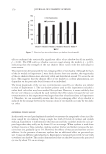
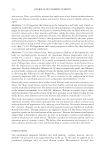
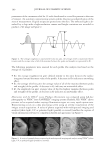
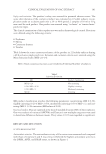
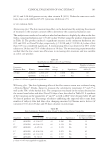
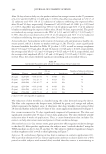
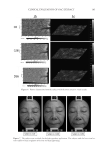
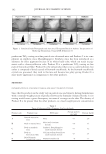
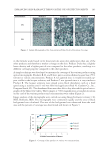
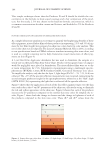
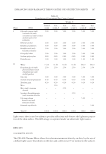
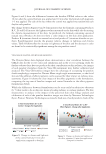
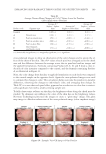
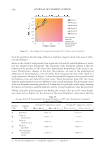
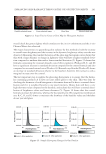
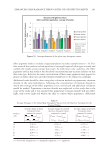
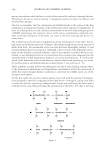
JOURNAL OF COSMETIC SCIENCE 152 Melanin formation was inhibited by PCS in a concentration-dependent manner. PCS (0.01% and 0.05%) signifi cantly inhibited melanin synthesis in Melan-a cells, while ar- butin also signifi cantly suppressed melanin production. Melanin production following the addition of 0.05% PCS was similar to that of 100 μM arbutin. Compared with con- trol cells, melanin content increased by 95.49 ± 9.27%, 86.3 ± 1.21%, and 67.12 ± 5.70% in 0.05%, 0.1%, and 1% PCS-treated cells, respectively (Figure 4B). HISTOMORPHOMETRIC CHANGES The mean number of epithelial surface microfolds decreased by 458.25% and −1.94% in UVB control and intact PCS-treated mice (1 ml/kg), respectively, compared with the intact control, and by −27.83%, −42.09%, and −35.83% in PCS-treated mice (0.5, 1, and 2 ml/kg, respectively) compared with UVB control mice. The mean epithelial thick- ness changed by 271.75% and −2.94% in UVB control and intact PCS-treated mice (1 ml/kg), respectively, compared with the intact control, and by −18.30%, −42.68%, and −32.62% in PCS-treated mice (0.5, 1, and 2 ml/kg, respectively) compared with UVB control mice. The mean number of infi ltrated dermal infl ammatory cells was altered by 1775.47% and −4.72% in UVB control and intact PCS-treated mice (1 ml/kg), re- spectively, compared with the intact control, and by −21.33%, −55.28%, and −49.09% in PCS-treated mice (0.5, 1, and 2 ml/kg, respectively) compared with UVB control mice. The percentage of collagen fi ber-occupied dermis in UVB control and intact PCS- administered mice (1 ml/kg) changed by 60.57% and −3.02% compared with the intact control, and −12.03%, −20.73%, and −16.58% in PCS-treated mice (0.5, 1, and 2 ml/kg) compared with UVB control mice, respectively (Figure 5, Table 1). DISCUSSION Our observations indicated that PCS increased hyaluronan synthesis but decreased elastase, collagenase, MMP-1, and tyrosinase activities, as well as melanin production. Thus, PCS Figure 2. Moisturizing effect of PCS. Hyaluronan synthesis was assessed in PCS-treated HaCaT. a p 0.01 compared with control (LSD test) b p 0.01 compared with the control (MW test).

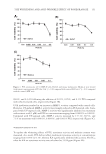
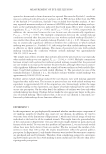
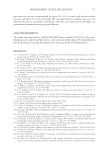
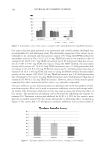
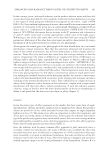
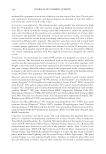
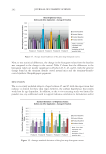
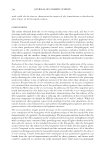
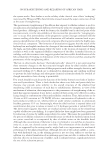
THE WHITENING AND ANTI-WRINKLE EFFECT OF PONEGRANATE 153 can serve as an affordable ingredient with antiwrinkle, moisturizing, and whitening effects. Many studies have shown that pomegranate is rich in ellagic acid and other organic materi- als including fl avonoids and polyphenols. These potent antioxidant properties may offer protection against skin aging. It is assumed that the combination of several polyphenol forms of pomegranate may exert various functions against skin aging. PCS used in this study contains ellagic acid (2.31 mg/g). Ellagic acid is a natural phenolic compound derived from many natural sources and has been reported to show anticarcinogenic (27), antifi brotic (28), and antioxidative effects (29). It has been suggested that ellagic acid has a high affi nity for copper at the active site of tyrosinase and inhibits its activity (30). In addition, ellagic acid inhibited UV-induced skin pigmentation of guinea pigs (30). Yoshimura et al. has reported that a pomegranate containing 90% ellagic acid has skin-whitening effect via inhibition of the proliferation of melanocyte and melanin synthesis (9). First, to evaluate the effects of PCS, we selected concentrations that did not affect cell viability. HDF-N cells, HaCaT cells, and Melan-a cells were used for in vitro experiments Figure 3. Antiwrinkle benefi ts of PCS. (A) The effects on procollagen synthesis in HDF-N cells were evaluated following treatment with TGF-β (10 ng/ml) and PCS (0.01%, 0.05%, and 0.1%). (B) Elastase activity was calculated after treatment with PPR (10 μM) and PCS (0.05% and 1%) in HDF-N cells for 24 h. (C) HDF-N cells were exposed to UVA (5 J/cm2) and then treated with PCS (0.0001%, 0.0005%, and 0.001%). After 24 h in culture, MMP-1 activity was evaluated. a p 0.01 and b p 0.05 compared with control (LSD test).
Purchased for the exclusive use of nofirst nolast (unknown)
From: SCC Media Library & Resource Center (library.scconline.org)