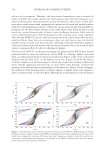
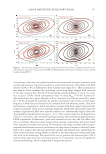
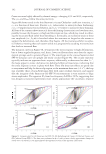
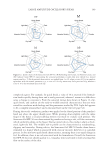
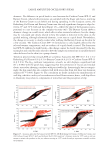
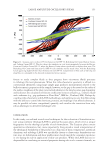
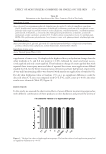
LARGE AMPLITUDE OSCILLATORY SHEAR 131 overall sensorial evaluation was captured for each of the formulations tested. The panel analyzed several sensorial parameters, including cushion, quick break, slip, tack, absorp- tion, and fi nish on skin. Each parameter was evaluated on a scale from 1 to 10. RESULTS AND DISCUSSION Four formulations with distinct textural attributes were investigated by carrying out a battery of rheology tests, TPA, and sensorial analyses. Rheological analyses consisted of both traditional and novel, nonlinear (LAOS) approaches. Traditional methods included stress ramps, steady torsional, dynamic strain sweeps, dynamic frequency sweeps, and preshear and recovery experiments for generating materials characteristics such as appar- ent yield stress, ZSV, elastic modulus [G’(ω)], loss modulus [G”(ω)], complex viscosity [η*(ω)], and tan delta [tan δ(ω)]. Overall, these data revealed a number of important properties about the four texture formulations, related to their at-rest properties, which are reviewed in the Standard Rheology section below. During LAOS testing, each of the texture formulations uniquely responded to the deformation stresses required to realize the high-oscillation shear rates. The resulting Lissajous plots correlated well with initial sensorial parameters, especially quick break and cushion. Finally, this report is supple- mented with a section on TPA, which is another instrumental approach that provides an alternative view of formulation textural properties, and a good determination of fi rmness, compressibility, resilience, and several other parameters. To mitigate complications, parallel discs were chosen for all experiments as three of the tested systems contained emulsion particles that could interfere with smooth fl ow in a cone and plate truncation gap. For parallel discs, the calculated strain is proportional to R/H, where R is the plate radius and H is the sample gap. Hence, the equation implies that the applied shear rate varies with the volume of sample, and that the maximum ap- plied shear rate only appears at the trimmed outer edge. This relationship is key because visualizing the edge of the sample conveys knowledge about how the sample relieves or stores the maximum applied oscillatory energy. Basically, this is where nonideal fl ow and deformation phenomena such as wall slip, plug fl ow, thixotropy, the coexistence of both soft solid and a liquid in yield stress materials, and shear banding may be visu- ally observed—each of these processes affects the meaning of the measured stresses and, hence, the interpretation of the LAOS data and subsequent correlation with sensorial analyses. BRIEF SUMMARY OF STANDARD RHEOLOGY DATA The elegance of LAOS studies can only be realized in light of data captured from standard rheological methods. Standard rheological techniques were applied to provide a frame- work to better comprehend the meaning of the dynamic contours in each Lissajous plot. Where practical, samples were studied with both smooth and rough plate surfaces to as- sess factors such as wall slip. Results from stress growth and stress ramp yield stress (τ0) experiments are possibly related to the low-strain internal loops of the Lissajous curves, and it is expected that each of these properties may have a subsequent relationship with the initial tactile properties, such as pick up, cushion, body, and initial spreadability. Steady torsional and preshear and recovery testing were undertaken to evaluate thixot- ropy, as thixotropic behavior could impact successive iterations at a single strain (or shear

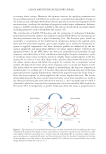
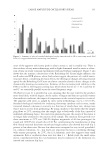
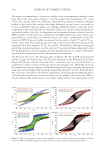
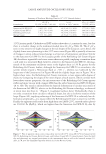
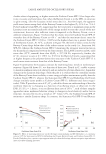
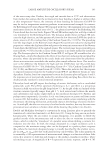
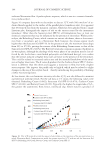
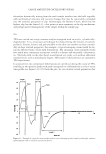
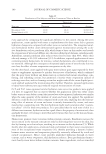
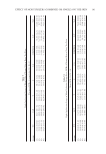
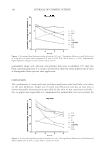
JOURNAL OF COSMETIC SCIENCE 132 rate), as well as the trajectory of loops at subsequent strains (or shear rates). Dynamic frequency sweeps were done to assess the time-dependent behavior of each formulation— where time dependence is related to the intrinsic relaxation behavior of the composite sample. Frequency sweeps in the LVR were compared to those commenced at 50 rad/s, which, in combination with larger strain amplitudes, results in large increases in the os- cillatory shear rate. Unless specifi cally mentioned, the rheological outcomes relate to 25°C, smooth surface data. The Sunscreen Gel SPF-50. It is an alcohol-based sunscreen gel that is thickened with lightly crosslinked poly(vinyl pyrrolidone) and packaged as a pump. Standard rheology shows that the Sunscreen Gel SPF-50 exhibits an apparent yield stress (14 ± 1 Pa) and shows slight thixotropy after yield, as evidenced by steady torsional and preshear and recovery experiments with both sandpaper and smooth surfaces. The smooth surface results differ slightly with the sandpaper data, indicating the presence of minor wall slip (below γ = 2.5 s-1), which is visible only at very low stresses (τ0). The transient stress growth overshoot maximum was 239 and 206 Pa for the rough and smooth sur- faces, respectively, suggesting a slight wall slip/shear banding process. Using a marker to monitor the deformation, it was diffi cult to visualize wall slip however, it was clear that at postyield the sample begins to shear band, meaning that the sample volume fl ows in the gap, and that there is also a region near the center of the gap that fl ows at a higher shear rate than the bulk. Plotting the I2/I1 harmonic ratio in the dynamic strain sweep shows that I2/I1 decreases from 0.27 (0.25 s-1) to 0.01 (5.0 s-1). One pos- sibility is that yielding of the microstructure is somewhat random, temporarily form- ing blobs of gel in a matrix of structured fl uid, or that nonperiodic shear banding affects the low shear rate data. At 32°C isotherm, the I2/I1 harmonic ratio values ranged from 0.44 (0.25 s-1) to 0.02 (5.0 s-1) the uptick in I2/I1 at 32°C may be related to heterogeneous solvent evaporation (ethanol). At each isotherm, the I2/I1 ratio bottoms out at 0.008 before the end of the LVR. As indicated in Figure 3, the length of the LVR plateau at 32°C is not highly affected by dynamic shear rate. Post yield, I3/I1 increases monotonically for both 25° and 32°C isotherms. Further, once the gel yields, it readily fl ows at both low and high shear rates (which is mimicked in vivo). The ZSV and yield stress outcomes are not signifi cantly affected by temperature. At 1% strain, the fre- quency sweep data conveys that G’ G” over the entire tested frequency range, indicat- ing the stability of the physical network however, unlike the Refreshing Gel Cream, tan δ rises at higher frequency, demonstrating a shear rate dependence of the micro- structural strength. The Refreshing Gel Cream. It is an oil-in-water gel cream that is packaged as a pump. The standard rheology suggests the presence of minor wall slip (see below), along with the possibility of plug fl ow (i.e., the system moves as a discontinuous domain), which may exist before complete yielding (τ0 = 66 ± 3 Pa). Observations with a marker did not reveal the presence of slip at the edge, but it is probable that the cohesive sample plug fl ows at lower shear rates, especially below the yield stress (as noted in dispensing product from its pump chassis). The transient stress growth overshoot maximum was 294 Pa for rough and 271 Pa for smooth discs, suggesting a slight wall slip or plug fl ow contribution. Plotting the I2/I1 harmonic ratio and the dynamic strain sweep shows that the ratio decreases from 0.14 (0.25 s-1) to 0.005 (5 s-1) the spike in I2,4/I1 suggests the presence of fl ow asymmetry at very low shear rates—which may be indicative of the cohesive nature of the Refreshing Gel Cream below yield. At each isotherm, near the end of the LVR and the
Purchased for the exclusive use of nofirst nolast (unknown)
From: SCC Media Library & Resource Center (library.scconline.org)