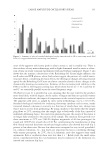
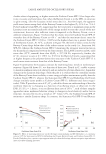
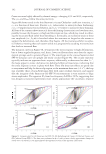
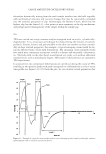
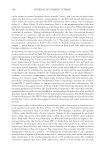
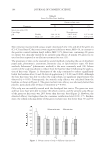
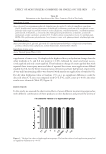
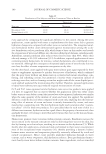
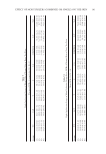
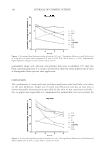
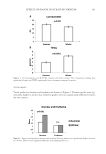
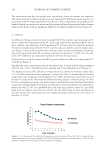
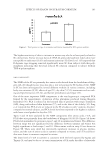
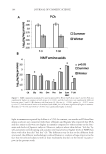
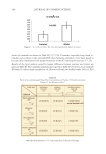
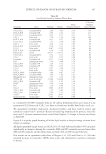
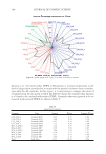
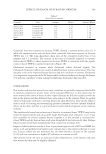
JOURNAL OF COSMETIC SCIENCE 190 for lipids) for each study and log to the base 10 was taken. For values below quantifi able limits (BQLs), half the detection limit was substituted. Following normalization and log transformation, the SkinMAP, NMF, and cytokine data were averaged across all four sites for each subject. Thus, each subject has a summer and a winter measure. These data were then modeled with a mixed model analysis of covariance (ANCOVA) with fi xed effect for time of year (group) and random effect for subject. All statistical tests comparing the two groups (winter vs. summer) were two sided using α = 0.05 signifi cance level. The least squares (adjusted for model) mean (on the log scale), the original mean (before log transformation), p value testing for signifi cant difference in each group mean from zero, standard errors, and p values for testing between group differences were calculated and reported. BQLs are reported and fl agged for greater than 30%. STATISTICAL METHODS: BIOPHYSICAL MEASURES AND VISUAL GRADES The Corneometer, TEWL, Expert Dryness, and Expert Redness data were each averaged across all four sites within the marked skin area for each subject. Thus, each subject has a summer and a winter measure. These data were then modeled with a mixed model ANCOVA with fi xed effect for time of year (group) and random effect for subject. All statistical tests comparing the two groups (winter vs. summer) were two sided using α = 0.05 signifi cance level. RESULTS AND DISCUSSION BIOPHYSICAL MEASURES Electrical measurements for the evaluation of SC hydration are well established, and sev- eral instruments are available (26–28) including the Corneometer (29) which has been shown to give reading correlated to dry skin grades (30). The most common way to assess skin barrier function is through the measurement of TEWL (31–35). Corneometer and TEWL results in summer and winter are shown in Figure 1A and B. Corneometer readings were higher in summer (Figure 1A), indicating a higher level of skin hydration in agreement with the literature (7–13). TEWL was lower in sum- mer compared to winter in agreement with the results reported by Muizzuddin et al. (11), Kikuchi et al. (10), and Wan et al. (7), but in contrast with those reported by Black et al. (8) who found higher TEWL values on the legs and forearms in July com- pared to February and December. Ishikawa et al. reported lower TEWL on the cheeks in summer compared to winter and lower TEWL on the buttocks in spring. On the palm, TEWL values were higher in autumn than in spring, but there were no differ- ence on other body sites investigated including legs (17). In the present study, sub- jects with at least moderately dry skin on the legs after the wash-out period in winter were selected. This may have increased the difference in barrier function seen be- tween winter and summer and led to the highly signifi cant reduction in TEWL in summer seen in Figure 1B.

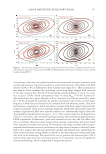
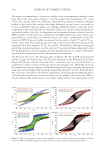
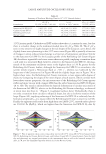
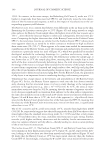
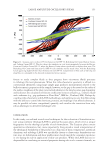
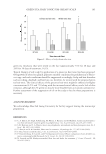
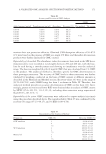
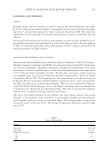
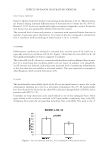
EFFECTS OF SEASON ON STRATUM CORNEUM 191 VISUAL GRADES Visual grades for dryness and erythema are shown in Figure 2. Dryness grades were sig- nifi cantly higher in winter, but erythema grades were not signifi cantly different between the two seasons. Figure 1. (A) Corneometer and (B) TEWL summer and winter studies. The corneometer readings were signifi cantly higher and TEWL signifi cantly lower in summer compared to winter. Figure 2. Expert visual grades for dryness and erythema. Dryness grades were signifi cantly higher in winter ( p 0.001). There was no signifi cant difference in erythema grades (n.s.).
Purchased for the exclusive use of nofirst nolast (unknown)
From: SCC Media Library & Resource Center (library.scconline.org)