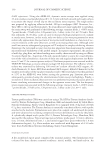
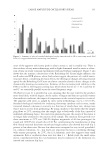
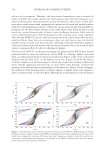
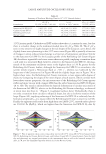
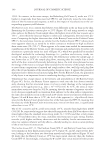
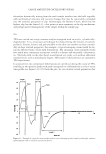
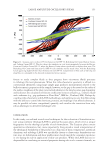
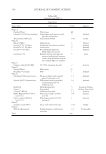
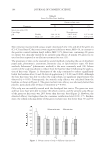
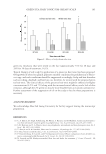
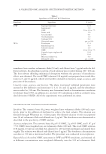
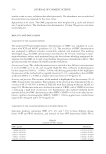
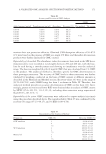
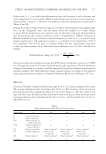
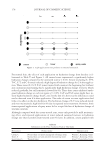
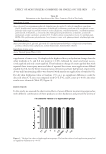
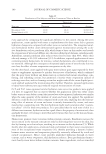
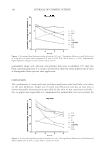
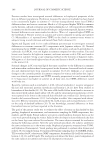
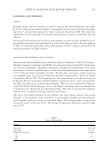
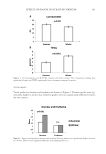
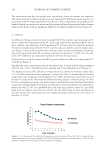
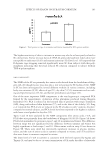
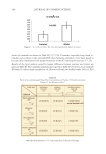
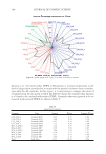
JOURNAL OF COSMETIC SCIENCE 164 Skin irritation was examined using a single closed-patch test (12), and all of the green tea (C1–C3) and base (C) hair tonics were negative (similar to water MII = 0), in contrast to the positive control (sodium lauryl sulfate MII = 0.5). Hair tonic containing 2% green tea extract was clinically trialed for its antioily scalp effi cacy. A similar 2% green tea ex- tract has been reported as an effi cient treatment for acne (13). The greasiness of skin can be assessed by several methods, including the use of absorbent paper pads, photometric assessment, bentonite clay, or lipid-sensitive tapes. Of these methods, Sebumeter® (photometric method) is the most commonly used (16). Sebum content of the scalp was shown to reduce from the baseline (day 0) following the applica- tion of hair tonic (Figure 1). Greasiness of the scalp continued to reduce signifi cantly below the baseline after 21 and 28 days of application (p = 0.024 and 0.008). Although the base hair tonic was able to reduce the scalp sebum, no signifi cant improvement was observed (p 0.05). Consequently, the antioily scalp effi cacy was calculated from the baseline, as shown in Figure 2. The green tea hair tonic effi cacy was obviously better than placebo, particularly after 28 days of treatment (p = 0.031). Oily scalp was successfully treated with the developed hair tonics. The green tea tonic and hair tonic base were able to reduce the sebum content, and the antioily scalp effi cacy of the green tea hair tonic was 20% better than the tonic base (Figure 2). However, the observed effi cacy was higher than the consumer satisfaction level (10% 17). Further- more, the sebum reducing ability of this green tea hair tonic was better than 3% and 5% Table II Green Tea Hair Tonic Stability Parameter Green tea hair tonic C1 C2 C3 Green tea extract (%) 2 4.5 7 Centrifuge Homogeneous pH Freshly 4.90 ± 0.10 4.83 ± 0.06 4.97 ± 0.06 Heat cool 5.03 ± 0.06 5.03 ± 0.06 5.00 ± 0.10 Figure 1. Sebum content of scalp at different time interval.

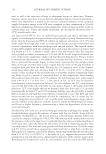
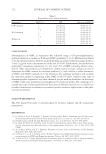
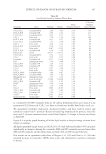
GREEN TEA HAIR TONIC FOR GREASY SCALP 165 green tea emulsions that were tested on the face (approximately 35% for 28 days and 29% for 30 days of treatment 14,15). Topical therapy of oily scalp by application of a green tea hair tonic has been proposed. Overgrowth of sebaceous glands generates suitable conditions for proliferation of Malas- sezia spp. and such conditions should be suppressed accordingly. Scalp and hair disorders such as itching, dandruff, and hair loss can, therefore, be treated with the proposed green tea hair tonic. The clinical effi cacy of the green tea hair tonic might be enhanced at higher concentrations (4.5% and 7%) along with the increased antioil effi cacy and a lack of skin irritation, although the 2% green tea may be more feasible from an economic perspective. Further assessment of the suppression of oil on the scalp or face by these preparations is necessary. ACKNOWLEDGMENT We acknowledge Mae Fah Luang University for facility support during the manuscript preparation. REFERENCES (1) C. A. Elmets, D. Singh, K.Tubesing, M. Matsui, S. Katiyar, and H. Mukhtar, Cutaneous photoprotec- tion from ultraviolet injury by green tea polyphenols, J. Am. Acad. Dermatol., 44, 425–432 (2001). (2) S. K. Kartiyar and C. A. Elmets, Green tea polyphenolic antioxidants and skin photoprotection, Int. J. Oncol., 18, 1307–1313 (2001). (3) T. Aburjai and F. M. Natsheh, Plants used in cosmetics, Phytotherapy Res., 17, 987–1000 (2003). (4) S. Hsu, Green tea and the skin, J. Am. Acad. Dermatol., 52, 1049–1059 (2005). (5) P. Chuarienthong, N. Lourith, and P. Leelapornpisid, Clinical effi cacy comparison of anti-wrinkle cos- metics containing herbal fl avonoids, Int. J. Cosmet. Sci., 32, 99–106 (2010). (6) N. Lourith and M. Kanlayavattanakul, Hair loss and herbs for treatment, J. Cosmet. Dermatol., 12, 210–212 (2013). Figure 2. Effi cacy of scalp sebum reduction.
Purchased for the exclusive use of nofirst nolast (unknown)
From: SCC Media Library & Resource Center (library.scconline.org)