269 CRITICAL FACTORS TO OBTAIN STABLE HIP GEL-IN-OIL EMULSIONS
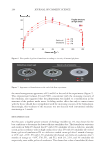
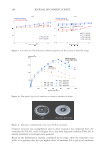
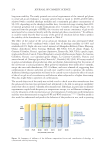
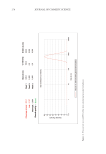
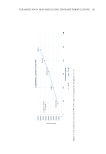
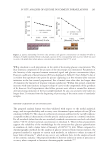
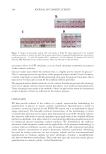
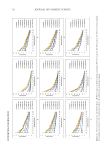
Internal phase concentration was also decisive in obtaining an optimized resistance of the
structure of gel-in-oil emulsions when subjected to high-stress conditions (Figure 13A).
From gel phase concentration greater or equal to 90% (F16, F15), the structure of gel-
in-oil emulsions was not able to withstand high shear. Conversely, for 80% and 85%,
the structure was not affected by shear and exhibited a typical shear-thinning behavior.
Furthermore, as shown in Figure 13B, F17 and F18 were able to recover their initial state
when the shear was stopped: immediately for F18, and in a slightly delayed manner for F17,
exhibiting thixotropic behavior. This means that the decrease in relative elastic character
seen during the oscillatory experiments between 85% and 80% of the internal gel phase
had no relationship to the structure’s resistance at higher stress.
DISCUSSION
The first aim of this study was to determine the factors affecting the creation and
stability of HIP gel-in-oil emulsions. The results demonstrated the importance of both
the manufacturing process and composition factors. Gel-in-oil emulsions were easily
manufactured in one step, at room temperature, by one-shot addition of one phase onto
the other (both indirect/oil-in-gel and direct/gel-in-oil emulsification modes are suitable).
One-shot addition simplified the procedure compared to the stepwise addition of the major
phase recommended in previous publications.6,8,9,11 The mixing procedure for emulsification
was found to be critical for the creation of gel-in-oil emulsion: on the basis of the almost
optimal composition tested, agitation using a low-shear planetary device, such as an anchor
or a scraper, was the most effective. This finding also differed from previous publications
on W/O HIPEs describing high-shear homogenization procedures from 3,500 rpm to
12,000 rpm.3,8,10,11,13,27 In addition, HIPEs manufactured in a one-step process were reported
to contain relatively large droplets, with size decreasing with increasing homogenization
time and intensity,12 generally around 20 µm or more,8,14 to around 10 µm (10), and around
5 µm after a required homogenization in an example containing the same emulsifier
(d).13 On the contrary, the gel-in-oil emulsions studied contained small internal droplets,
around 1 to 2 µm, without the need for high-shear preparation. An optimized droplet
size was reached from above 2% to 2.5% of emulsifier (d) without the interaction of other
parameters, which was also in line with a dosage greater than 1.5% required to achieve
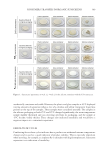
Figure 13. Flow profile of gel-in-oil emulsions (A, B) according to internal gel phase concentration.
Internal phase concentration was also decisive in obtaining an optimized resistance of the
structure of gel-in-oil emulsions when subjected to high-stress conditions (Figure 13A).
From gel phase concentration greater or equal to 90% (F16, F15), the structure of gel-
in-oil emulsions was not able to withstand high shear. Conversely, for 80% and 85%,
the structure was not affected by shear and exhibited a typical shear-thinning behavior.
Furthermore, as shown in Figure 13B, F17 and F18 were able to recover their initial state
when the shear was stopped: immediately for F18, and in a slightly delayed manner for F17,
exhibiting thixotropic behavior. This means that the decrease in relative elastic character
seen during the oscillatory experiments between 85% and 80% of the internal gel phase
had no relationship to the structure’s resistance at higher stress.
DISCUSSION
The first aim of this study was to determine the factors affecting the creation and
stability of HIP gel-in-oil emulsions. The results demonstrated the importance of both
the manufacturing process and composition factors. Gel-in-oil emulsions were easily
manufactured in one step, at room temperature, by one-shot addition of one phase onto
the other (both indirect/oil-in-gel and direct/gel-in-oil emulsification modes are suitable).
One-shot addition simplified the procedure compared to the stepwise addition of the major
phase recommended in previous publications.6,8,9,11 The mixing procedure for emulsification
was found to be critical for the creation of gel-in-oil emulsion: on the basis of the almost
optimal composition tested, agitation using a low-shear planetary device, such as an anchor
or a scraper, was the most effective. This finding also differed from previous publications
on W/O HIPEs describing high-shear homogenization procedures from 3,500 rpm to
12,000 rpm.3,8,10,11,13,27 In addition, HIPEs manufactured in a one-step process were reported
to contain relatively large droplets, with size decreasing with increasing homogenization
time and intensity,12 generally around 20 µm or more,8,14 to around 10 µm (10), and around
5 µm after a required homogenization in an example containing the same emulsifier
(d).13 On the contrary, the gel-in-oil emulsions studied contained small internal droplets,
around 1 to 2 µm, without the need for high-shear preparation. An optimized droplet
size was reached from above 2% to 2.5% of emulsifier (d) without the interaction of other
parameters, which was also in line with a dosage greater than 1.5% required to achieve
Figure 13. Flow profile of gel-in-oil emulsions (A, B) according to internal gel phase concentration.