271 CRITICAL FACTORS TO OBTAIN STABLE HIP GEL-IN-OIL EMULSIONS
out of packaging, spreadability, etc.32–35 but can also contribute to analyzing the stability
of the formula, especially based on evaluations of yield stress and thixotropy (i.e., time for a
sheared product to recover its initial configuration).36,37 Predominant elastic character was
much reported in previous publications as a characteristic of HIPEs,3,8,10,11,26 but a clear
relationship with the stability of the emulsion was not shown. Oscillatory experiments
carried out in the different parts of this work demonstrated that stable gel-in-oil emulsions
were characterized by an elastic structure, stable to frequency sweep. Unstable gel-in-oil
emulsions or gel-in-oil evolving to cream gels during aging due to insufficient dose of
emulsifiers (F7 and F8) could be detected by a very weak elastic structure at low frequencies.
However, F9 showing delayed exudation after 3 months of storage is a counterexample as
weaknesses in its structure were not detected by this sole measurement. Defective cream
gels, obtained when the gel phase viscosity was too low, were also differentiated by a
significantly weaker structure than gel-in-oil emulsions. However, because the relative
elastic character (G’/G”) was also shown to be closely connected to the internal gel phase
concentration, it seemed complicated to predict instability issues on the basis of this
parameter alone. Shear-thinning behavior was also reported as a characteristic of HIPEs,
without any relationship to the stability of the formulation.3,25 In the case of the gel-in-
oil emulsion base studied, tracking the risk of breakage on the flow curve at high shear
helped to set the conditions to obtain the most stable structures. The most suitable ratio
between external oily phase and internal gel phase, revealed as decisive, was determined
to be from 20:80 to 15:85 W/W in the formula studied. The optimum concentration of
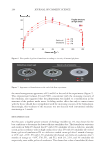
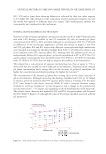
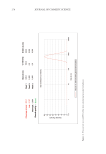
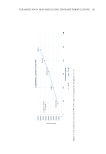
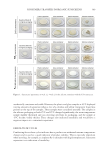
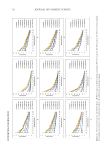
emulsifiers was refined to greater than or equal to 2% (Figure 14). The essential role of
internal gel phase concentration could explain why weaknesses of the structures were
observed when studying the impact of emulsification mode, gel viscosity, and emulsifier
dosage. The gel internal phase concentration was arbitrarily chosen around 90% in these
trials. It would be interesting to supplement the trials with ratios 20:80 and 15:85 to
confirm the low viscosity limit.
Thus, a combination of the two types of rheology experiment (application of a low
oscillatory stress at different frequencies and shear rate ramp) detected early signs of
structural weakness, 7 days after manufacturing, for inappropriate compositions. This
approach helped to anticipate instability issues occurring after 1 or 3 months of storage
with conventional stability monitoring and can support the development of customized
HIP gel-in-oil emulsions.
CONCLUSION
The study, combining conventional characterization methodology and rheology
experiments, helped to better understand the influence of the different factors on the
structure and behavior of HIP gel-in-oil emulsions under stress. Rheology experiments
highlighted a strong and highly elastic structure reflecting the organization of the HIP
for optimized formulations. Relationships among conductivity, rheology profiles (behavior
under stress and elastic character), and formulation stability were clearly observed. In
addition, rheology measurements can detect early signs of weakness of the structure
under stress without the need to wait for long-term stability, and can support formula
development in a more general context than the formulation base studied. The knowledge
acquired can also remove the legitimate uncertainty of formulators in the face of an
unusual formulation concept.
out of packaging, spreadability, etc.32–35 but can also contribute to analyzing the stability
of the formula, especially based on evaluations of yield stress and thixotropy (i.e., time for a
sheared product to recover its initial configuration).36,37 Predominant elastic character was
much reported in previous publications as a characteristic of HIPEs,3,8,10,11,26 but a clear
relationship with the stability of the emulsion was not shown. Oscillatory experiments
carried out in the different parts of this work demonstrated that stable gel-in-oil emulsions
were characterized by an elastic structure, stable to frequency sweep. Unstable gel-in-oil
emulsions or gel-in-oil evolving to cream gels during aging due to insufficient dose of
emulsifiers (F7 and F8) could be detected by a very weak elastic structure at low frequencies.
However, F9 showing delayed exudation after 3 months of storage is a counterexample as
weaknesses in its structure were not detected by this sole measurement. Defective cream
gels, obtained when the gel phase viscosity was too low, were also differentiated by a
significantly weaker structure than gel-in-oil emulsions. However, because the relative
elastic character (G’/G”) was also shown to be closely connected to the internal gel phase
concentration, it seemed complicated to predict instability issues on the basis of this
parameter alone. Shear-thinning behavior was also reported as a characteristic of HIPEs,
without any relationship to the stability of the formulation.3,25 In the case of the gel-in-
oil emulsion base studied, tracking the risk of breakage on the flow curve at high shear
helped to set the conditions to obtain the most stable structures. The most suitable ratio
between external oily phase and internal gel phase, revealed as decisive, was determined
to be from 20:80 to 15:85 W/W in the formula studied. The optimum concentration of
emulsifiers was refined to greater than or equal to 2% (Figure 14). The essential role of
internal gel phase concentration could explain why weaknesses of the structures were
observed when studying the impact of emulsification mode, gel viscosity, and emulsifier
dosage. The gel internal phase concentration was arbitrarily chosen around 90% in these
trials. It would be interesting to supplement the trials with ratios 20:80 and 15:85 to
confirm the low viscosity limit.
Thus, a combination of the two types of rheology experiment (application of a low
oscillatory stress at different frequencies and shear rate ramp) detected early signs of
structural weakness, 7 days after manufacturing, for inappropriate compositions. This
approach helped to anticipate instability issues occurring after 1 or 3 months of storage
with conventional stability monitoring and can support the development of customized
HIP gel-in-oil emulsions.
CONCLUSION
The study, combining conventional characterization methodology and rheology
experiments, helped to better understand the influence of the different factors on the
structure and behavior of HIP gel-in-oil emulsions under stress. Rheology experiments
highlighted a strong and highly elastic structure reflecting the organization of the HIP
for optimized formulations. Relationships among conductivity, rheology profiles (behavior
under stress and elastic character), and formulation stability were clearly observed. In
addition, rheology measurements can detect early signs of weakness of the structure
under stress without the need to wait for long-term stability, and can support formula
development in a more general context than the formulation base studied. The knowledge
acquired can also remove the legitimate uncertainty of formulators in the face of an
unusual formulation concept.