309 CONSUMERS TRANSFER INORGANIC SUNSCREENS
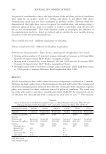
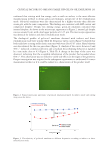
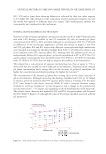
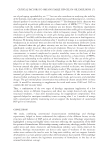
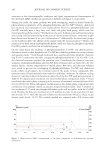
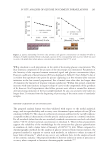
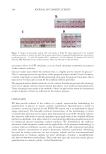
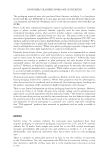
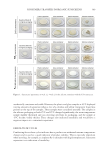
aesthetically consistent and stable. However, the plastic and glass samples at 45°C displayed
varying amounts of separation where a mix of a colorless and yellow transparent liquid was
present on the top of the samples. These samples were considered unstable. The samples in
the silicone packaging at both 25°C and 45°C changed significantly the room temperature
sample slightly thickened and was excreting oils from its packaging, and the sample at
45°C became visibly thicker. These changes also indicated instability and would have a
negative impact on a consumer’s experience.
FREEZE-THAW CYCLES
Conducting freeze-thaw cycles indicates how a product can withstand extreme temperature
changes and is used as a quick indicator of product stability. This is especially important
when traveling, for example, as airplanes fly to altitudes with frigid temperatures. Sunscreen
separation is an indication of instability.
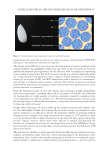
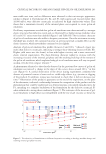
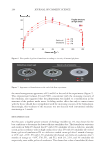
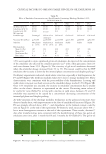
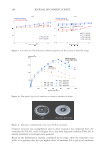
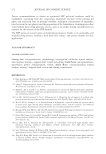
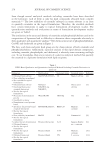
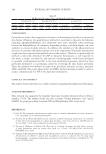
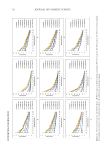
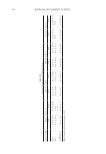
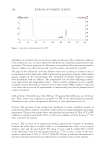
Figure 1. Sunscreens’ appearance at week 12, *week 2 for the silicone container with the TiO2 sunscreen.
310 JOURNAL OF COSMETIC SCIENCE
The TiO
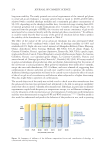
2 and combination sunscreens were stable, as they did not show any change in
any packaging type after three freeze-thaw cycles. The ZnO sunscreen, however, separated
in all packaging types, including in its original packaging. It can be concluded that the
formulation itself cannot withstand extreme temperature changes regardless of the type
of packaging it is in. Stability from a packaging perspective for the ZnO-based sunscreen
cannot be commented on in this study.
CONCLUSIONS
The goal of this study was to determine the stability of inorganic sunscreen emulsions
when transferring them to alternative packaging. Ideally, sunscreens should maintain
consistent SPF, critical wavelength, viscosity, spreadability, pH, particle size, and aesthetics,
and should remain stable under extreme temperatures.
This study is the first study to our knowledge that focused on inorganic sunscreens. Prior
research evaluated the stability of chemical UV filters in plastic, glass, and metal packaging,
but not inorganic sunscreens or with the use of silicone packaging.19
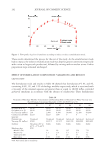
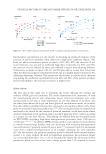
This study confirms that using alternative packaging to store sunscreens negatively impacts
the stability of the formulation. While transferring products to travel-size containers may
be a trendier or more convenient option, in vitro SPF, spreadability, particle size, and data
collected visually clearly displays that all alternative packaging types tested, especially
silicone packaging, will change the extent of the product’s protection, its ability to spread,
and its homogeneity on a visual and molecular level. It is likely that the silicone packaging
was permeable to some of the sunscreens’ ingredients, either causing leakage or solidification
of the leftover material contained inside them. It is also possible that ingredients within
the sunscreen formulations could have partially dissolved the packaging, causing those
chemicals to become introduced to the formulation, or that some ingredients had evaporated
in the packaging, causing parts of the formulation to become more concentrated.
It is recommended that consumers purchase travel-sized sunscreens rather than transferring
their products to alternative packaging to maintain the integrity of the product. Companies
that sell travel-sized sunscreens run stability studies that must meet desired specifications
in the original packaging before being sold on the shelves, leaving the consumer with no
doubt about the reliability to protect themselves from UV radiation.
We hope that the results of this study can guide consumers who are not aware that in
addition to the interactions of raw materials in a formulation, packaging type can also
impact stability. The results of this study can help deter consumers from transferring their
personal care products into alternative packaging when traveling.
REFERENCES
(1) United States Department of Homeland Security. TSA checkpoint travel numbers [internet]. Accessed April
19 2023. https://www.tsa.gov/travel/passenger-volumes 2023. Transportation Security Administration.
(2) United States Department of Homeland Security. Liquids rule [internet]. Accessed April 19 2023. https://
www.tsa.gov/travel/security-screening/liquids-rule 2023. Transportation Security Administration.
(3) American Academy of Dermatology. Association. Skin Cancer. Accessed April 19 2023. https://www.aad.
org/media/stats-skin-cancer.
Previous Page Next Page