j. Soc. Cosmet. Chem., 32, 393-405 (December 1981) Acid-base characteristics of human hair: Absorption of HCI and NaOH, and the effects on physical properties G. RAMACHANDRA BHAT, ROGERIO M. PARREIRA, ELVIN R. LUKENBACH, and DONALD L. HARPER,Johnson &Johnson Baby Products Co., Skillman, NJ 08903, and HELIO C. PARREIRA, Johnson &Johnson Products, Inc., New Brunswick, NJ 08903. Re•ivedAp•13, 1981. Synopsis An investigation of the ABSORPTION of HCI and NaOH by HUMAN HAIR is reported. Normal hair absorbs little HCI and NaOH in the range between pH 4 and 10. BLEACHING with H202 for an hour reduces this range by about 2 pH units from the base side, and the enhanced NaOH absorption is accompanied by a slightly decreased HCI absorption at low pH. Also, bleached hair exhibits significantly faster absorption of both HCI and NaOH. The effects of HCI and NaOH absorptions on the physical properties of hair are investigated via measurements of fiber density, viscoelasticity, interfiber friction and triboelectric behavior and examination of visual and microscopic appearance. The results are mutually consistent and correspond well with the HCI and NaOH absorption characteristics to indicate that normal hair is immune to the actions of HCI and NaOH over a pH range between 4 and 8. INTRODUCTION Commercial shampoos span a broad pH range (between 3.3 and 8.0) but there seems to be some subscription to the thought that low pH shampoos are better for hair than those with neutral or alkaline pH. It is often claimed that acid pH brings forth astringent or constrictive effects and consequently enhances structural integrity, luster and manageability of hair. Such claims are based on qualitative and largely subjective information and have perhaps stemmed from the concept of acid-rinses practiced in the days of the soap shampoos. The proponents of low pH shampoos could also have drawn some support from the published values of the isoelectric and isoionic points of human hair. For normal hair, the former is determined to be pH 3.67 by microelectro- phoresis (1) and pH 2.45-3.3 by streaming potential measurement (2,3), while the latter is stated to be in the vicinity of pH 6 (4). The actual relevance of such data in reference to the claims of beneficial effects of acid shampoos, however, remains uncertain. The present investigation entails measurements of the ability of human hair to absorb HCI and NaOH and of the effects of such absorptions on physical properties indluding 595

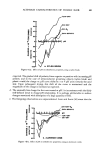
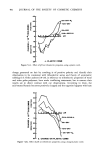
394 JOURNAL OF THE SOCIETY OF COSMETIC CHEMISTS fiber density, viscoelasticity, interfiber friction, triboelectric behavior and physical and microscopic appearance. EXPERIMENTAL 1. ABSORPTION OF HCI AND NaOH The HCI and NaOH absorption experiments were conducted with three types of human hair: a. De Meo natural brown b. De Meo natural white (blond) and c. De Meo natural brown, bleached for 1 hour in a 3% aqueous solution of H202 at pH 10 and 35øC. As a result of this bleaching, cysteic acid increased from 43 to 183/a moles and •4 cystine decreased from 1400 to 1198/a moles per gram of hair. The three types of hair were thoroughly Soxhlet extracted first with a 50/50 chloroform/methanol mixture and then with distilled, deionized water to bring them to an initial state near the neutral pH. The samples were dried, formed into several 1.5 gram specimens and condi,tioned in a 65% RH, 70øF atmosphere. The HCI and NaOH absorptions by the specimens at various pH levels in the pH 2-11 range were measured using an automatic titrimeter. In the procedure, the hair specimen was introduced into HCI or NaOH solution, using lg:100 ml liquor ratio, at the specified pH level the volume of 0.01N acid or 0.01N base added from the titrimeter burette to the treatment solution to maintain the pH constant at that specified level was automatically recorded as a function of time. At the pH 2 level, 0.05N acid was used instead of 0.01N in the titrimeter burette because the latter has nominally the same pH as the treatment solution to render titration impossible. The treatment was continued for 24 hours, which was longer than the time required to reach equilibrium in every instance. The specimens were then removed from the treatment baths and dried. These specimens were highly entangled and were unsuitable for evaluation of physical properties. Therefore, a different set of 8-inch, 1.5 g.wt. tresses of De Meo natural brown hair, precleaned by Soxhlet extraction with a 50/50 chloroform/methanol mixture, were individually immersed for 2-3 hours in aqueous solutions of HCI and NaOH at room temperature, one each at every integral level of pH between 2 and 11. Each tress was subjected to ten such immersions followed each time by drying in an oven at 55øC. The tresses were finally equilibrated overnight in solutions at their respective pH levels. The pH of the solutions used in the final cycle of treatment did not change and therefore equilibration of each tress at its respective pH level was ensured. The tresses were removed from the treatment baths and dried. 2. EVALUATION Many of the physical tests were conducted only with the brown hair samples treated at pH 2, 4, 7, 9 and 11.
Purchased for the exclusive use of nofirst nolast (unknown)
From: SCC Media Library & Resource Center (library.scconline.org)