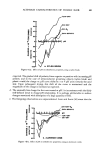
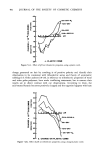
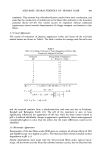
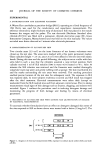
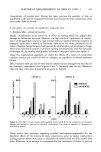
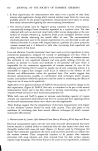
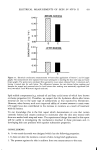
438 JOURNAL OF THE SOCIETY OF COSMETIC CHEMISTS II. THE NATURE OF SOIL IN HAIR Three types of materials soil hair: a) oily .,t,, .•,- su•,sm,,.es, (e.g. sebum, excreted from the sebaceous gland, lipids originating from skin surface cells), b) proteinaceous matter (e.g. cell debris from the stratum corneum and proteins of the sweat, etc.) and c) extraneous materials, mainly particulate soil (e.g. hydrocarbons, soot and metal oxide particles, etc.) that deposit from the polluted environment and ingredients of hair grooming preparations left behind (e.g. detergents, waxes, pomades, hairspray resin, etc.). Whereas all these various soils play important parts in affecting the visual and tactile perception of hair dirtiness, probably the lipids are the most important due to their sticky consistency cementing the various particles to each other and to the hair surface. A. THE SEBUM ON HAIR The amount of sebum found on the scalp and on hair at any particular moment depends on the relative magnitudes of two processes: a) the production of sebum by the sebaceous glands and b) its removal, mainly by mechanical action, i.e. rubbing, combing, brushing, etc.). Sebum production has been the •',• •* •C many detailed investigations /2 =x The sebum originates from the sebaceous glands -t:•t are attached to the hair follicles (Figure 1). The sebaceous glands produce sebum at continuous outputs (2,4). There are some seasonal or even daily variations in the amount of sebum produced (5) (Figure 2) and it is generally accepted that hormones, in particular androgens and estrogens (2,5), affect the production of sebum. As the hormonal balance changes with age from preadolescence to puberty and then to S•h-ematic Diagram•-•f Hair FollicleSand Associated Slain Glands apo-pilo sebaceous duct • ---•. •, sebaceous gt3nd apocr,ne du•t• q J skin surJac½ uct ' eccrine gland Figure 1. A schematic representation of the sebaceous gland and the hair follicle.

CLEANING OF HAIR 439 Free cholesterol I I ChOlesterOl Ond wOxesters I 10 5 • 20, 10 2O 15 10 50 4O 30 I II III IV V I i I III IV V 15 10 5 I II III IV V I II III IV V Figure 2. Seasonal dependence of the composition of skin surface lipids. 1--16.8.1973 II--10.10.1973 III--18.1.1974 IV--22.3.1974 V--24.6.1974. ( .... causal level -- replacement sum) (Reproduced by permission from ref. 5.)
Purchased for the exclusive use of nofirst nolast (unknown)
From: SCC Media Library & Resource Center (library.scconline.org)