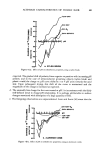
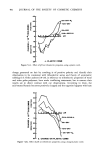
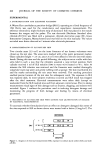
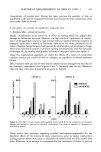
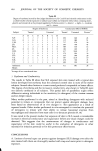
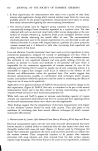
414 JOURNAL OF THE SOCIETY OF COSMETIC CHEMISTS LOTION C LOTION D 1100 1 i TREATED 900 7oo ,500 300 lOO [•1UNTREATED 1100 0 1 2 $ 4 0 1 2 3 4 DAYS Figure 7. The effects of two commercially available lotions (C & D) on the progression of detergent damage. Times of exposure to detergent are indicated by arrows. the lotions completely, the corresponding control sites were also treated a few minutes prior to washing. Such precautions were taken to control for the presence of a residue which could influence the tests in two ways: a) affect the electrical measurements by shielding the electrode from the skin thereby interfering with quantitation of damage and b) the residue would impede the penetration or induction of damage during subsequent exposures to SLS. The latter possibility would make it difficult to distinguish between protection and/or healing in this experimental design. Subsequent work aimed at clarifying these questions demonstrated that the lotions could cause a slight increase in the electrical conductance of skin even after the sites treated with them were thoroughly washed with soap and water eighteen hours later. This increase is too small to cause ,obvious differences in the conductance readings as taken routinely in these experiments but it can be observed using an appropriate experimental design (Figure 8). Additional studies in this laboratory (7) revealed that the higher conductance referred to above was due, at least in part, to the persistence, after washing, of some residue, Table II The effect of lotions A, B, C and D on Sodium lauryl sulfate damaged skin as analyzed from the log ratio values of conductance in treated (T) versus untreated (U) sites. Geometric Mean Lotion Day N Ratio (T/U) P-T • A 3 12 O.52 O.O2 B 3 12 0.83 0.51 C 4 12 0.60 0.01 D 4 12 0.39 0.01 'P-value of T-test (two tailed)

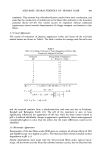
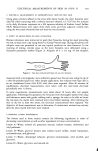
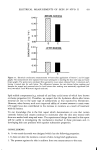
ELECTRICAL MEASUREMENTS OF SKIN IN VIVO.' I 415 z I i I 4 22 32 MINUTES Figure 8. Relative electrical conductivity measurements taken repeatedly during exposure to sodium lauryl sulfate (SLS). A = site treated with lotion A about 18 hrs. prior to washing and taking measurements. ß = site treated with lotion A just prior to washing and taking measurements. Experimental.' Lotion A was applied to one forearm of three subjects. The contralateral forearms were left untreated. After about 18 hours lotion was applied to both forearms after which these were thoroughly washed using Ivory © soap and luke-warm water. The forearms were allowed to dry for at least 60 min subsequent to which 3 glass wells, fitted with electrodes, were afixed to the inner aspects of the forearms using elastic bands. Aliquots of 3 ml of SLS solution (30% in water) were added to each well and the changes in conductance were recorded periodically. During the measurements the reference electrode was kept continuously in the mouth. The values registered upon closing the circuit are not absolute but represent peak heights on a chart recording. probably lipophilic in nature, capable of increasing skin hydration by means of occlusiveness. This occlusive action is expected to influence the adsorbtion to keratin and penetration of SLS throught the stratum corneum. Since both these factors have been associated with the potential of SLS and other anionic detergents to cause skin damage (8) it is possible that the beneficial effect of lotions demonstrated in our experiments is due to some measure to protection. 2. Aloe vera lotion An interesting pattern was observed in some SLS exposed sites treated with lotion C which contains an extract of Aloe vera. The beneficial effect of the treatment in those sites became evident only after the skin was damaged enough to exhibit a conductance of 500 to 600 micro MHOS (Figure 9). This level of conductance corresponds to a degree of skin damage in which a subsequent exposure to SLS causes an additional massive increase in conductance and a transient loss in capacitance. As discussed above the transient loss in capacitance is most likely caused by events occurring below the level of the stratum comeurn. From the available data it is difficult to analyze why the treatment with Lotion C showed maximum effectiveness so late in the develop- ment of injury. Imokawa (9) showed that part of the damage to the stratum corneum caused by repeated exposures to anionic detergents is secondary to the release of lysosomal enzymes. In view of this evidence one could speculate that the effect of treatment with lotions, during later stages of damage reflects a beneficial effect on viable cells below the stratum comeurn.
Purchased for the exclusive use of nofirst nolast (unknown)
From: SCC Media Library & Resource Center (library.scconline.org)