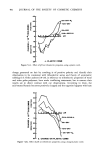
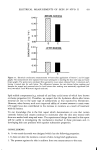
450 JOURNAL OF THE SOCIETY OF COSMETIC CHEMISTS rate determining process. (The concentration at which this transition occurs will depend on the rate of agitation and the particular rate constant that governs the reaction between the detergent and the solid soil.) The mechanisms of solubilization of semi-solid fats by detergents is not well understood at all. According to Lawrence (23,24), a number of steps are involved, among them the penetration of the detergent molecules into the fat and the formation of liquid crystalline phases containing mixtures of lipids with detergent molecules, appears to be the most prevalent. While the kinetics of the formation of mixed detergent-lipid micelles is not clear, it appears that the rate of the initial penetration of detergent molecules into the solid lipids strongly depends on the temperature. A critical temperature, Tp exists which is determined by the composition and the individual detergent-lipid combination, at which sudden change in the rate of detergent penetration takes place. Below Tp, the surfactant uptake by the micelies is slow above Tt is becomes fast. The rate of overall solubilization follows the same pattern. The nature of the shampoo used can determine the residual surface characteristics of the hair fiber after shampooing and, consequently, has an important bearing on the subsequent resoiling rate of the hair. Leduc, et al. (9) have shown that the resoiling rate, as measured by in vitro wicking of oils on hair tresses (Figure 13) or by in vivo measurements, differed considerably depending on the brand of shampoo used (Figure 14). Although the mechanisms responsible for these effects are not known, it is conceivable that shampoos deposit various layers of surfactants onto the hair surface imparting different surface energies. Alternatively, it is also possible that shampoos affect the arrangement of the cuticular cells on the surface of the hair and, in this way, leave the hair surface in different states of roughness. This is an important area for further research, especially since many important hair characteristics, e.g. combability, tangling and luster are greatly influenced by the topography of the hair surface (25,26). The residual hair surface energy and residual surface roughness after hair cleaning, in addition to influencing the resoiling rate, will also have a major effect on the subsequent cleaning operations. A low energy smooth surface will wet less and, therefore, allow the removal of oily soil to a much lesser extent than a rough, high energy surface. Since, on the average, hair in the United States is subjected to between 100-300 washings per year, even if small amounts of soil are left behind after each cleaning operation, the cumulative effect on hair can be quite substantial, especially considering that residual sebum, over long times, can undergo irreversible chemical changes (oxydation polymerization) leading to a more difficult removability. IV. THE ASSESSMENT OF CLEANING EFFICACY Whereas a battery of objective measuring techniques are available for the determina- tion of the cleanliness of fabric, the situation is very different when it comes to the evaluation of hair. Whether hair is perceived as clean or not depends on highly subjective judgements governed by visual and tactile sensations. Some attempts have been made to clarify the psychophysical relationships between the perceived hair cleanliness attributes and the various objective physical factors governing their perception but, to date, these efforts have given limited and only qualitative insight into the problem. Hair is regarded as being clean when it is not perceived as oily. The

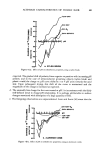
CLEANING OF HAIR 451 I• Tagged fatty acid /0 Figure 12. Schematic representation of the mechanism of removal of semi-solid lipids by detergents. (Reproduced by permission from ref. 22). 3 ', I ', I I ', • I ', ', a b c d e f g h i j V.G.H. G.H. D.H. Shampoo Figure 13. In Vitro reoiling rates of hair tresses washed with a shampoo for very oily hair (tresses a, b, c, d) a shampoo for oily hair, (tresses e, f, g, h) and a shampoo for dry hair (tresses i, j) (Reproduced with permission from ref. 9).
Purchased for the exclusive use of nofirst nolast (unknown)
From: SCC Media Library & Resource Center (library.scconline.org)