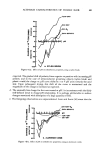
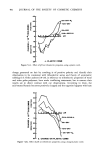
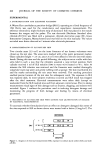
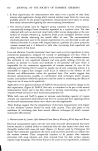
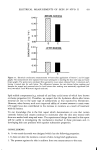
ACID-BASE CHARACTERISTICS OF HUMAN HAIR 401 72Hr-DRY 80 OHr-DRY 6O •, OHr-N 2 _ 40 •0 24Hr-65%R.H. 2O / 0 pH • 20 •r • 40 u ,,ø,, 60 z lOO a. NYLON BRUSH Figure 7 (a). Effect of pH on triboelectric properties, using a nylon brush. expected. The gradual shift of polarity from negative to positive with increasing pH persists, and in the case of semiconductor grooming objects (nylon brush and plastic comb) the charge vs. pH curve shifts by 3 or 4 pH units towards the acid side. Upon subsequent drying, this shift of the curve is maintained and the magnitude of the charge is increased as expected. d. The unusually low charge for the tress treated at pH 2 is inconsistent with the fairly well-defined trend in charge-pH relationship. It is perhaps attributable to surface changes associated with absorption of a large quantity of HC1. e. The foregoing observations are unprecedented. Lunn and Evans (16) assert that the : OHr-DRY.N2 • z 40 5O ' b. ALUMINUM COMB Figure 7 (b). Effect of pH on triboelectric properties, using an aluminum comb.

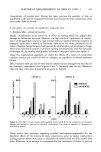
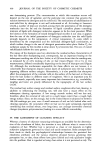
402 JOURNAL OF THE SOCIETY OF COSMETIC CHEMISTS 40 30 ,,• OHr'DRY'N2 • 72Hr-DRY 2O I 24Hr-65%R.H. OO 2 a 4 $ - , , ' pH x 10 $ ao z 4O 50 C. PLASTIC COMB Figure 7 (c). Effect of pH on triboelectric properties, using a plastic comb. charge generated on hair by combing is of positive polarity and identify their observation to be consistent with triboelectric series and theory of asymmetric rubbing (17). Other authors (18-20), in reference to triboelectric properties of wool and other polar polymers, have made conflicting statements, but in essence their results are in direct contrast with our observations. According to them, the acid-treated keratin becomes postively charged and the opposite happens with base 4O 3O •- 2o ..• =' 10 , o x lO o • ,- 3o z 4O ••1 pH 24Hr-85%R.H. OHr-DRY OHr-DRY-N• 50 d. CHARGE ON PLASTIC COMB Figure 7 (d). Effect of pH on triboelectric properties, using a charged plastic comb.
Purchased for the exclusive use of nofirst nolast (unknown)
From: SCC Media Library & Resource Center (library.scconline.org)