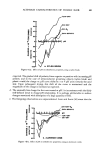
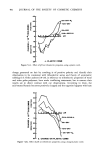
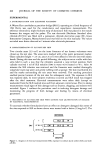
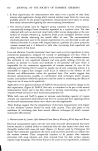
412 JOURNAL OF THE SOCIETY OF COSMETIC CHEMISTS z o r lOOC 3o • • III I II I I 01 2•4 78 10 DAYS i i I II I I I I I 01 2•4 78 10 Figure 5. Changes in electrical conductance and capacitance immediately after exposure to sodium lauryl sulfate (see details in text). (Figure 5). Thus, it appears that durint5 more advanced stages of damage, the exposure to SLS causes pronounced changes in the electrical properties of skin which due to their transient nature, are not obvious if the measurements are taken some 24 hours after the insult. It is likely that the temporary decrease of capacitance described above is a consequence of the effect of detergent on epidermal cells situated below the level of stratum comeurn proper. This hypothesis is supported by our observations that capacitance values taken (with a dry, metal electrode) in between successive tape- strippings increased continuously reaching maximum levels upon complete elimina- tion of the SC. However, if tape-stripped rat skin is exposed to SLS in vivo a transient increase in capacitance takes place which after a few minutes of additional exposure is followed by a pronounced decrease (unpublished data). 2. Healing of SLS Insulted Skin After cessation of exposure to SLS the conductance measurements showed a decrease over a period of at least fourteen days. This process appeared to occur in two distinct stages: a rapid and substantial decline during the first two to three days and a slower reduction which extended beyond fourteen days (Figure 4). A very similar pattern appears during healing of tape-stripped skin in which the regeneration of normal barrier properties was quantitated by means of transepidermal water loss (2). Based upon this similarity we suggest that the same general mechanisms are involved in the healing of epidermis severely damaged with SLS as those reported for stripped skin. Histological studies of Matoltsky, et al. (2) have shown that the early phase of rapid barrier regeneration is associated with the formation of a temporary barrier of closely intertwined parakeratotic cells, the precursors of which appear to originate in the granular layer. The mitotic activity in injured epidermis during the early phases of regeneration is maximal and it is greatly influenced by the application of occlusive dressings (6). As healing proceeds the parakeratotic cells are gradually replaced by the final barrier,

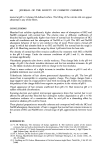
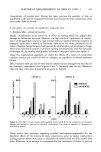
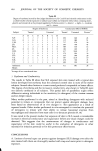
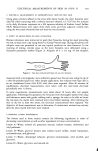
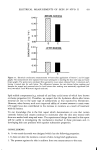
ELECTRICAL MEASUREMENTS OF SKIN IN VIVO.' I 413 characteristic of normal skin. During the latter process the porosity of skin as manifested in the rate of transepidermal water loss (2) and electrical conductivity seem to be rather close to normal. B. THE EFFECT OF LOTIONS ON DETERGENT DAMAGED SKIN I. Beneficial effect--protection/healing Ideally, a formulation to be tested for its effect on healing should be applied after damage or trauma has occurred. However, the high electrical capacitance or conduc- tance of damaged skin returns to near normal levels so rapidly following cessation of detergent insult that it would be extremely difficult to use those parameters as an index of healing during the post-insult period. As an alternative, we developed a design which was expected to permit or promote healing simultaneously with the induction of damage, viz., by treating with product in between detergent insults (see Figure 3). Using this experimental approach, we tested the effects of a series of commercial cosmetic lotions and creams as well as collagen, an ingredient in several marketed lotions. Daily treatment with any one of these lotions resulted in less damage from SLS than in the untreated, contralateral sites (Figures 6 and 7). Statistical data for the differences observed after a few days of treatment are given in Table II. LOTION A • LOTION B 600 - 500 • TRE ._• E ,._,. o 300- 50 z z o 0 1 2 $ 6 7 9 0 1 2 .'5 6 7 9 ' DAYS Figure 6. The effects of two commercially available lotions (A & B) on the progression of detergent damage and healing as indicated by electrical conductance. The times of exposure to detergent are indicated by arrows. These results raise questions regarding possible mechanisms responsible for the beneficial effects of the lotions. In these experiments, prior to taking conductivity readings special efforts were made to eliminate the lotions from the sites treated with them. Moreover, in an attempt to compensate for the eventuality of failure to remove
Purchased for the exclusive use of nofirst nolast (unknown)
From: SCC Media Library & Resource Center (library.scconline.org)