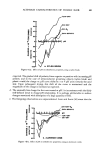
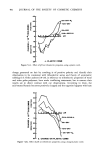
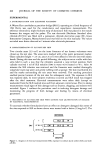
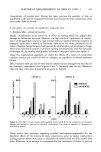
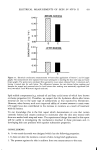
410 JOURNAL OF THE SOCIETY OF COSMETIC CHEMISTS D. EVALUATION OF ERYTHEMA On the day following the last exposure to SLS, photographs of the test sites were taken on Ektachrome 135 film with a Nikkormat FTN equipped with a 55 mm lens. Illumination was provided by a Vivitar 283 flash unit fitted with a neutral density filter. The flash unit was mounted on a universal adapter attached to the shoe mount and adjusted to provide a fixed illumination angle relative to the lens centerline. The transparencies were projected and evaluated independently by four people who graded the erythema on a scale of zero to three. E. PRINCIPAL LOTION INGREDIENTS The lotions used in these studies contain the following ingredients in order of decreasing concentration as well as other ingredients in lower concentrations: Lotion A--Water, glyceryl stearate plus sodium laur¾1 sulfate, stearyl heptanoate, cyclomethicone, and glycerine. Lotion B--Water, mineral oil, potassium stearate, sodium stearate, cholesterol, and cetyl palmitate. Lotion C--Water, Aloe vera gel, lanolin, stearic acid. Lotion D--Water, urea, oleth-3-phosphate, petrolatum, synthetic spermaceti, and glycerin. 60- 40 • NDUCTANCE :3- 1 0 0 2 4 6 8 ]0 ]2 14 16 DAYS Figure 4. Changes in electrical conductance and capacitance in skin exposed to sodium lauryl sulfate (30% aqueous for •-hr at intervals indicated by arrows) and the return to normal of these parameters after cessation of detergent insult.

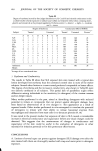
ELECTRICAL MEASUREMENTS OF SKIN IN VIVO.' I 411 RESULTS AND DISCUSSION A. CHARACTERIZATION OF SLS INSULTED SKIN 1. Induction of damage To most subjects three to five exposures of skin to SLS (30% aqueous, daily for • hour) caused various degrees of damage which ranged from dryness and chapping to severe erythema. These changes in the appearance of skin were associated with a gradual increase in the electrical conductance and capacitance (Figure 4). In some subjects the increase in conductance in the SLS exposed sites approached values equivalent to those observed by us after damaging the skin by tape-stripping to the stratum lucidurn, a procedure known to result in the complete elimination of the normal barrier functions of skin (4). The amount of variation in the degree of insult, as measured by electrical conductance, was rather small when comparing several close sites on the same forearm or the sites on the contralateral forearm in the same subject (see below). On the other hand considerable variation in sensitivity to SLS was observed among subjects. Thus, subjects with dry skin complaints were remarkably more sensitive than a group of subjects who were considered to have normal skin (Table I). Table I Differences with "Dry" and "Normal" Skin in Sensitivity to Sodium Lauryl Sulfate. Number of Exposures Times Condition Subject To Cause Erythema Treated of Skin Dry V.M. 2-3 3 A.B. 2-3 3 J.M. 2 1 G.G. 2 4 C.J. 2-3 2 V.S. 2-3 2 K.D. 2 2 K.P. 2 3 V.F. 3-5 6 D.I,. 6-7 2 R.L. 6-7 2 C.D. 7 2 M.D. 5 1 Normal While the objective of these experiments did not include a complete characterization of the differences in sensitivity to SLS of dry vs. normal skin, these observations seem to correlate with the findings of Thiele and Malten (5) who showed that subjects with dry skin had an increased sensitivity to alkali and trypsin. The conductance and capacitance measurements shown in Figure 4 were taken each day just prior to re-exposing the skin to SLS. Under those conditions both parameters showed a continuous increase with each additional insult. However, when the measurements were taken near the end of each exposure to SLS solution, and using the latter as the electrolyte bridge there occurred an increase in capacitance in the first 2-3 days followed by a decrease to well below the levels measured after the first exposure
Purchased for the exclusive use of nofirst nolast (unknown)
From: SCC Media Library & Resource Center (library.scconline.org)