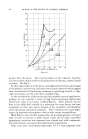
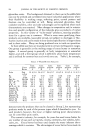
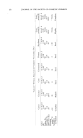
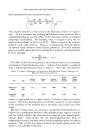
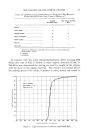
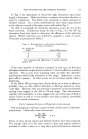
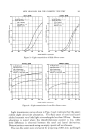
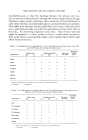
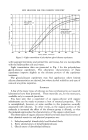
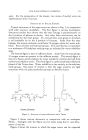
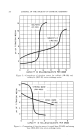
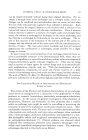
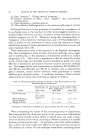
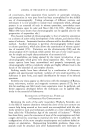
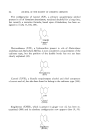
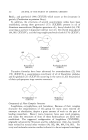
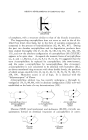
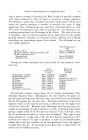
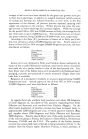
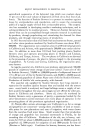
238 JOURNAL OF THE SOCIETY OF COSMETIC CHEMISTS room temperature. Haziness, separation or precipitation were inter- preted as signs of incompatibility, while homogeneity and clarity were assumed to denote compatibility. The data in Table 2 indicate that the salicylate end-blocked fluid is similar in solubility to Dow Corning 555, an alcohol-soluble silicone. In general, the former is compatible with 99 per cent isopropanol animal fats and waxes esters such as isopropyl myristate, diglycol stearate and glyceryl monostearate fatty acids hydrocarbon oils and waxes and silicone oils such as Dow Corning 200 and Dow Corning 555. It is in- compatible with vegetable oils, water and most alcohols. Apparently. COO--, the addition of the salicylate radical, (•OH to the dimethyl structure is responsible for this increased solubility over a dimethylpoly- siloxane fluid of about the same molecular weight. As might be expected the salicylate end-blocked fluids absorb ultraviolet light. In Fig. 1 the light transmission is plotted against the wave length. The transmittance for a fluid containing 12 dimethylsiloxane units is negligible below 350 mt•, but increases from 0.7 per cent at 350 mt• to 91.9 per cent at 370 mu. i.o •. 0.5 Cell = $•andord Ret ....... Eehyl Alcohol CiH • CiH • CiH• OH CH• CH• CH, OH • • I 1.6 ß 10 • gm,gm,/lite• • X • 12 • 11.6
•Co•c.
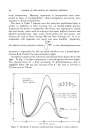
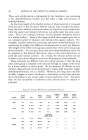
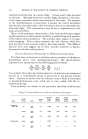
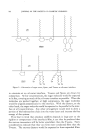
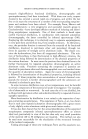
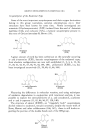
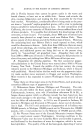
•Conc ß 10 • (Co•c. • 2 ß 10 • gm,/life• I I I 260 300 340 WAVE LENGTH, Figure 2.--Absorption of salicylate end-blocked fluid compared to methyl salicylate.

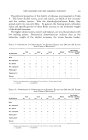
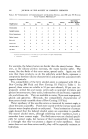
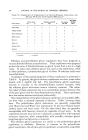
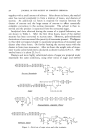
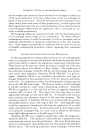
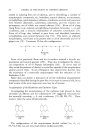
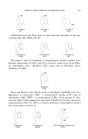
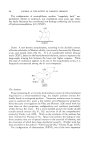
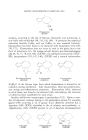
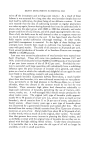
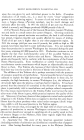
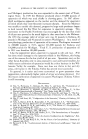
NEW SILICONES FOR THE COSMETIC INDUSTRY 239 In Fig. 2 the dependence of ultraviolet light absorption upon chain length is illustrated. Methyl salicylate, a common ultraviolet absorber, is used for comparison. The fluids were evaluated as dilute solutions in absolute ethanol. As a result, determinations were made using ethanol as the reference instead of the empty quartz cell used for Fig. 1. No shift in wavelength for maximum absorption occurs for any of the fluids examined. Calculations using the data in Fig. 2 for the 305 mu absorption band were made to determine the efficiency of the salicylate radical. Methyl salicylate was arbitrarily assigned a value of unity. These data are presented in Table 3. TABLE 3--EFFECTIVENESS OF SALICYLATE END-BLOCKED FLUIDS AS SUNSCREEN No. of Me2 SiO Units Order of Effectiveness* 4 ..................... 1.13 8 ..................... 0.86 12 ..................... 1.68 * As compared with effectiveness of methyl salicylate rated as 1.0. If the same quantity of salicylate is present in each case, we find that the higher molecular weight silicone is about 1.7 times as effective as methyl salicylate. This is even more surprising when one finds that dimethyl- polysiloxanes exhibit little absorption in this range. Apparently a syner- gistic effect is present. In other words, we do not know exactly what is happening. In the 290 to 320 mu range these silicone fluids are at least as effective, probably more so, than methyl salicylate in filtering destructive ultra- violet light. However, they are relatively transparent to the less harmful, tanning wave lengths in the 350 to 370 mu range. This characteristic together with insolubility in water suggests the use of this type of fluid in suntan lotions as well as in non-cosmetic uses such as paints, automobile polishes and textile treatments. F^TT¾ ALCOHOL ESTERS OF DIMETHYLPOLYSILOXANE The second group of silicones consists of fatty alcohol esters of dimethyl- polysiloxane. Chemically, these silicones are: Me Me RO(SiO)nSiOR n 5 0 Me Me Esters of octyl, lauryl, stearyl and behenyl alcohols have been prepared. The average value of n has been varied so that each organic alcohol is attached to either a short or a long chain polymethylsiloxane molecule.
Purchased for the exclusive use of nofirst nolast (unknown)
From: SCC Media Library & Resource Center (library.scconline.org)