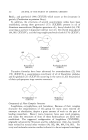
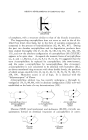
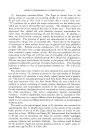
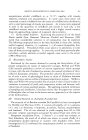
248 JOURNAL OF THE SOCIETY OF COSMETIC CHEMISTS All of these materials are more compatible in conventional cosmetic in- gredients than the dimethylpolysiloxane fluids. The salicylate end-blocked fluids may find use as a water repellent sunscreen material in suntan lotions. The wax-like fatty alcohol esters may be useful in solid preparations such as lipstick and lip pomade. The glycol-siloxane esters, because of their un- usual solubility characteristics, may be useful where their hydrolyric in- stability can be used advantageously. Each of these new silicones is capable of being modified in a variety of ways. Furthermore, it is possible to add still other groups to the siloxane molecule. Thus, the number of silicones potentially available is great. The actual number used, however, is limited only by the ingenuity of the silicone chemist in synthesis and the ability of the cosmetic chemist to define the characteristics he desires. SOCIETY COSMETIC CHEMISTS GILTMORE HOTEL, NEW YORK CITY MAY 18, 1956 REGISTRATION 9:00 A.M. PRESENTATION OF PAPERS 9:30 A.M. MEETING OPEN TO MEMBERS AND NON-MEMBERS The Society of Cosmetic Chemists Meeting to be held at the Biltmore Hotel, New York City, May 18, 195G, will offer the following program: "The Behavior of Perfumery Materials in Thioglyeolate Solutions," E. Sagarin and 3/1. Balsam. "The Measurement of Static Charge on Hair," It. Henkin, V. C. Ester and C. Nlills. "A New Permanent Waving Process," R. E. Reed. "The Use of Iodophors in Cosmetics," A. Cantor, fl. Nlost and M. Shelanstri. "The Analysis of Lipstieks," Paul W. Jewel. "Laboratory Evaluation of Potential Caries-Preventive Agents in Dentifrices, S.D. Gershon, O. W. lgeiditch and D. J. Martin. "Some Practical Problems in the Formula- tion of Aerosol Hair Sprays," It. R. Shepherd.

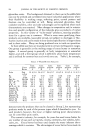
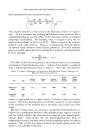
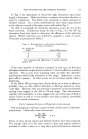
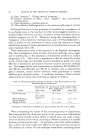
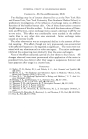
THE SUGAR ESTERS IN COSMETICS* By L•OYD OsiPo v Foxter D. She//, Inc., New York ll, N.Y. Studies on the sugar esters were initiated with the primary objective of providing low cost detergents for household use which would utilize excess sugar production capacity. However, this development has elicited considerable interest on the part of the food, cosmetic and pharmaceutical industries because of the unusual character of these esters. The sugar monoesters of fatty acids are the only water-soluble surface-active agents to be made available which are either natural foods or which hydrolyze to form natural food products. Sucrose and raffinose monoesters of fatty acids are new chemicals. Nonetheless, their potential usefulness is such that it can be anticipated that the transition from laboratory preparation to t•ll-scale commercial production will be rapid. PROCESS FOR MANUFACTURE OF THE SUGAR ESTERS The commercial process for the manufacture of the sugar esters is quite simple. To obtain the monoester, three moles of sugar are dissolved in a solvent such as dimethylformamide. One mole of a methyl ester of a fatty acid and about 0.1 mole of an alkaline catalyst are added. The mixture is maintained at about 90øC., under a vacuum corresponding to the vapor pressure of the solution at this temperature. An alcoholysis reaction occurs. The methyl alcohol portion of the methyl ester is replaced by sucrose to form the sugar ester of the fatty acid and methanol. Under these conditions of temperature and pressure, the methanol is removed as it is formed, * Presented at the November 30, 1955, New York Chapter Meeting, New York City. TABLE 1 CoNvERSiON ov METHYL STEARATE TO SUCROSE MONOSTEARATE Material Present After Indicated Time •--Percentages Based on Alcohol Solubles---•, 3 Hr. 6 Hr. 9 Hr. 12 Hr. Sucrose monostearate 36.0 70.0 88.0 89.5 Sucrose distearate 57.7 24.3 5.6 3.8 Methyl stearate 3.15 0.0 0.0 0.0 Potassium stearate 3.15 5.7 6.4 6.7 249
Purchased for the exclusive use of nofirst nolast (unknown)
From: SCC Media Library & Resource Center (library.scconline.org)