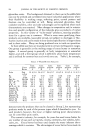
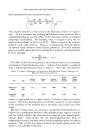
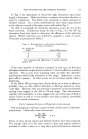
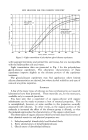
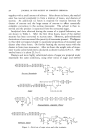
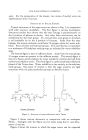
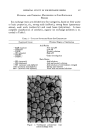
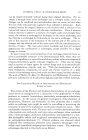
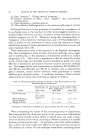
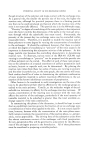
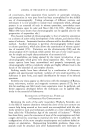
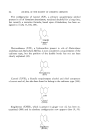
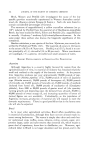
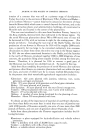
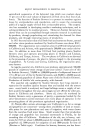
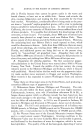
250 JOURNAL OF THE SOCIETY OF COSMETIC CHEMISTS together with a small amount of solvent. After about six hours, the methyl ester has reacted completely to form a mixture of mono- and diesters of sucrose. An additional six hours is required for reaction between the diester of sucrose and the large excess of sucrose to effect essentially complete conversion to the sucrose monoester. The solvent is then re- moved and the product is separated from the unreacted sugar. Analytical data obtained during the course of a typical laboratory run are shown in Table 1. After the first three hours, most of the methyl stearate has been converted to sucrose ester. However, poly-substituted derivatives of sucrose exceed the quantity of monoester present. The figures in this table correspond closely to equimolar proportions of monoester and diester after three hours. On further heating the sucrose reacts with the diester to form more monoester. After six hours the weight ratio of mono- ester to poly-substituted esters calculated as diester is about 2.9 to 1. After twelve hours it is about 23.5 to 1. Diesters and more highly substituted esters of sugar are prepared under essentially the same conditions, using other ratios of sugar and methyl HHHHHHHH HHHHHHH HC-C-C-C- C- C-C-C-C =C-C-C-C-C-C-C-C-C--O -CH• HHHHHHHHH HHHHHHHHII I - , .... o o S•/c•'ose Monoo/ea[e H H•0H H OH OH H • HH HH HO-C-C-O-C-C-O i}-H H--}--O-C-C-O-C-C-OH I I HH HH HHHHHHH HHHHHHH I I HC-C-C-C-C-C-C-C-C=C- C-C-C-C-C-C-C-C-O-C-Ci• H-•IH HHHHHHHHH HHHHHHHH& •0 / [ween O-C-C-O-C-C-OH HHHHHH ./•N t-- HH HH HH HH HH HH HH HH HC-C-C-C-C-C• %'5 O-C-C- O-C-C-O-C- C- O-C-C- O-C-C- O-C-C-O-C-C-O- C-C-O H H IHHIH II I HH HH HH HH HH HH HH HH HCH HCH II I HHCH '•' Polyoxyethylene 41kylated Phenol HHHHHHHH HHHHHHH HC-C- C-C-C-C-C-C- C= C-C- C-C- C-C-C- C-C-O-CH e O O H O oO%H R•l/15•lOSe O/eate H H•OH H OH H OH OH H Figure 1.--Structure of sugar esters and other nonionics.

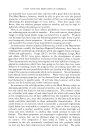
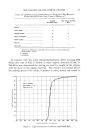
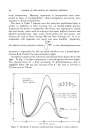
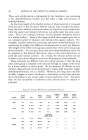
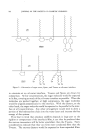
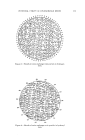
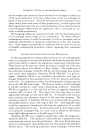
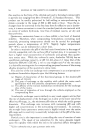
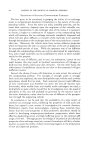
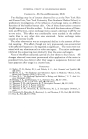
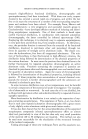
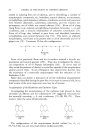
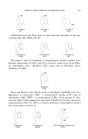
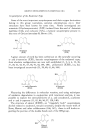
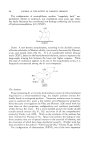
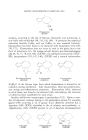
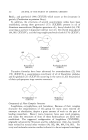
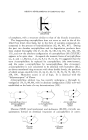
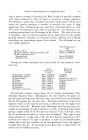
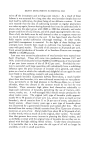
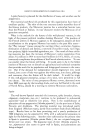
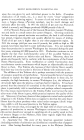
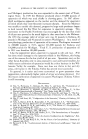
THE SUGAR ESTERS IN COSMETICS 251 ester. For the preparation of the diester, two moles of methyl ester are employed per mole of sucrose. STRUCTURE OF SUGAR ESTERS Typical structures of the sugar esters are shown in Fig. 1, in comparison with other nonionic emulsifiers. The first figure is sucrose mono61eate. Structural studies have shown that the ester linkage is predominantly on the 6 position of glucose as shown. Any other fatty acid moiety can be substituted for the oleyl group. If a second fatty acid group is attached, it will probably be on the 6 position of fructose. Aside from the ester linkage, the sucrose molecule contributes 10 oxygen atoms for water solu- bility. Seven of these are hydroxyl groups. This contribution is equivalent to a minimum of 10 ethylene oxide groups, as indicated by water solubility data. The bottom figure is that of raffinose oleate. Aside from the ester group, 15 oxygen atoms are present in the raffinose moiety. The second figure is that of a Tween, which employs for water solubility a hexitan derived from sorbitol and ethylene oxide. The third figure is a polyoxyethylene alkylated phenol of the Triton class. Water solu•bility is due entirely to the ethylene oxide groups. One point of interest is that the sugar moieties are rigid structures while the polyoxyethylene groups are flexible chains. CHz =0 Sucrose •/•tearate •0 Tween Oh Figure 2.--Structure of sucrose distearate and a Tween. Figure 2 shows sucrose distearate in comparison with an analogous Tween. Analogies with the Spans can be made using the tri-and tetra- esters of sucrose. Figure 3 shows the manner in which the sugar esters can be expected
Purchased for the exclusive use of nofirst nolast (unknown)
From: SCC Media Library & Resource Center (library.scconline.org)