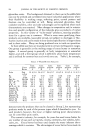
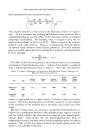
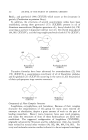
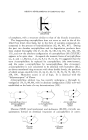
264 JOURNAL OF THE SOCIETY OF COSMETIC CHEMISTS this reaction in the form of the chloride salt and is furnished commercially in particle size ranging from 20 to 50 mesh (U.S. Standard Screens). This product can be readily pulverized by ball milling or micropulverizing to obtain a powder in the range of 300 to 400 mesh or finer. Since the ex- changer must be converted to the free base form for effective use in deodor- ants, it is more convenient to treat the standard particle size material with an excess of sodium hydroxide, rinse free of residual caustic, air dry and then pulverize. Quaternary ammonium bases as a class exhibit a low level of thermal stability. Therefore, when compounding formulations containing such materials, processing temperatures should not be carried for prolonged periods above a temperature of 50øC. Slightly higher temperatures (60ø-70øC.) can be tolerated for a short time. In order to maintain the pH of the final resin formulation in the range of 5.0-6.0, compatible with the surface pH of normal skin, it is necessary to have a higher total concentration of carboxylic acid groups than quater- nary amine sites. While the carbox¾1ic resin, Amberlite XE-64, has an equilibrium exchange capacity, at pH 5.0-6.0, about 1.5 times that of the Amberlite IRA-411 (XE-98), a two to one weight ratio* of the two resins is a desirable starting point for compounding purposes because of the strong alkaline properties of the quaternary amine resin. The activity of the ion exchange resin components in an antiperspirant- deodorant formulation depends upon the following factors: (a) Degree of dissociation of the functional groups in the desired pH range of 5.0-6.0. (b) The rate of exchange or the rapidity with which the resins reach equilibrium with the ionizable components of perspiration. (c) The affinity of the various malodorous constituents for the exchange sites of the resins. (d) The rate of migration of ions through the vehicle employed as the compounding base. A carboxylic exchanger reacts similarly to any weak organic acid in that the rate of displacement of the hydrogen ion is slow at the lower end of the effective pH range, i.e., the minimum pH value at which the acidic groups dissociate. This exchange rate increases with increasing pH and with higher salt concentrations in the surrounding environment. In contrast, the strongly basic quaternary amine resin is highly ionized over the entire pH range and its reactivity is essentially independent of the pH of the reac- ting medium. Particle size is also important in controlling the rate of reaction of resin exchangers. The speed of ion adsorption by the resins depends largely upon the rapidity with which the ions to be adsorbed diffuse throughout * 2 parts carboxy]ic resin, 1 part quaternary amine resin.

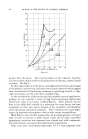
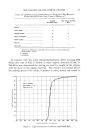
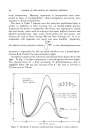
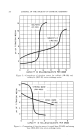
POTENTIAL UTILITY OF ION-EXCHANGE RESINS 265 the gel structure of the polymer and make contact with the exchange sites. As a general rule, the smaller the particle size of the resin, the higher the reaction rate, although for practical purposes there is a limiting particle size that can be easily produced and beyond which the reaction rate of the resin is not materially affected. This particle size is in the 400 mesh range. "Porosity" or degree of crosslinking of the resin polymer is also important since this factor controls the dimensions of the paths in the resin gel struc- ture through which the adsorbable ions must travel. Fortunately, the porosity of the present-day ion exchange resins can be controlled w•thin reasonable limits. Therefore, it is possible to modify the reaction rate of these polymers to some degree bv varying the concentration of crosslinker in the exchanger. It should be explained, however, that there is a point at which the degree of crosslinking or "porosity" of the resin ceases to be important in determining the adsorption acitvity of the polymer. At this stage, particle size becomes the controlling characteristic in determining reaction rate. To illustrate, various resins of the IRA-411 (XE-98) type varying in crosslinkage or "porosity" can be prepared and the particle size of these polymers can be varied. The effect of each of these resin proper- ties on the adsorption of a typical constituent of axillary perspiration such as lactic, butyric or caprylic acid, can be determined. By plotting the reaction rate values from these two series of resins, one varying in porosity and the other in particle size, on the same graph, the rate curves will cross. Such studies should be of value in determining the optimum combination of resin properties required to achieve maximum effectiveness in the ad- sorption of the known odoriferous constituents of perspiration. Other factors to be considered in such investigations are the size of the ions to be adsorbed and their relative affinities for the exchange group at- tached to the resin polymer. Usually, as the molecular weight of the ad- sorbable ion increases, its affinity for the exchange sites also increases. Of course, concentration of the reacting ions in contact with the resin also affects the activity of the exchanger, particularly if the total quantity of ionizable material to be adsorbed is greater than the total available ex- change capacity of the resin combination. In summarizing this phase of the discussion, it should be kept in mind that an equilibrium reaction governs the function of an ion exchange resin or combination of resins when applied to the skin. It is not a static equilib- rium, however, because while the concentration of the resin phase essen- tially remains constant, the concentration of the reaction phase, i.e., perspir- ation, varies appreciably. The driving force of the adsorption arises from the almost continuous contact of the exchanger with fresh prespiration. In turn, perspiration flow will be governed to some extent by the effective- ness of the astringent present in the formulation. All of these phenomena must be considered in preparing a suitable product.
Purchased for the exclusive use of nofirst nolast (unknown)
From: SCC Media Library & Resource Center (library.scconline.org)