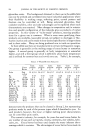
266 JOURNAL OF THE SOCIETY OF COSMETIC CHEMISTS SELECTION OF SUITABLE COMPOUI•DING VEHICLES The last point to be considered in gauging the utility of ion exchange resins in antiperspirant-deodorant formulations is the nature of the com- pounding vehicle. Since the resins are solid, insoluble particles, and be- cause their reactivity depends upon the migration of the ionizable con- stituents of perspiration to the exchanger sites of the resins, it is necessary to choose a reagent or combination of reagents as the compounding base which will maintain the ion exchange materials completely dispersed and which will also allow diffusion or transfer of the materials to be adsorbed through the medium to the exchanger sites of the resin particles at a reason- able rate. Moreover, the vehicle must have certain adhesive properties which will maintain the resin in contact with skin at the site of application for reasonable periods of time. While the optimum rate of ion diffusion through the compounding vehicle can only be determined by experimenta- tion, some rough yardsticks can be established by which to select suitable media for this purpose. First, the rate of diffusion, and in turn, ion adsorption, cannot be too rapid because this may result in localized concentrations of hydrogen or hydroxyl ions which could cause skin irritation. On the other hand, the achievement of equilibrium cannot be too slow or the compound will give ineffective results. Second, the choice of resins will determine to some extent the nature of the compounding medium. For examp!e, if strongly acidic or strongly basic resins are employed, the more hydrophobic type vehicles such as white petrolatum, should first be tried. Such materials prevent rapid diffusion of ionic constituents and therefore cut down the over-all reaction rate. Conversely, when weakly basic and weakly acidic exchangers are used, a hydrophylic or polar vehicle should first be investigated, since the speed of adsorption in this case will probably be governed by the reaction rate of the resins themselves, rather than by the rate of diffusion of the perspira- tion through the supporting vehicle. In conclusion, it can be said that the availability of a wide variety of synthetic ion exchange resins, exhibiting the properties of solid acids and bases, has opened a new avenue of investigation for cosmetic chemists. Preliminary reports from dermatologists studying these materials have shown that the novel properties of these polymeric adsorbents should be useful in developing antiperspirant-deodorant preparations which have effective deodorizing action and high buffering power in the optirnum pH range of 5.0-6.0. Through greater knowledge of the physical and chemical properties of ion exchange materials, cosmetic formulatots will be in a better position to assess the utility of these interesting reagents in the preparation of new and improved products.

POTENTIAL UTILITY OF ION-EXCHANGE RESINS 267 COMMENTS--BY FRANZ HERRMANN, M.D. Two findings may be of interest observed by us at the New York Skin and Cancer Unit, New York University Post-Graduate Medical School, in preliminary investigations of the influence of exchange resins on different functions of the healthy human skin. One of these observations concerns the pH response of the skin surface. In line with the observations of Otten- stein and Thurmon, cation exchange resins caused a decrease in pH by one to two units. This effect was considerably more marked in the axillary vaults than in any other skin area examined. Anion exchange resins caused an increase in pH. The other observation was an unexpected decline in the amount of ther- mal sweating. This effect, though not very pronounced, was encountered with sufficient frequency to be regarded as significant. The resins were not mixed with any aluminum salt or other astringent. The cation exchangers inhibited the outpouring more distinctly than the anion exchangers. None of the effects outlasted a period of a few (three to four) hours. All changes observed were most pronounced after application of the resins in powdered form, less distinct after their usage in suspensions (lotions) and least apparent after usage in a creamy base. REFERENCES (1) Shelley, W. B., Hurley, H. J., and Nichols, A. C., drch. Dermatol. and Syphilol., 68, 428 (1953). (2) Martin, G. J., "Ion Exchange and Adsorption Agents in Medicine," Boston, Little, Brown and Company (1954), p. 89 et. seq. (3) Root, M. J., "Ion Exchange Applications in Biology and Medicine," N.Y. dcad. Sci- ences Monograph (1953). (4) Heming, A. E., and Flannagan, T. L., Federation Proc., 10, 307 (1951). (5) McChesney, E. W., 5 t. Lab. Clin. Med., 38, 199 (1951). (6) Thurmon, F. M., and Ottenstein, B., 5 t. Imestigative Dermatol., 18, 333 (1952). (7) Thurmon, F. M., U.S. Patent 2,653, 902. (8) Thurmon, F. M., U.S. Patent 2,684,321. (9) Thurmon, F. M., Ottenstein, B., and Bessman, M. J., 7. Investigative Dermatol., in press. (10) Ottenstein, B., Boncoddo, N., Bessman, J. J., and Thurmon, F. M., Ibid., 22, 349 (1954). (11) Ikai, K., Ibid., 23, 411 (1954).
Purchased for the exclusive use of nofirst nolast (unknown)
From: SCC Media Library & Resource Center (library.scconline.org)